You pull out the box grater for a handful of cheese, grate for 30 seconds, then face a bulky tool with bits stuck in the holes. If that is your usual experience, the question is fair: is a box grater worth it when you only use one side?
Usually, yes—but only if that coarse side regularly handles enough cheese or vegetables to justify the cabinet space and cleanup. A box grater is practical for moderate batches, such as cheese for tacos, pizza, casseroles, or baked pasta. For occasional small jobs, citrus zest, or a tight kitchen drawer, a slimmer tool may be a better fit.
Key Takeaways
- Keep a box grater if you often shred enough cheese or vegetables for a full recipe, not just a garnish.
- The coarse side is the most useful surface for many kitchens, so using only one side is not a reason by itself to get rid of it.
- A fine handheld grater is better for zest, garlic, ginger, spices, and hard-cheese finishing.
- A flat coarse grater can be a smart space-saving option for small portions of cheese or vegetables.
- Choose based on your usual batch size, storage space, comfort, and cleanup tolerance—not the occasional recipe with unusual needs.
The right choice depends less on how many surfaces a tool has and more on what you actually grate, how much you prepare at once, how comfortable the tool feels in your hands, and how much washing up you are willing to do.
What Each Side of a Box Grater Is Actually For
Most box graters have several cutting surfaces, but the layout varies. Some have four distinct sides, while others combine hole sizes or include a slicing panel. Check your own grater rather than assuming every side serves the same purpose.
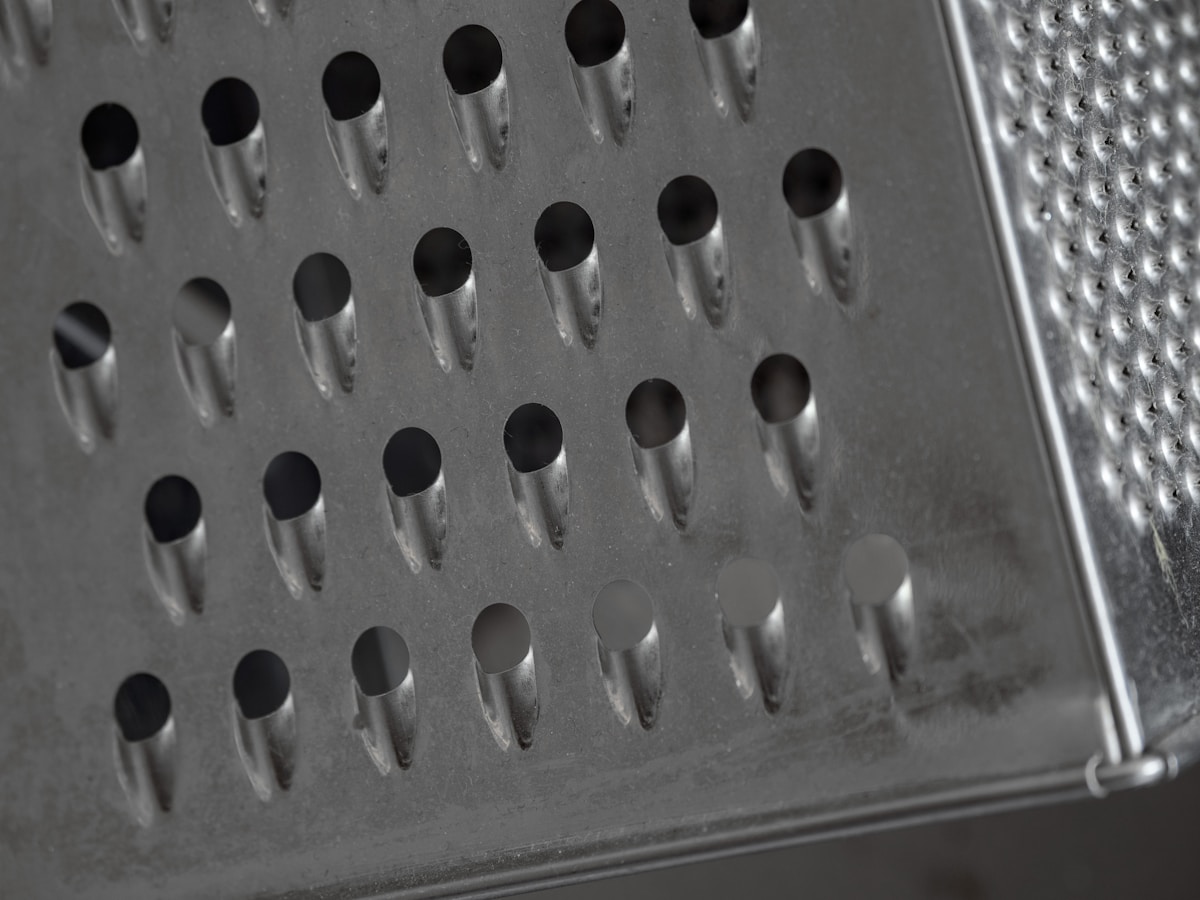
The coarse shredding side is the one many home cooks use most. It makes broad, distinct shreds for cheese on tacos, pizza, quesadillas, casseroles, and baked dishes. It can also handle firm vegetables such as carrots, zucchini, potatoes, and cabbage when a recipe calls for grated vegetables.
A medium or smaller shredding side creates thinner strands. It can be useful when you want cheese to melt quickly or vegetables to blend more neatly into fritters, slaws, fillings, or quick breads. If your cooking rarely depends on a particular shred size, though, this side may see little use.
The fine grating side has small, sharp openings for ingredients such as hard cheese, garlic, ginger, nutmeg, and small amounts of onion. It can produce a fine texture, but a separate fine handheld grater is often easier to control and rinse for these small jobs.
If your box grater has a slicing side, it creates thin slices rather than grated pieces. That can be useful for some vegetables or cheese, but it is not a replacement for a mandoline when you need a large quantity of even slices. It is also different from julienne cutting, which produces narrow matchsticks rather than grated texture.
There is nothing wrong with using only one or two surfaces. The coarse side covers many everyday cheese-shredding tasks, while a separate fine grater can handle zesting and finishing more conveniently. A multi-sided tool is useful only when its extra functions solve real cooking problems for you.
Whatever side you use, work on a stable surface. Keep your fingers clear of the cutting area, and stop before the last small piece becomes difficult to hold. Trying to grate every last bit of cheese or vegetable is rarely worth the risk.
When a Box Grater Earns Its Cabinet Space
A box grater earns its place when you regularly shred more than a small garnish-sized amount. If you grate a bowlful of cheese for nachos, a casserole, homemade pizza, or baked pasta, its broad base and upright shape are useful. You can set it over a board, plate, or bowl to help contain the shreds.
It is also a sensible all-purpose tool when you want several shred sizes without buying separate gadgets. One box grater can cover coarse cheese, smaller vegetable shreds, fine hard-cheese grating, and sometimes slicing. That versatility can be worthwhile even if every side is not used equally often.
The coarse side is the deciding factor for many households. If you use it weekly for a block of cheese, carrots for slaw, or zucchini for fritters, the box grater probably remains useful. Its large surface gives you more room to work than a narrow handheld tool.
Its drawbacks are straightforward. A box grater is bulkier than a flat grater, can feel awkward if you need to hold it in midair, and has several sharp surfaces to wash around. Food can cling inside the perforations, especially soft cheese, moist vegetables, and garlic.
Try this keep-or-replace test: think about your last ten grating jobs. If several involved enough food to fill a bowl or cover a baking dish, keep the box grater. If nearly all involved one lemon, a little Parmesan, or a small handful of cheese, a narrower tool may better match your routine.
You may not need to choose only one tool. A box grater plus a fine handheld grater often covers more real-life cooking needs than relying on the box grater for everything. The box handles volume; the smaller tool handles precision.
Box Grater Alternatives by Ingredient and Batch Size
The best grater for cheese depends on the texture and amount you need. The same is true for vegetables, citrus, garlic, and spices.
Fine handheld grater
A fine handheld grater is best for citrus zest, nutmeg, garlic, ginger, chocolate, and a light shower of hard cheese over finished pasta, soup, or salad. Its narrow shape gives you close control, especially when working directly over a bowl or plate.
It is not a substitute for making a large pile of shredded cheese. Fine teeth create very small pieces, and grating a full block of cheese this way can be slow and tiring. Think of it as a finishing and flavor-building tool, not a bulk shredder.
Flat coarse grater for vegetables and cheese
A flat grater for vegetables or cheese is a strong option for small portions. It stores flat in a drawer or alongside cutting boards, which is helpful in compact kitchens. It can work well for a little cheddar for eggs, one carrot for a salad, or a small amount of zucchini for a quick batter.
The tradeoff is stability. A flat grater needs to be held securely over a bowl, leaned against a board, or braced at an angle. If your grip is weak, your wrists get uncomfortable, or you dislike balancing tools while working, a box grater may feel easier for anything beyond a small job.
Rotary grater
A rotary grater uses a hopper and crank. You place the ingredient in the chamber and turn the handle to grate it through a drum. This format may appeal if you prefer less direct contact with the grating surface while processing suitable ingredients.
Before choosing one, consider the practical details: hopper size, how easily it comes apart for washing, whether replacement drums are available, and where the parts will live when not in use. Rotary designs can have more components than a flat grater, so they are not automatically the easiest option for cleanup or storage.
Mandoline with julienne attachments
A mandoline is mainly a slicing tool. With a julienne attachment, it can produce thin vegetable matchsticks for salads, stir-fries, and garnishes. That texture is useful, but it is different from the softer, irregular texture produced by a grater.
Do not expect a mandoline to replace every grater. It can be useful for uniform slices or julienne vegetables, but it may not give you the same result as grated cheese or finely grated vegetables in fritters. Its blades are sharp, so use the supplied guard when available and work deliberately.
Food processor grater attachment
A food processor grater attachment makes the most sense for repeated large-batch prep. If you are shredding several blocks of cheese, a large quantity of vegetables, or ingredients for batch cooking, the processor can reduce manual effort when it is already out.
For small jobs, the extra parts can outweigh the benefit. You may need to wash the bowl, lid, feed tube, pusher, and disc, then store them all. Check your appliance manual before using a disc because compatibility, assembly, care instructions, and available functions vary by model.
Compare Cleanup, Storage, Control, and Comfort Before You Choose
| Tool | Best for | Main advantage | Main tradeoff |
|---|---|---|---|
| Box grater | Moderate batches of cheese or vegetables | Multiple shred sizes in one tool | Bulky and more involved to clean |
| Flat coarse grater | Small portions of cheese or vegetables | Slim, simple storage | Requires careful positioning |
| Fine handheld grater | Zest, garlic, ginger, spices, hard cheese | Precise control for small jobs | Inefficient for bulk shredding |
| Rotary grater | Cooks who prefer a hopper and crank | Keeps hands farther from the grating surface | More parts may need washing and storage |
| Food processor disc | Repeated large-batch prep | Reduces manual grating | Largest cleanup and storage commitment |
A box grater is the most versatile option among simple manual tools. It offers multiple shred sizes in one piece and is useful for moderate-to-large batches, but it occupies more drawer or cabinet space and needs more care during washing.
Comfort matters as much as speed. Consider whether you can keep the tool stable, whether your counter height makes upright grating comfortable, and whether repetitive wrist movement bothers you. A tool that seems fast in theory but is uncomfortable to use will likely stay in the cabinet.
Choose based on your most common task, not the occasional recipe that needs every possible shred size. A cook who zests citrus twice a week may get more value from a fine handheld grater. A cook who regularly makes family-size baked dishes may benefit more from a box grater or food processor disc.
Make Any Grater Easier to Clean and Safer to Use
The simplest cleaning habit is to wash a grater soon after use. Cheese and vegetable residue become harder to remove once they dry into the openings. A quick rinse and brush after cooking is usually easier than dealing with stuck-on food later.
When practical, rinse from the non-cutting side so water pushes food back out through the holes. Use a dish brush to remove residue rather than rubbing near sharp teeth with bare fingers. Keep your hand away from the cutting edges, especially on fine and coarse surfaces.
Do not assume every grater is dishwasher-safe. Care instructions vary by maker and material, so follow the guidance for your specific tool. If you wash by hand, dry it thoroughly before putting it away, particularly around seams, handles, and the inside of a box grater.
Store sharp tools where you will not reach into them blindly. A box grater can stand in a cabinet with other upright tools if it is stable. A flat or fine grater can go in a drawer as long as its cutting surface is not loose where your hand may contact it.
The final answer is simple: keep the box grater if its coarse side regularly handles meaningful batches and you appreciate having multiple shred sizes available. Replace it, or supplement it, with a flat coarse grater or fine handheld grater if most of your jobs are small, specific, and limited by storage space.
FAQs
Is a box grater worth it if I only use the coarse side?
Yes, if that coarse side regularly handles enough cheese or vegetables to make the box grater’s stability and capacity useful. If you usually grate only a small handful of cheese, a flat coarse grater may be a better fit.
What is the best grater for cheese?
Match the tool to the amount and result you need. Use a box or flat coarse grater for shredded cheese, a fine handheld grater for hard-cheese finishing, and a food processor disc when you regularly prepare larger batches.
How do I clean a box grater without cutting myself?
Clean it promptly, use a dish brush near the sharp perforations, and keep fingers away from the cutting surfaces. Rinse from the non-cutting side when practical, dry it thoroughly, and follow the maker’s washing and dishwasher-care instructions.