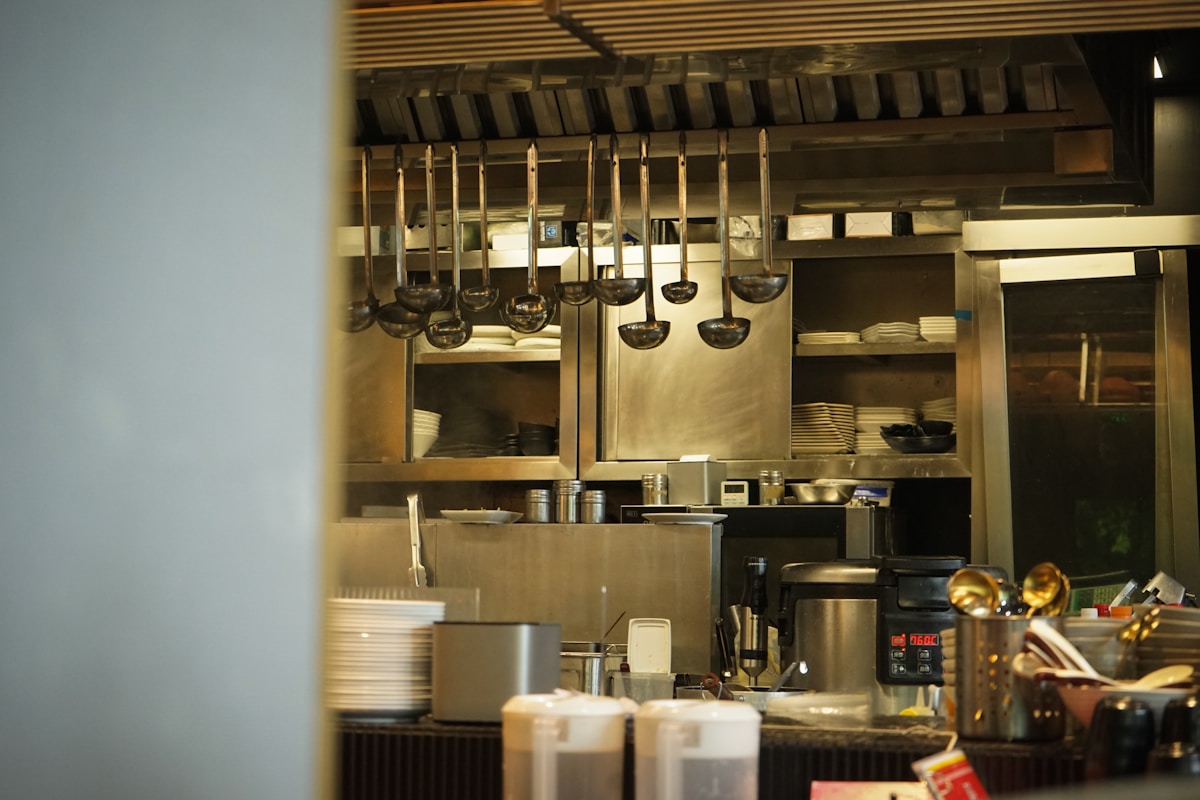
Have you ever walked into a new kitchen and felt your stomach drop? The air is thick with the smell of garlic and something searing, someone yells “BEHIND,” and a pan clatters. It’s a whirlwind of controlled chaos, and if your only experience is the predictable, systematized rhythm of a fast-food line, it can feel like you’ve landed on a different planet.
I’ve heard from so many new cooks, just like you, who feel what they call “stunted” or “incompetent” after making this exact leap. You’ve got years of experience keeping cool under pressure and moving fast, but suddenly you’re faced with a pile of whole carrots instead of a pre-portioned bag, and the confidence you built evaporates.
Let’s take a deep breath. I want to tell you a secret that every seasoned chef knows: your fast-food experience is valuable. And the feeling of being completely lost is normal. Everyone starts somewhere, and today, we’re going to build a roadmap to get you from feeling overwhelmed to feeling confident and capable in your new whites.
Why It Feels So Different (And That’s Okay!)
The first step is understanding why this transition is so jarring. It’s not that you’re a bad cook; you’ve just been playing a completely different sport.
Fast-food kitchens are built on systems. The goal is perfect replication, speed, and consistency. The recipes are engineered to be foolproof. The fries are pre-cut, the sauces come from a dispenser, and the cook times are programmed into the fryer. Your job was to execute that system flawlessly, and you probably got very, very good at it.
A restaurant kitchen, on the other hand, is built on skills and senses. The goal is to apply foundational techniques to raw ingredients to create something delicious. It’s about touch, taste, smell, and judgment. Think of it this way: working in fast food is like being an expert at assembling a piece of IKEA furniture using a perfect set of instructions. Working in a restaurant is like being a woodworker who starts with a raw plank of wood and has to cut, shape, and join it into a beautiful chair.
Your fast-food background gave you incredible superpowers: speed, the ability to handle a rush, an ingrained sense of food safety, and stamina. You know how to work on a team when the tickets are flying. Those are things you can’t easily teach! You’re not starting from scratch; you’re just learning to apply your strengths in a new way.
Your New Kitchen Superpowers to Master
Instead of feeling overwhelmed by everything you don’t know, let’s focus on the building blocks. If you can get a handle on these four areas, everything else will start to click into place.
-
Knife Skills: This is non-negotiable. In a restaurant, you build dishes from the ground up, and that starts with a knife. Consistent cuts aren’t just about making food look pretty; they ensure everything cooks evenly. A tiny piece of carrot will turn to mush while a giant chunk is still raw. Your new best friends are the basic cuts: the dice (small cubes), the julienne (matchsticks), and the brunoise (tiny, tiny dice).
-
Mise en Place: This is a fancy French term for a simple, life-saving concept: “everything in its place.” It means having every single ingredient for your station prepped, measured, and organized in little containers before service starts. This is the secret to how restaurant kitchens handle the dinner rush without imploding. It requires foresight and organization, a step beyond just grabbing the next bag from the freezer.
-
Understanding Heat: Your new stove doesn’t just have an “on” button. You’ll learn the vast difference between a gentle simmer for a delicate sauce (around 185-205°F or 85-96°C) and a ripping hot sear on a steak in a cast-iron pan (upwards of 450°F or 232°C). You’ll learn to control the heat, to listen to the sizzle of oil, and to know when a pan is properly preheated just by the way it looks. (Your future self will thank you for learning this.)
-
Tasting, Tasting, Tasting: In fast food, the seasoning is in the pre-made sauce. In your new kitchen, you are the seasoning expert. You’ll have a spoon in your pocket to taste everything you make. Does this sauce need more salt to brighten the flavors? A squeeze of lemon juice for some acid to cut the richness? A knob of butter to make it silky? This is where cooking becomes creative, and it’s a skill you build one taste at a time.
A Practical Game Plan for Your First 90 Days
Okay, theory is great, but what should you actually do when you clock in tomorrow? Here is a simple, manageable plan to build real momentum.
-
Weeks 1-4: Be a Sponge. Your primary goal is to watch, listen, and absorb. Pick one station—whether it’s pantry, grill, or fry—and aim to understand it inside and out. Don’t be afraid to ask questions, but be smart about when you ask. The middle of a frantic dinner service is not the time. Wait for the quiet prep time before service or during cleanup. Carry a tiny notebook and a pen. When the chef shows you how to plate the salmon dish, sketch it out. Write down the ingredients for the house vinaigrette. This shows you’re serious and saves you from asking the same question twice.
-
Weeks 5-8: Practice at Home. You don’t get better at basketball by just watching games; you have to shoot hoops. The same goes for cooking. Buy a 5-pound bag of onions or potatoes—they’re cheap!—and spend 20 minutes a few nights a week practicing your knife cuts. Put on some music, watch a tutorial video, and just chop. Don’t worry about speed; focus on making every single piece the exact same size. This muscle memory will translate directly to the prep list at work.
-
Weeks 9-12: Own One Thing. Find one small thing on your station and decide to become the absolute master of it. Maybe it’s making the perfect emulsion for a salad dressing that never breaks. Maybe it’s blanching the green beans so they are always perfectly crisp-tender and bright green. Or maybe you can create a “dessert portfolio,” as one young cook I read about did, by experimenting with simple recipes at home. Having one area where you feel deeply competent is a massive confidence booster that will spill over into everything else you do.
The Most Important Skill Isn’t About Food
I’m going to be honest. A good chef would rather hire someone with a fantastic attitude and zero experience than a skilled cook who is arrogant and unwilling to learn. Your mindset is your single greatest asset right now.
-
Stay Humble and Hungry: Accept that you are a beginner here. Leave your ego at the door. Say “Yes, Chef.” Be the first to volunteer for the less glamorous jobs, like peeling potatoes or cleaning the walk-in cooler. A hunger to learn is more valuable than any existing skill.
-
Communicate Constantly: Learn the language of the kitchen. “Behind you!” when you’re walking behind someone with a hot pan. “Corner!” when you’re coming around a blind corner. “Hot!” when you’re carrying something hot. This isn’t just kitchen slang; it’s the language of safety and teamwork.
-
Learn from Your Mistakes: You are going to burn something. You will misread a ticket. You will over-salt the soup. (I once spent an hour carefully picking herbs only to toss them in the wrong pot!) It happens to everyone. The key is how you handle it. Own it immediately, tell your chef, ask how to fix it or do it better next time, and move on. Don’t hide it. Honesty builds trust way faster than perfection.
This transition is a marathon, not a sprint. You’ve already proven you can handle pressure and hard work. Now, you’re just adding a new layer of artistry and technique. Be patient with yourself, stay curious, and celebrate the small victories. You absolutely have what it takes.
Try This Tonight: Grab one onion. Just one. Look up a video on the “pole-to-pole” method for dicing an onion. Follow the steps slowly. Your only goal is not speed, but consistency. Try to make every little square the same size. Feel the knife in your hand. Pay attention to how you’re holding it. That’s it. You just laid a foundational brick for your entire culinary career. Welcome to the kitchen.