


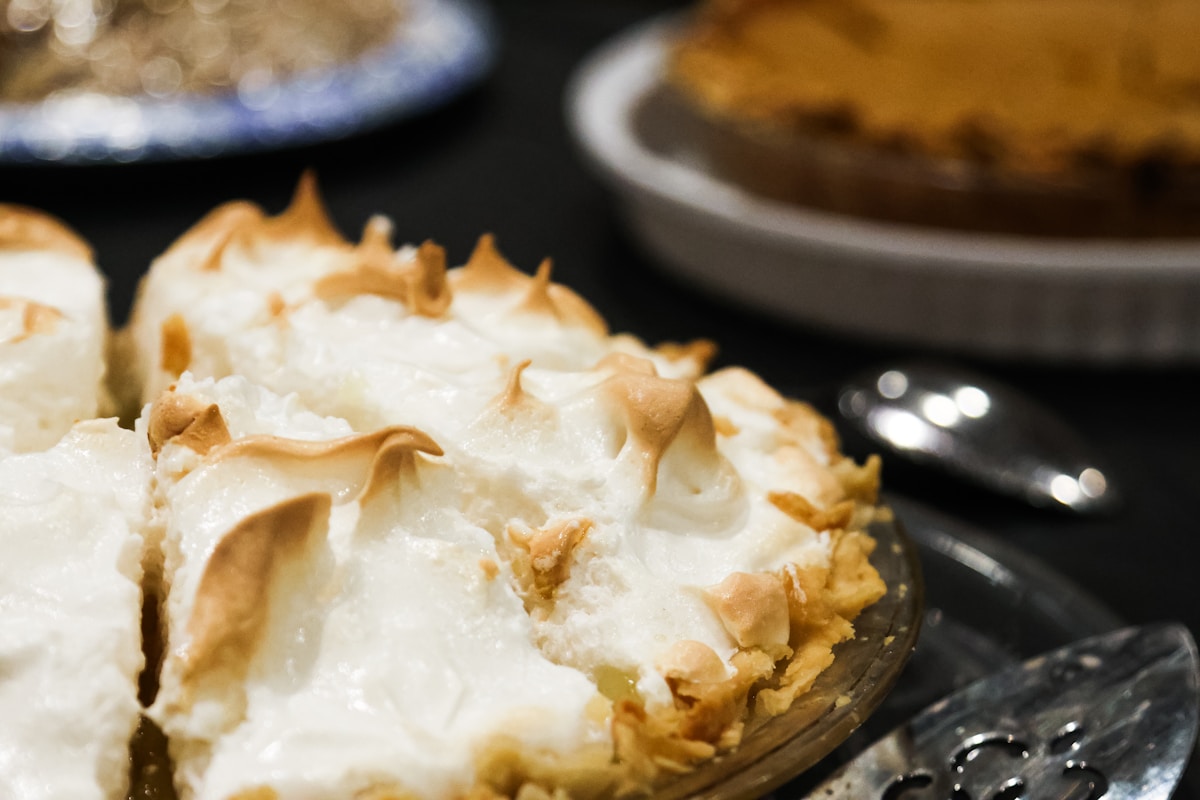
There’s a moment in baking that feels like pure magic. You pull a perfectly set, gloriously dense cheesecake from the fridge. Its surface is a flawless ivory canvas. Then, you crown it with pillowy clouds of meringue, toast the peaks to a beautiful crème brûlée brown, and present it to a chorus of oohs and aahs. It’s a showstopper.
But there’s another, more tragic version of this story. A few hours later, you notice it: a sticky, clear syrup pooling around the base of your masterpiece. The meringue has started to ‘weep,’ creating a sugary moat that turns the top of your cheesecake into a soggy disappointment. Or worse, when you go to slice it, the entire topping slides off in one sad, slippery sheet.
If this has happened to you, know that you’re not alone. This is one of those baking challenges that feels personal, but I promise it’s just chemistry. And like any chemical reaction, we can control it. The secret isn’t a magic ingredient; it’s understanding the relationship between a cold, moist cheesecake and a delicate egg-white foam. Let’s break down the science and build a foolproof method for that perfect, stable, torch-able topping.
The Science of a Weeping Meringue
At its core, a meringue is a foam—a delicate structure of air bubbles trapped within a network of egg white proteins. Sugar plays a dual role: it adds sweetness and, crucially, it helps stabilize this protein network. When a meringue ‘weeps,’ it’s undergoing a process called syneresis. The protein structure begins to collapse, releasing the water and dissolved sugar it was holding.
What causes this collapse on a cheesecake? Two main culprits:
-
Moisture: A cheesecake is a baked custard. It’s rich, dense, and holds a significant amount of moisture. When you place a porous meringue on top of it, the meringue acts like a sponge, drawing moisture up from the cheesecake’s surface. This excess water destabilizes the protein-sugar structure, causing it to break down and leak.
-
Instability: Not all meringues are created equal. The most common type, French meringue, is simply raw egg whites whipped with sugar. It’s light and airy, but it’s also the most fragile. Its structure is not strong enough to withstand the moisture and temperature shock of sitting on a cold, damp cheesecake.
So, the solution is two-fold: we need to use a meringue that is structurally sound and create the best possible conditions for it to succeed. This means choosing the right recipe and preparing our cheesecake canvas perfectly.
The Meringue Showdown: French vs. Swiss vs. Italian
To build a meringue that won’t fail, we need to cook it. Cooking the egg whites with the sugar creates a far more stable, durable, and marshmallow-like foam that can stand up to the challenge. This leaves us with two excellent candidates.
-
French Meringue (The One to Avoid Here): This is made by gradually adding sugar to whipping raw egg whites. It’s perfect for folding into batters or making light, crisp meringue cookies that will be baked dry in the oven. For topping a cheesecake, it’s a guaranteed failure. The uncooked proteins and undissolved sugar crystals make for a weak structure that will weep and slide almost immediately.
-
Swiss Meringue (The Home Baker’s Hero): This is our gold standard for this task. In the Swiss method, you gently heat egg whites and sugar together over a double boiler (a bain-marie) until the sugar completely dissolves and the mixture reaches about 160°F (71°C). Then, you whip it until it’s a thick, glossy, and incredibly stable foam. The heat dissolves the sugar perfectly and begins to set the egg proteins, creating a robust structure that resists weeping. It has a dense, marshmallowy texture that is just divine when toasted.
-
Italian Meringue (The Professional’s Choice): This is the most stable meringue of all. It’s made by whipping egg whites while slowly streaming in a hot sugar syrup that has been cooked to the ‘soft-ball’ stage, around 240°F (115°C). The scorching hot syrup fully cooks the egg whites, creating an exceptionally smooth and durable meringue. It’s fantastic, but it requires careful handling of hot syrup and is a bit more technically demanding than the Swiss method. (If you’re juggling other kitchen tasks, the Swiss method is much more forgiving.)
For reliability and texture, I almost always recommend the Swiss meringue for topping cheesecakes.
Your Step-by-Step Guide to a Perfect Swiss Meringue
Ready to build a meringue that stands tall? Let’s walk through it. The most critical, non-negotiable first step is this: your cheesecake must be completely and thoroughly chilled. I mean refrigerator-cold, for at least 6 hours, and preferably overnight. A cool or room-temperature cake will only accelerate the weeping process.
Ingredients:
- 4 large egg whites (about 120g), at room temperature
- 1 cup (200g) granulated sugar
- 1/4 teaspoon cream of tartar (This helps stabilize the egg whites)
- 1 teaspoon pure vanilla extract
Equipment:
- A stand mixer with a whisk attachment (A KitchenAid is ideal for this.)
- A metal or glass mixing bowl (Do not use plastic, as it can retain oils that prevent whipping.)
- A small saucepan
- An instant-read thermometer
- An offset spatula
Method:
-
Prepare the Double Boiler: Fill your saucepan with about an inch of water and bring it to a gentle simmer. Place your clean mixer bowl on top, ensuring the bottom of the bowl does not touch the water.
-
Heat the Mixture: Add the egg whites, sugar, and cream of tartar to the mixer bowl. Whisk them together constantly by hand. You must keep the mixture moving to prevent the eggs from scrambling.
-
Check the Temperature: Continue whisking until the mixture reaches 160°F (71°C) on your thermometer. The heat is dissolving the sugar and making the egg whites safe to eat. A great kitchen hack here is to test for texture: carefully rub a tiny bit of the mixture between your fingers. If it feels completely smooth, the sugar is dissolved. If it feels grainy, keep whisking over the heat.
-
Whip it Good: Carefully transfer the hot bowl to your stand mixer fitted with the whisk attachment. Start on medium-low speed and gradually increase to high. Let it whip for 8-10 minutes. You will see it transform from a hot syrup to a brilliant white, thick, and glossy meringue. It’s done when it holds stiff, dramatic peaks and the outside of the bowl feels neutral and cool to the touch.
-
Add Flavor: Turn the mixer down to low and add the vanilla extract, mixing just until combined. Your meringue is now ready for the cheesecake.
Application and the Art of the Torch
Working quickly while the meringue is at its peak texture, dollop it onto the center of your fully chilled cheesecake. Use an offset spatula to gently spread it towards the edges, leaving a small border.
Now for the fun part. The goal is not just to spread it, but to create texture—swoops, swirls, and tall peaks. This is what will catch the flame and create that beautiful toasted look. Don’t be shy; an uneven, rustic surface looks much better than a perfectly flat one.
To toast it, you have two options:
-
Culinary Torch (Recommended): A small kitchen torch (brands like Iwatani are fantastic and reliable) gives you ultimate control. Hold the flame a few inches from the surface and keep it constantly moving. Concentrate on the highest peaks, letting them get a deep brown, while gently kissing the valleys with color. The smell of toasting sugar is your reward.
-
Oven Broiler (Use with Extreme Caution): If you don’t have a torch, you can use your broiler. Move an oven rack to the highest position and preheat the broiler. Place the cheesecake on a baking sheet and put it in the oven. Leave the door ajar and DO NOT walk away. It will go from pale to burnt in under a minute. Watch it like a hawk and pull it out the second it achieves the color you want. (Honestly, a torch is a worthy investment for this alone.)
Troubleshooting Common Meringue Disasters
Even with a great recipe, things can go sideways. Here’s how to fix them.
-
Problem: My meringue is grainy.
- Cause: The sugar didn’t fully dissolve in the heating stage.
- Fix: Next time, rely on both your thermometer and the finger-rub test. Don’t rush this step; it’s the foundation for a smooth texture.
-
Problem: My meringue won’t whip to stiff peaks.
- Cause: A trace of fat or grease is the enemy of egg whites. This could be a speck of yolk in your whites, or residual oil in a plastic bowl or on your whisk.
- Fix: Be meticulous. Use a spotless glass or metal bowl. When separating your eggs, do it one by one into a small bowl before adding the white to your main bowl. That way, if one yolk breaks, it doesn’t contaminate the whole batch.
-
Problem: I did everything right, but it still wept a little the next day!
- Cause: Even a stable Swiss meringue isn’t invincible. Over time, especially in a humid refrigerator, a tiny bit of weeping is possible.
- Fix: This leads to my most important practical tip: For best results, top and torch your cheesecake on the day you plan to serve it. You can make the cheesecake a day or two ahead, but apply the meringue topping as close to serving time as possible for the best texture and appearance.
By choosing the right technique and understanding the simple science behind it, you can leave watery, sliding meringues in the past. You’re not just following a recipe; you’re controlling a chemical reaction. And the result is a truly spectacular dessert that is as stable and delicious as it is beautiful.


