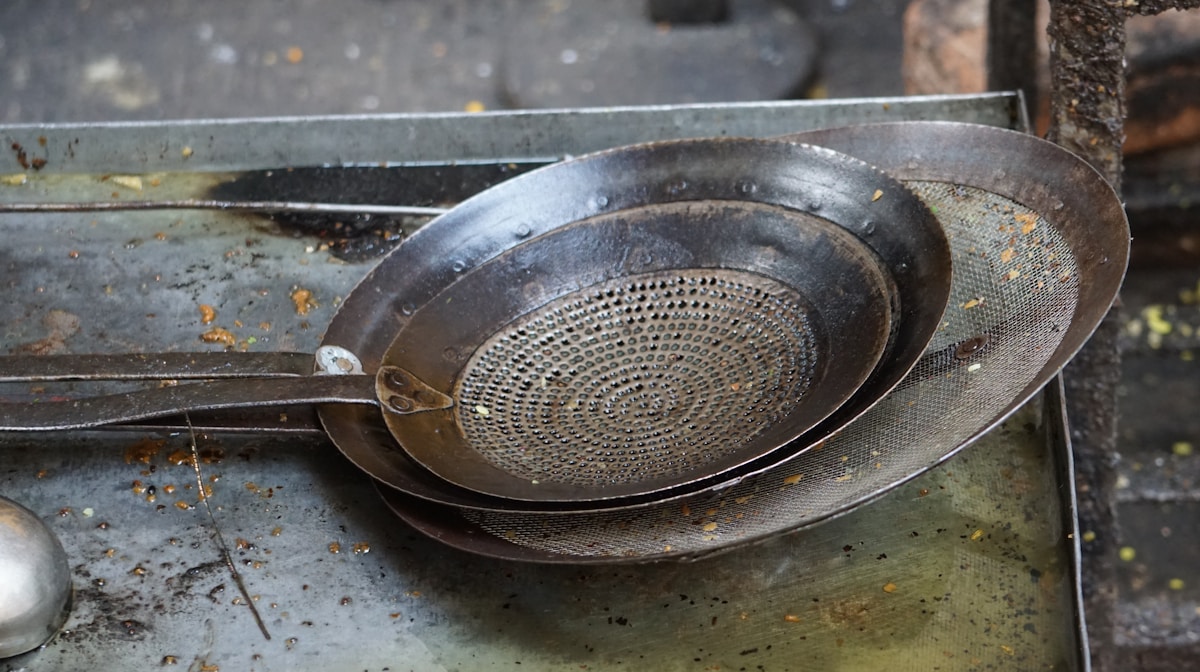
It’s a heart-sinking moment for any home cook. You pull out that trusty cast iron skillet from the back of the cupboard, or maybe you scored one for a few bucks at a garage sale, and there it is: a bloom of angry orange rust. Your first thought is probably, “Well, this is garbage now.” It feels like a fatal flaw, a point of no return.
But what if I told you that throwing out a rusted cast iron pan is like throwing out a car because it has a flat tire? With a little bit of effort and some basic household supplies, you can bring that skillet back from the brink. In fact, it’s almost impossible to permanently ruin a cast iron pan short of physically cracking it. That rust is just surface deep. Today, we’re going to walk through the process of resurrecting that pan, turning a rusty discard into a kitchen workhorse that will probably outlive you.
The Myth of Ruined Cast Iron
First, let’s get one thing straight: cast iron is tough. It’s a solid hunk of iron alloy. Unlike pans with delicate non-stick coatings that can be scratched and rendered useless, cast iron’s cooking surface is something you create and maintain yourself. This surface is called “seasoning,” which is just a layer of polymerized oil baked onto the metal. When the seasoning wears away or the pan is exposed to moisture for too long, the iron underneath oxidizes. That’s rust.
Think of it as the pan returning to its natural state. Your job is simply to remove that oxidation and re-establish the protective seasoning. Communities like the r/castiron subreddit are filled with incredible before-and-after photos that prove this point daily. People rescue pans that have been sitting in barns for 50 years. Your little bit of cupboard rust is a weekend project, not a kitchen tragedy.
The philosophy here is pure value. Why spend $30-$50 on a brand-new Lodge skillet when you can restore a vintage Griswold or a forgotten hand-me-down to perfect working condition for the cost of some vinegar and oil? Let’s get to it.
Your Rescue Kit What You Will Need
You don’t need a fancy workshop for this. Most of what you need is likely already in your kitchen or garage. This isn’t a high-tech operation; it’s about applying a little chemistry and some elbow grease.
Here’s your shopping list:
- White Vinegar: Standard, cheap distilled white vinegar is perfect. It’s the acid we’ll use to dissolve the rust.
- Steel Wool: Get a couple of pads. Grade #00 is great, but whatever you find at the hardware or grocery store will work. For really stubborn rust, a wire brush attachment for a drill can speed things up, but it’s not necessary.
- A Scouring Pad or Stiff Brush: For the initial cleaning and scrubbing.
- Rubber Gloves: You’ll be glad you have them, especially during the scrubbing phase.
- A Basin or Sink Stopper: You need something large enough to submerge the pan in a vinegar solution.
- A High-Smoke-Point Oil: This is for re-seasoning. Good options include grapeseed oil, canola oil, avocado oil, or even melted Crisco. Avoid olive oil, as its smoke point is too low.
- Paper Towels: Lots of them.
That’s it. For under $10 in supplies, you’re ready to perform a kitchen miracle.
Step-by-Step The Stripping and Rust Removal Process
This is where the transformation happens. We need to strip the pan down to its raw, gray, metallic self. Goodbye rust, goodbye old flaky seasoning.
Step 1: The Vinegar Soak
Create a 50/50 solution of white vinegar and water in your basin or sink. Make enough to completely submerge the rusted parts of the pan. Place the skillet in the bath and set a timer for 30 minutes. (Yes, it will smell a bit like a salad dressing experiment gone wrong.)
The acid in the vinegar will immediately start breaking down the rust. You might even see it fizzing a little. Crucial Tip: Do not leave the pan in the vinegar for more than an hour, tops. The acid attacks the rust, but if left too long, it will start to pit the iron itself. 30 minutes is usually the sweet spot.
Step 2: The Scrub Down
After the soak, take the pan out and get ready to scrub. This part takes the most effort. Using your steel wool and a bit of water, start scrubbing the rusted areas. The rust and old seasoning should start coming off as a murky, dark sludge. Keep scrubbing until you’ve removed all the orange and black gunk, revealing the bare, silver-gray metal underneath. Rinse the pan frequently to check your progress. You want it to be uniformly gray. If some spots are stubborn, you can return it to the vinegar bath for another 15-20 minutes, but don’t overdo it.
Step 3: The Critical Quick-Dry
This is the most important step in the entire process. Once you’ve rinsed the pan for the last time, the bare iron is completely exposed and incredibly vulnerable to moisture in the air. It can develop a thin layer of “flash rust” in a matter of minutes. To prevent this, you must dry it immediately and thoroughly.
First, dry it as much as you can with paper towels. Then, immediately place it on a stove burner over low heat. Let it sit for 5-10 minutes. The heat will evaporate every last molecule of moisture, leaving the pan bone dry and slightly warm, which is the perfect state for our next step.
Rebuilding the Foundation The Art of Re-Seasoning
With your pan stripped bare and perfectly dry, it’s time to build its new non-stick surface. Seasoning isn’t a layer of oil; it’s a layer of polymerized oil. We’re going to use heat to transform a thin coat of liquid fat into a hard, slick, plastic-like coating that bonds to the metal.
Step 1: Apply a Micro-Thin Layer of Oil
Preheat your oven to 450°F (232°C). While the oven heats up and your pan is still warm from the stove, pour a tiny amount of your high-smoke-point oil into the pan—I’m talking about a quarter-sized puddle. Now, take a paper towel and rub that oil over every single surface of the pan: inside, outside, the handle, everywhere. Get it into every nook and cranny.
Now for the pro-tip: Take a clean, dry paper towel and wipe it all off. All of it. It will look like you’ve removed all the oil, but you haven’t. An invisible, microscopic layer remains. This is exactly what you want. Applying too much oil is the number one mistake in seasoning; it results in a sticky, splotchy, uneven surface. (Trust me, wipe it all off. You want a micro-layer, not an oil slick.)
Step 2: The Bake
Place the oiled pan upside down on the center rack of your preheated oven. Placing it upside down prevents any excess oil from pooling on the cooking surface. Put a sheet of aluminum foil on the rack below to catch any potential drips.
Bake the pan for one solid hour. During this time, the oil will smoke as it undergoes its chemical transformation into a polymer. Make sure your kitchen is well-ventilated. After an hour, turn the oven off, but do not open the door. Let the pan cool down completely inside the oven, which will take another couple of hours.
Step 3: Cool and Repeat (Optional but Recommended)
Once the pan is cool enough to handle, you’ll see a new, dark, semi-matte surface. Your pan is now officially seasoned and ready to use. However, the best seasoning is built in thin layers. For a truly fantastic, durable surface right from the start, I highly recommend repeating the oiling and baking process two or three more times. Each layer will darken the pan and improve its non-stick properties.
Is It Worth It The Final Verdict
After a bit of soaking, scrubbing, and baking, you’ve done it. You’ve taken a piece of cookware destined for the scrap heap and turned it back into a high-performance kitchen tool. The total cost was maybe a few dollars and an afternoon of your time. The result is a pan that can sear a steak, fry an egg, and bake cornbread with the best of them—a pan that can last another hundred years.
Compare that to the alternative: tossing it out and buying a new one. You not only saved money, but you also participated in the long tradition of cast iron cooking—one of care, maintenance, and longevity. The next time you see a rusty skillet, don’t see a problem. See an opportunity.