


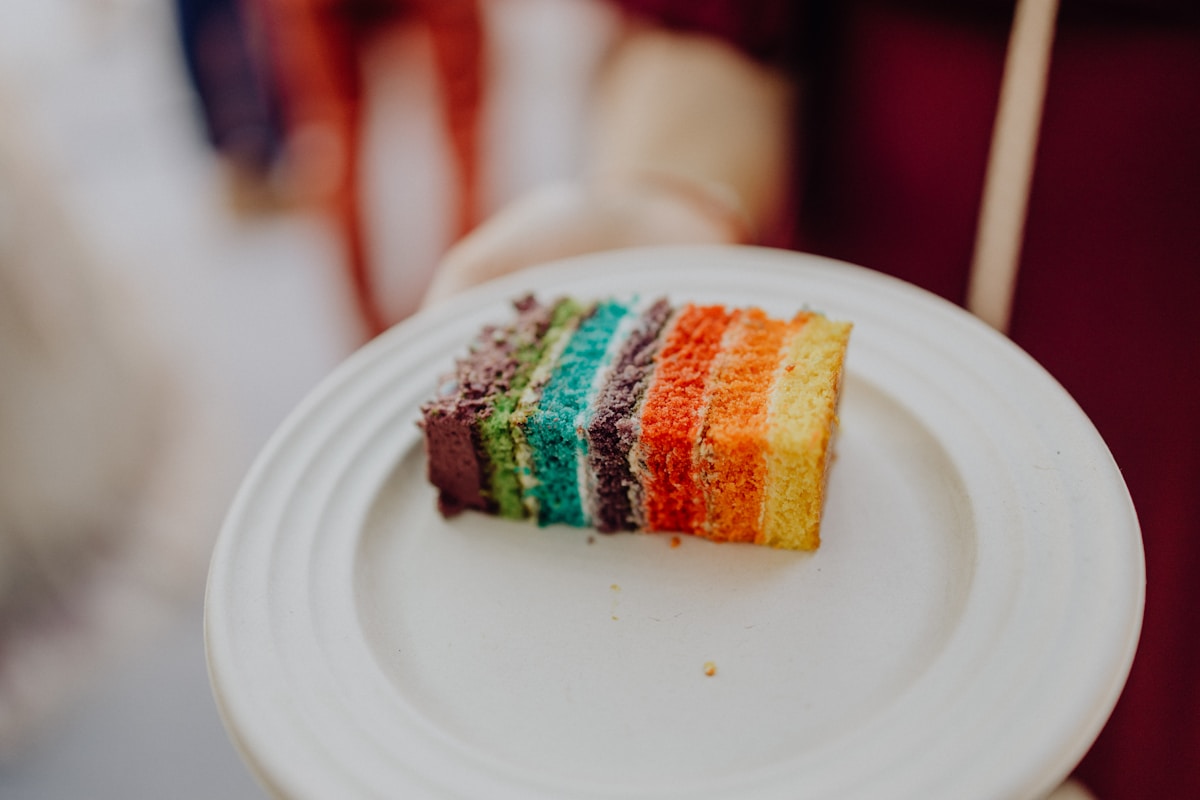
Have you ever scrolled through your social media feed and stopped dead in your tracks at the sight of a perfect rainbow bagel or a beautifully striped cinnamon roll, its swirls a vibrant celebration of color? It’s the kind of baking that looks like pure magic, a feat of kitchen wizardry reserved for the pros. You might think, “There’s no way I could ever make that.” I’m here to tell you that you absolutely can.
That stunning, crisp separation of colors isn’t magic; it’s a technique. And like any technique, it can be learned. It’s a method that turns your dough into a canvas, allowing you to tell a story, celebrate an identity, or simply bring a splash of pure joy to your table. From the beautiful Pride-themed bakes that fill our screens in June to festive holiday loaves, colorful dough is a powerful way to connect our food to our culture and our hearts. So, let’s pull back the curtain on this beautiful art form together.
The Secret is Stacking Not Swirling
The first and most important principle to understand is that creating those distinct, sharp lines of color comes from careful layering, not from swirling or kneading different colors together. If you simply dropped blobs of colored dough into a bowl and kneaded them, you’d end up with a muddled, brownish-gray mass. (A fun experiment for kids, perhaps, but not what we’re aiming for here.)
The goal is to create separate, solid-colored sheets of dough and then stack them like pages in a book. When you roll this stack up and slice it, each slice reveals a cross-section of those layers, creating the iconic swirl or stripe pattern. This methodical approach is what preserves the integrity and vibrancy of each individual color.
Think of it like working with modeling clay. You don’t mash the colors together if you want a rainbow; you lay them side-by-side or on top of one another. The same logic applies here. This simple shift in thinking—from mixing to layering—is the foundational secret to unlocking a world of colorful baking.
Your Toolkit for Technicolor Baking
Before you start, gathering the right tools and ingredients will make the process smoother and far more enjoyable. The right dough and the right coloring agent are especially critical.
The Best Dough for the Job: You need a dough that is sturdy, pliable, and forgiving. Enriched doughs are the absolute champions for this technique. These are doughs that contain higher amounts of fat, sugar, and sometimes eggs, like:
- Cinnamon Roll Dough: A classic sweet dough that’s a dream to work with.
- Challah Dough: Its beautiful texture and slight sweetness make it a fantastic choice for striped braided loaves.
- Brioche Dough: Rich and buttery, it holds its shape wonderfully.
You can certainly try this with leaner doughs like a basic bread or even sourdough, but be mindful. The longer fermentation times of sourdough can sometimes slightly dull the vibrancy of colors. For your first attempt, I highly recommend a reliable sweet dough.
The Only Food Coloring to Use: This is non-negotiable: you must use gel-based food coloring. Liquid food coloring, the kind you find in little teardrop-shaped bottles at the supermarket, will add too much extra moisture to your dough. This can throw off the hydration, making it sticky and difficult to handle. Gel colors (from brands like AmeriColor or Wilton) are highly concentrated pigments with very little liquid. A tiny dab provides an explosion of color without altering your dough’s texture. For natural options, you can experiment with powders like beet root (pink/red), turmeric (yellow), or spirulina (green/blue), but be aware they can sometimes add a subtle flavor and may not be as intensely vibrant as gels.
Essential Equipment:
- Kitchen Scale: For dividing the dough into perfectly equal portions. This is key for uniform stripes!
- Bench Scraper: Invaluable for dividing dough cleanly and lifting it from your work surface.
- Rolling Pin: A simple wooden or marble one works perfectly.
- Ruler or Measuring Tape: Don’t eyeball it! Precision is your friend here.
- Disposable Gloves: Unless you want rainbow-stained hands for a few days.
- Unflavored Dental Floss: My secret weapon for the cleanest cut. More on that later!
A Step-by-Step Guide to Creating Striped Dough
Ready to make some magic? We’ll use a basic sweet dough as our canvas, perfect for making cinnamon rolls. This recipe makes about 12 standard-sized rolls.
Base Sweet Dough Ingredients:
- 1 cup (240ml) whole milk, warmed to about 110°F (43°C)
- 2 ¼ teaspoons (1 packet) active dry yeast
- ½ cup (100g) granulated sugar, divided
- 1 large egg + 1 egg yolk, at room temperature
- ¼ cup (57g) unsalted butter, melted
- 4 cups (480g) all-purpose flour
- 1 teaspoon salt
The Process:
-
Activate the Yeast: In a large bowl, combine the warm milk, yeast, and 1 tablespoon of the sugar. Let it sit for 5-10 minutes until it becomes foamy. This tells you your yeast is alive and ready to work.
-
Mix the Dough: Add the remaining sugar, egg, egg yolk, and melted butter to the yeast mixture. Whisk to combine. Add the flour and salt, and mix with a spoon until a shaggy dough forms. Turn the dough out onto a lightly floured surface and knead for 8-10 minutes until it’s smooth and elastic. It should pass the “windowpane test.” (You can stretch a small piece thin enough to see light through it without tearing.)
-
First Rise: Place the dough in a lightly oiled bowl, cover it, and let it rise in a warm place for 60-90 minutes, or until doubled in size.
-
Divide and Conquer: Gently deflate the risen dough. Now, weigh the entire ball of dough on your kitchen scale. Divide that total weight by the number of colors you want to use. For a three-color stripe, divide by three. Use your bench scraper to cut the dough into precise, equal portions.
-
The Art of Coloring: Put on your gloves! For each portion of dough, flatten it slightly, add a small dab of gel food coloring to the center, and fold the dough over it. Begin kneading. It will look marbled and messy at first, but keep kneading until the color is completely uniform and streak-free. Repeat for each color, cleaning your work surface between each one to avoid color transfer.
-
Roll and Stack: Now for the main event. On a lightly floured surface, roll one colored dough portion into a neat rectangle. Use your ruler! Let’s aim for a rectangle that’s about 8 inches wide and 12 inches long. Set it aside. Repeat with the next color, rolling it to the exact same dimensions. Place this second rectangle directly on top of the first. Repeat with all your colors until you have a neat stack.
-
The Pro Tip - Chill Out: This is a game-changer. Wrap your stacked dough block in plastic wrap and place it in the refrigerator for 20-30 minutes. This firms up the dough slightly and makes the colors less likely to bleed or smear in the next step.
-
The Final Roll & Fill: Take your chilled stack and gently roll it out a little further, maybe to 10x15 inches, to meld the layers together. Now, spread your filling (for cinnamon rolls, a mix of softened butter, brown sugar, and cinnamon is perfect) evenly over the top layer. Starting from a long edge, roll the entire slab up into a tight log.
-
The Clean Cut: Do not use a dull knife! A dull blade will squish your log and smear the colors. Use a very sharp chef’s knife or, my favorite trick, a piece of unflavored dental floss. Slide the floss under the log, bring the ends up, cross them over the top, and pull. It creates a perfectly clean, compression-free cut every single time. Slice into 1 to 1.5-inch rolls.
-
Second Rise & Bake: Arrange your beautiful rolls in a baking dish, cover, and let them rise for another 30-45 minutes. Bake at 375°F (190°C) for 20-25 minutes, or until golden brown. Let them cool slightly before adding a glaze or icing.
Beyond Cinnamon Rolls Creative Ideas
Once you’ve mastered this technique, the possibilities are endless! Don’t just stop at cinnamon rolls. Try applying the same principles to:
- Braided Loaves: Instead of stacking, roll each colored dough into a long rope and braid them together for a stunning challah or brioche.
- Rainbow Bagels: After creating your log, simply join the ends to form the classic bagel shape before boiling and baking.
- Pinwheel Cookies: This technique is perfect for slice-and-bake sugar cookies. Just make your colored log, chill it well, and slice into thin cookies.
- Colorful Pasta: Yes, really! The same layering principle can be applied to pasta dough for beautiful striped farfalle or ravioli.
The Story in the Swirl
Baking has always been more than just sustenance; it’s a form of expression, a way to share love, and a method for celebration. Creating a loaf of bread with carefully placed stripes of color is an act of intention. It’s taking the time to make something not just delicious, but also visually meaningful.
When bakers create rainbow-striped goods during Pride Month, they are doing more than making a tasty treat. They are baking their support, their identity, and their joy into something that can be shared with the world. It’s a delicious form of solidarity. The same is true for the red and green swirls in a Christmas loaf or the team colors in a batch of game-day rolls.
Food tells the story of who we are. By learning a technique like this, you’re not just adding a new skill to your kitchen repertoire; you’re adding a new color to your palette for storytelling. Your oven is your canvas. Now go create something beautiful.


