


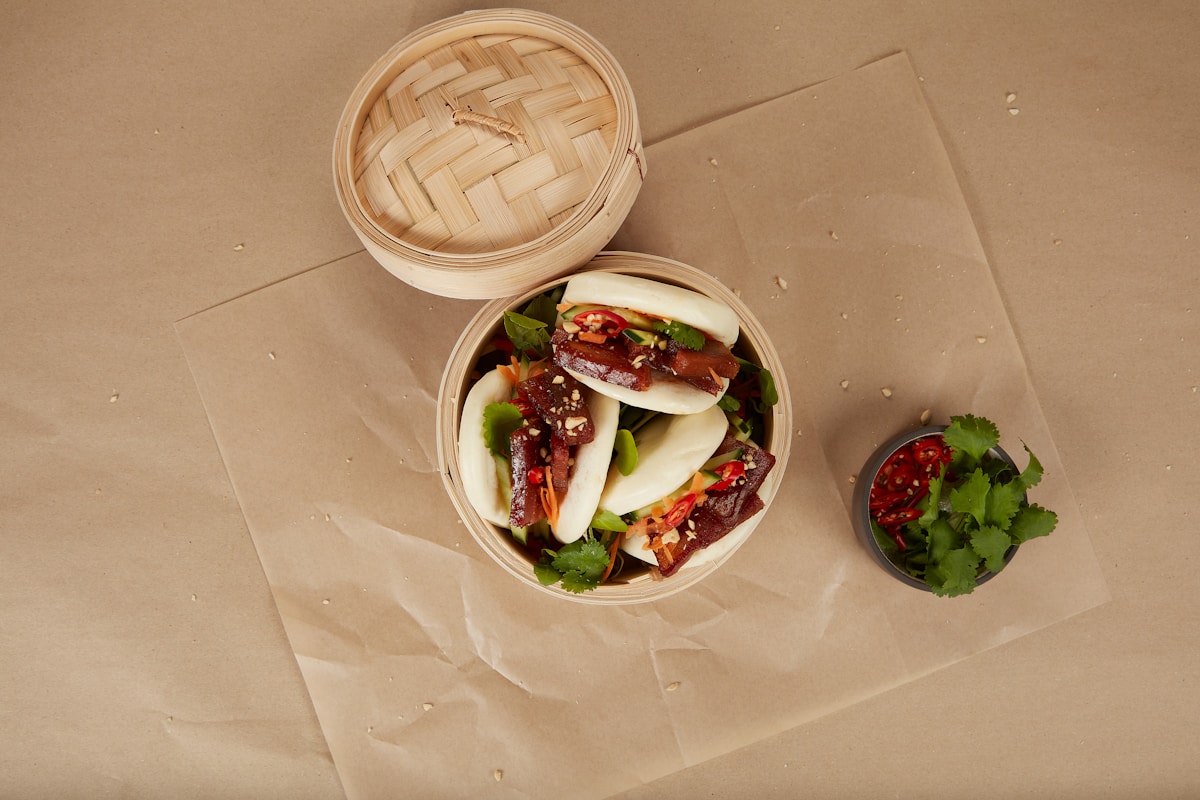
Have you ever lifted the lid of your steamer, heart full of hope, only to find your homemade bao buns are… not quite right? Instead of the pristine, cloud-like pillows you get at a favorite dim sum spot, yours are a bit dense, slightly yellow, and maybe even a little wrinkled. It’s a common kitchen heartbreak, but I’m here to tell you that restaurant-quality bao are absolutely achievable at home.
Food is a story, and the story of bao is one of comforting warmth and incredible craft. These steamed buns are a cornerstone of Chinese cuisine, a perfect, pillowy vehicle for everything from savory Char Siu pork to sweet red bean paste. The journey to mastering them is a lesson in patience and science, and today, we’re going to walk that path together. Forget disappointment; let’s get you to bao bun bliss.
The Flour Secret Why All-Purpose Isn’t Always the Best Purpose
The number one culprit behind dense, off-white bao is often the flour. While your standard all-purpose flour is a versatile workhorse, it usually has too much protein for the delicate, tender crumb we want in a classic steamed bun.
Here’s the breakdown:
- Bread Flour: Has the highest protein content (12-14%). This develops a lot of gluten, which is fantastic for chewy bread loaves but results in tough, chewy bao. Avoid this completely.
- All-Purpose (AP) Flour: Typically has a protein content of 10-12%. Unbleached AP flour, a favorite for many bakers, can give your buns a yellowish tint. If you must use AP, a bleached version (like King Arthur’s) will yield a whiter result because the bleaching process softens the protein.
- Cake Flour or Pastry Flour: These are the low-protein champions (7-9%). They create a super-fine, tender crumb and are excellent choices for fluffy bao. The downside is they can sometimes be too delicate to handle easily.
- Specialty Bao Flour: This is your golden ticket. Often found in Asian markets, these flours are specially milled and have the perfect low protein content to produce brilliantly white, soft, and fluffy buns. If you see a bag labeled “Hong Kong Flour,” grab it!
For a reliable starting point, a 50/50 mix of all-purpose flour and cake flour strikes a wonderful balance between structure and tenderness. It’s my go-to when I don’t have specialty flour on hand.
The Art of the Knead and Proof
Once you have the right flour, the next step is developing the dough correctly. It’s a delicate dance between developing enough gluten for a smooth surface but not so much that the buns become tough.
Whether you’re using a stand mixer (like a KitchenAid with a dough hook) or your hands, aim for a dough that is smooth, soft, and slightly tacky, but doesn’t stick to your fingers excessively. Knead for about 10-12 minutes by machine on low speed, or 15-20 minutes by hand. The goal is a dough that can pass the “windowpane test”—where you can stretch a small piece thin enough to see light through it without it tearing.
Proofing is equally critical. Over-proofing is the fast track to disappointment. When the yeast works for too long, it produces acids that give the dough a sour taste and, more tragically, weakens the gluten structure. An over-proofed bao will puff up beautifully in the steamer and then collapse into a sad, wrinkled dimple the moment it hits the air.
Kitchen Hack: To check if your dough has proofed perfectly, use the “poke test.” Gently press a floured finger about half an inch into the dough.
- If the indent springs back immediately, it needs more time.
- If the indent stays completely, it’s likely over-proofed.
- If the indent springs back slowly and only partially, it is just right. (Your future self will thank you for learning this.)
Mastering the Steam The Final Frontier
Your dough is perfect. Your filling is ready. Now for the final, crucial step: steaming. This is where the magic happens, and also where things can go wrong in an instant.
First, set up your steamer. A traditional bamboo steamer is ideal because its lid absorbs condensation, preventing water from dripping onto your perfect buns. If you only have a metal steamer, you can wrap the lid in a clean kitchen towel to catch the drips.
Cut out small squares of parchment paper, one for each bun. This prevents them from sticking to the steamer basket and allows steam to circulate freely. Place your shaped and proofed buns on their individual parchment squares inside the steamer, leaving at least 1-2 inches of space between them. They will expand significantly!
Here is the most important rule of steaming bao: Do not peek.
Bring the water in your wok or pot to a full, rolling boil before placing the steamer on top. Once the steamer is on, set a timer for 10-12 minutes (depending on the size of your buns) and walk away. Lifting the lid early causes a sudden drop in temperature, which will shock the buns and make them deflate instantly. (Yes, really.)
After the time is up, turn off the heat but leave the steamer on the pot with the lid on for another 5 minutes. This gradual temperature change helps the buns set and prevents them from wrinkling when they meet the cooler air.
A Simple Framework for Perfect Bao Dough
Ready to put this all into practice? Here is a basic ingredient list and method to get you started. This makes about 12 medium-sized buns.
Ingredients:
- 2 cups (250g) All-Purpose Flour
- 2 cups (240g) Cake Flour
- 2 teaspoons Instant Yeast
- 1/4 cup (50g) Granulated Sugar
- 1 teaspoon Baking Powder (for extra lift and whiteness)
- 1 cup (240ml) Warm Water or Milk (around 105°F / 40°C)
- 2 tablespoons Neutral Oil or Melted Lard
Method:
- Activate Yeast: In a small bowl, combine the warm water/milk, a pinch of the sugar, and the yeast. Let it sit for 5-10 minutes until foamy.
- Mix Dry Ingredients: In a large bowl or the bowl of your stand mixer, whisk together the flours, remaining sugar, and baking powder.
- Combine and Knead: Pour the yeast mixture and the oil into the dry ingredients. Mix until a shaggy dough forms, then knead for 10-15 minutes until smooth and elastic.
- First Proof: Place the dough in a lightly oiled bowl, cover it, and let it rise in a warm place for about 1 to 1.5 hours, or until doubled in size.
- Shape: Gently punch down the dough and divide it into 12 equal pieces. Roll each piece into a ball, then flatten it into a disc. Add your favorite filling (like seasoned ground pork or sweet red bean paste), or leave them plain as mantou.
- Second Proof: Place the shaped buns on their parchment squares in the steamer basket. Cover and let them rest for another 20-30 minutes, until they look slightly puffy.
- Steam: Following the rules above, steam over high, boiling water for 10-12 minutes. Rest for 5 minutes with the heat off before removing the lid.
Embracing the art of bao is a delicious adventure. It connects you to a rich culinary tradition and rewards you with the incredible satisfaction of creating something truly special from scratch. Don’t be discouraged by a few less-than-perfect attempts; each batch is a step closer to that perfect, pillowy, snow-white bun. Happy steaming!

