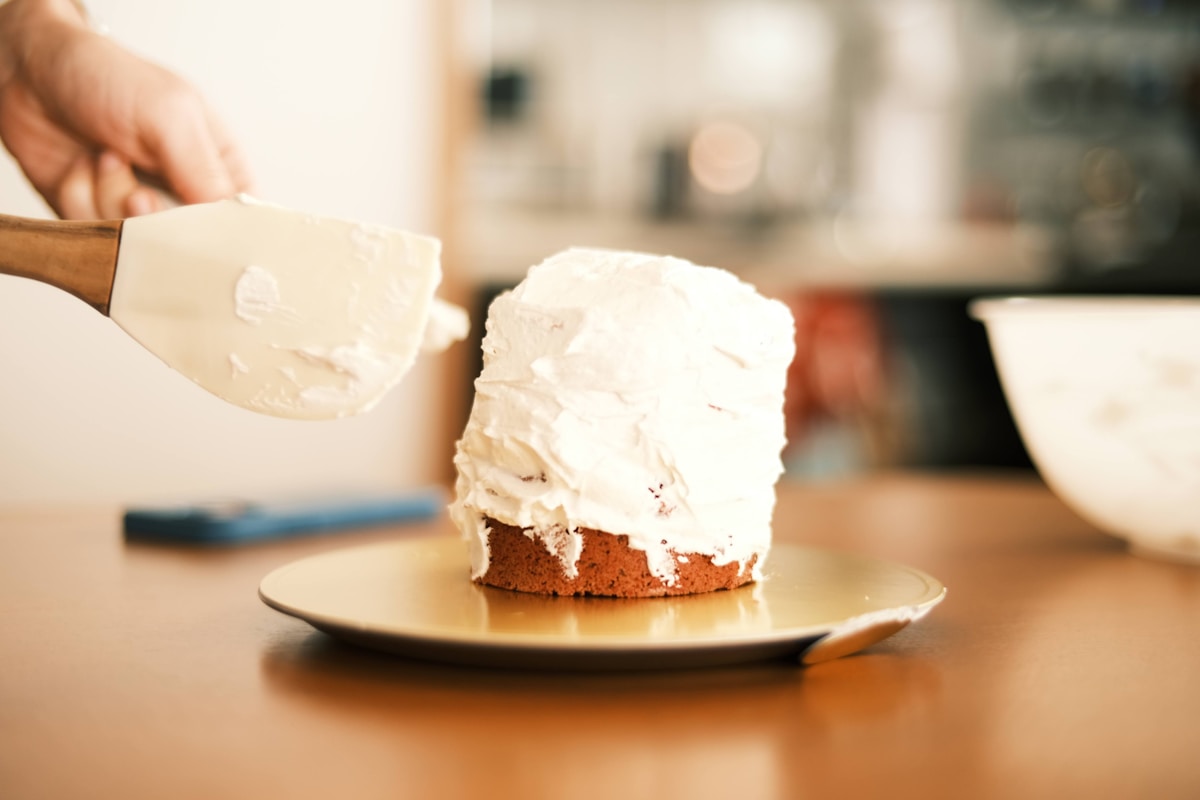
The Sweet Problem with Most Frostings
Have you ever been served a slice of visually stunning cake, only to find yourself scraping off the thick layer of frosting? You’re not alone. So often, the beauty of a cake is betrayed by a frosting that is achingly, cloyingly sweet. This is usually the fault of classic American buttercream, a simple mixture of powdered sugar and fat that can feel gritty and heavy, masking the delicate flavors of the cake itself.
For years, bakers have faced a choice: this intense sweetness, or the more technically demanding (and expensive) meringue-based buttercreams. But what if I told you there’s a third way? A frosting with the stability of buttercream but the light, ethereal texture of whipped cream, and a sweetness level you can actually control. Enter Ermine frosting, the vintage recipe that’s making a huge comeback for a very good reason.
What Exactly is Ermine Frosting A Baker’s Secret Weapon
Ermine frosting also goes by a few other names, like “cooked-flour frosting” or “heritage frosting,” which hints at its origins. This was, in fact, the original frosting for the classic Red Velvet Cake before cream cheese frosting took over. Its name, “ermine,” is said to come from its pure white color and luxurious, velvety texture, like the fur of the animal.
Unlike its powdered-sugar-based cousin, Ermine frosting begins with a surprising step: you cook a simple pudding. Flour, granulated sugar, and milk are whisked together and heated until the mixture thickens into a paste or roux. This starchy base is the scientific heart of the recipe. It’s cooled completely and then whipped, bit by bit, into softened butter.
So, what’s the magic here? It’s all about chemistry. By cooking the flour and milk, the starch granules gelatinize, absorbing liquid and creating a thick, incredibly stable structure. Because you use granulated sugar, it fully dissolves in the milk during the cooking process, meaning there is zero chance of the gritty texture that plagues powdered sugar frostings. When this cooled pudding is whipped into the butter, it creates a beautifully stable emulsion that’s shockingly light and smooth. (It’s chemistry you can eat.)
The Science of Silky Smooth A Step-by-Step Guide
Making this frosting is more about technique and temperature than anything else. Follow these steps precisely, and you’ll be rewarded with a frosting that will change the way you think about cake forever. This recipe makes enough to generously fill and frost a standard two-layer 8-inch or 9-inch cake.
Ingredients:
- 5 tablespoons (40g) All-Purpose Flour (King Arthur is a reliable choice)
- 1 cup (200g) Granulated Sugar
- 1/4 teaspoon Fine Sea Salt
- 1 cup (240ml) Whole Milk
- 1 cup (227g) Unsalted Butter, softened to a cool room temperature (about 67°F / 19°C)
- 1 1/2 teaspoons Pure Vanilla Extract
Equipment:
- Medium saucepan
- Whisk
- Stand mixer with a paddle attachment (a hand mixer also works)
- Rubber spatula
- Shallow bowl or dish
- Plastic wrap
Instructions:
-
Prepare the Pudding Base: In your cold saucepan (off the heat), whisk together the flour, granulated sugar, and salt. This dry-whisking step is crucial to prevent lumps. Slowly pour in the whole milk while whisking continuously until the mixture is completely smooth.
-
Cook the Roux: Place the saucepan over medium heat. Whisk constantly and thoroughly, scraping the bottom and corners. The mixture will begin to thicken. Keep whisking for about 5 to 8 minutes, until it becomes a very thick, pudding-like consistency. It should be thick enough that your whisk leaves distinct trails in the bottom of the pan. This step cooks out the raw flour taste and activates the starch.
-
Cool Completely (The Most Important Step): Immediately transfer the hot pudding to a shallow bowl to help it cool faster. Press a piece of plastic wrap directly onto the surface of the pudding. This prevents a skin from forming. Now, let it cool completely to room temperature. Do not rush this step! If it’s even slightly warm, it will melt the butter. (My kitchen hack: place the bowl in a larger bowl of ice water for 15-20 minutes to speed things up, but still make sure it’s not cold, just room temp.)
-
Whip the Butter: While the pudding cools, place your perfectly softened butter in the bowl of a stand mixer fitted with the paddle attachment. Beat on medium-high speed for a full 5 minutes. The butter should transform, becoming pale, light, and almost doubled in volume. This incorporates air, which is key to the final texture.
-
Combine and Emulsify: Once the pudding base is at room temperature, begin adding it to the whipped butter, one heaping tablespoon at a time, with the mixer on medium speed. Wait until each addition is fully incorporated before adding the next. This slow process builds a strong, stable emulsion. Scrape down the sides and bottom of the bowl periodically.
-
The Final Whip: After all the pudding has been added, the frosting might look a little soft. This is normal. Increase the mixer speed to medium-high and whip for another 2 to 4 minutes. You will see it transform into a light, fluffy, and voluminous frosting. Finally, beat in the vanilla extract.
Troubleshooting Your Ermine Frosting
Even with a precise method, baking can be fickle. Here are the most common issues and how to fix them, based entirely on chemistry.
-
Problem: My frosting is soupy and looks curdled.
- The Cause: Your emulsion broke. This almost always happens for one of two reasons: the pudding was still warm when you added it, or your butter was too soft/warm. The fat and water have separated.
- The Fix: Don’t throw it out! Place the entire mixing bowl in the refrigerator for 20 minutes. This will firm up the butter. Then, return it to the mixer and start beating on low, gradually increasing the speed to high. The emulsion should come back together into a smooth frosting.
-
Problem: My frosting feels greasy and heavy.
- The Cause: It’s under-whipped. The magic of this frosting is the air you incorporate at the end.
- The Fix: Just keep whipping! Put it back on the mixer at medium-high speed for another 3-5 minutes. You’ll see it lighten in both color and texture.
-
Problem: There are lumps in my frosting.
- The Cause: This stems from the pudding stage. Either the flour wasn’t fully whisked into the cold milk initially, or a skin formed while it was cooling.
- The Fix: Prevention is the best cure. Whisk thoroughly at the start and always press plastic wrap directly on the surface. If you do have lumps, you can try pushing the finished frosting through a fine-mesh sieve with a spatula. It’s a bit of work, but it can save the batch.
Flavor Variations and Perfect Pairings
The neutral, lightly sweet profile of Ermine frosting makes it a perfect canvas for other flavors.
- Chocolate Ermine: Melt 4 ounces (113g) of unsweetened or bittersweet chocolate and let it cool until it’s barely warm to the touch. Beat it into the finished frosting.
- Espresso Ermine: Dissolve 2 tablespoons of instant espresso powder in the milk while you are heating it in step 2.
- Lemon Ermine: Add the zest of one large lemon and 1 tablespoon of fresh lemon juice along with the vanilla extract.
- Brown Butter Ermine: For a deep, nutty flavor, brown half of the butter (1/2 cup or 113g). Let it cool and solidify in the fridge until it’s the same soft consistency as the rest of your butter. Beat the browned butter and regular butter together in step 4.
This frosting is sturdy enough to pipe and hold its shape, making it ideal for layer cakes. Its subtle sweetness makes it the perfect partner for flavorful cakes where you don’t want the frosting to overpower everything else. Think rich chocolate cakes, tangy lemon cakes, classic vanilla birthday cakes, and of course, its original partner, Red Velvet Cake.