


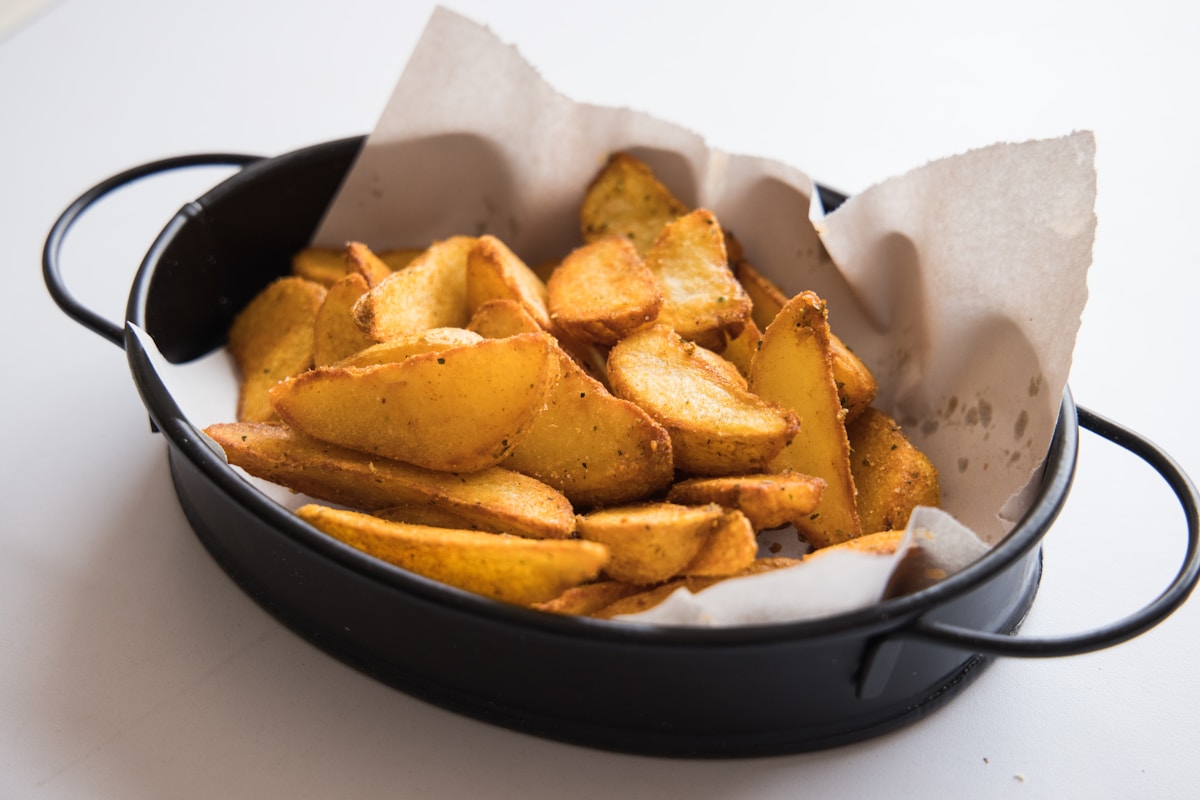
You pull a baked potato from the oven, cut it open, and find a dry, crumbly center beneath a skin that is tough or strangely soft. It is a common frustration, but a great baked potato is not difficult once a few small details are in place.
For crispy baked potatoes with fluffy centers, use similarly sized russets, dry the skins thoroughly, coat them lightly with oil and coarse salt, and bake them uncovered at 425°F until fully tender. The timer is useful, but tenderness is the final test.
Key Takeaways
- Choose similarly sized russet potatoes for a starchy, fluffy interior and sturdy skins.
- Dry the potatoes completely before adding a light coat of oil and coarse salt.
- Bake uncovered at 425°F; foil traps steam and creates softer skins.
- Start checking early, then bake until a skewer slides easily through the center.
- Split and fluff potatoes while hot to release steam and keep the interior light.
Start with the right potatoes and a simple setup
Russet potatoes are a practical choice for classic crispy baked potatoes. Their starchy flesh becomes light and fluffy when fully cooked, while their thicker skins hold up well to oil, salt, and oven heat.
Choose potatoes that are firm and heavy for their size, without major green patches, deep cuts, or soft spots. Buy russets that are close in size and shape so they finish at roughly the same time.
For four medium potatoes, gather:
- 4 medium russet potatoes, about 8 to 10 ounces each
- 1 to 2 tablespoons olive oil or neutral cooking oil
- Coarse kosher salt or coarse sea salt
- Optional butter, pepper, and toppings for serving
You will also need a fork, a baking sheet, and, if you have one, an instant-read thermometer. Bake the potatoes on a sheet pan, or place them directly on the oven rack with a sheet pan below to catch drips.
Baking directly on the rack allows air to circulate around the potatoes, which can help the skins dry more evenly. A baking sheet is simpler and still produces excellent results. In either case, leave space between the potatoes.
Potato size, oven calibration, pan material, and starting temperature can all affect how long to bake potatoes. Use the timing ranges below as a guide rather than a strict deadline.
Prep the skins for crispness, not steam
Heat the oven to 425°F. This fairly high baked potato temperature gives the skins a chance to brown and crisp while the centers become tender. If your oven runs hot or cool, expect the timing to vary.
Scrub each potato under cool running water, paying attention to the ends and shallow creases. Since the skin is part of the finished potato, clean it well.
Dry every potato thoroughly with a clean kitchen towel or paper towels. Surface moisture must evaporate before the skin can crisp, so this simple step makes a real difference.
Pierce each potato three or four times with a fork, spacing the holes around the potato. The holes provide small vents as the potato cooks. A few quick pricks are enough; there is no need to stab deeply or repeatedly.
Rub each potato with oil until the skin has a light, even sheen. Avoid a thick coating, which can make the skin greasy rather than crisp.
Season all sides generously with coarse salt. Oil and salt baked potatoes have a crisp, well-seasoned skin: the oil encourages browning and drying at the surface, while coarse salt adds flavor and texture. Fine table salt works if needed, but coarse salt is more noticeable on the finished skin.
Bake the potatoes uncovered. Do not wrap them in foil if you want crisp oven baked potato skins. Foil traps steam, creating a softer, more steamed skin.
Arrange potatoes in a single layer on the sheet pan, leaving at least 1 to 2 inches between them. Crowding can trap moisture and soften the skins.
Bake at a steady temperature until tender and fluffy
At 425°F, use these approximate bake-time ranges as a starting point:
- Small russets: about 45 to 55 minutes
- Medium russets: about 55 to 70 minutes
- Large russets: about 70 to 90 minutes
Start checking at the early end of the range, especially with smaller potatoes. A large, round potato may need more time than expected, while a narrow potato of similar weight may finish sooner.
The outside can look browned before the center is fully soft. If the middle still feels firm, return the potato to the oven and check again in 5 to 10 minutes.
If you have an instant-read thermometer, an internal temperature around 205°F to 210°F can be a helpful baked potato doneness guide. This is a texture indicator, not a food-safety target. Tenderness should always confirm that the potato is ready.
If your oven has hot spots, rotate the baking sheet once around the halfway point. You usually do not need to turn individual potatoes unless one side is browning much faster than the others.
Avoid opening the oven repeatedly. Begin checking when the potatoes approach the early end of their expected range, then check only as needed.
Check baked potato doneness, then split and fluff right away
A fully baked potato should be tender all the way through, not just soft near the skin. Slide a thin knife, metal skewer, or fork into the center. It should pass through with very little resistance.
You can also gently squeeze the potato with an oven mitt or folded towel. A done potato yields slightly under gentle pressure. Do not squeeze hard, which can split the skin or make the potato collapse.
Use one or two checks rather than repeatedly puncturing the potato. Too many holes can damage the crisp, salted skin.
Once tender, let the potatoes rest only until they are safe to handle, usually a few minutes. Cut a lengthwise slit across the top without slicing all the way through the bottom.
Protect your hands with a towel or oven mitts, then gently press the ends inward to open the slit. Fluff the hot interior with a fork, lifting and separating the flesh instead of stirring it into a smooth mash.
Fluffing releases steam and creates the light texture people expect from a fluffy baked potato. Add butter, salt, pepper, cheese, or other toppings after fluffing so the center stays airy rather than compacted.
Fix dry centers, tough skins, and other baked-potato problems
Dry or crumbly center: The potato may have baked longer than necessary, especially if it was small. Begin testing earlier next time and remove it once the center is fully tender. Split and fluff promptly instead of leaving it whole for a long time after baking.
Dense or firm center: The potato likely needs more time. Return it to the oven uncovered until a skewer reaches the center easily. Extra butter can add richness, but it will not fix an undercooked middle.
Tough, pale, or papery skin: Damp skins, too little oil or salt, an oven that is not fully heated, or a lower baking temperature can all contribute. Dry the potatoes well, use a light but complete oil coating, season all sides, and preheat the oven fully.
Soft skin: Foil is a frequent cause because it holds steam around the potato. Potatoes packed too closely can have a similar result. Bake uncovered with room around each potato.
Unevenly cooked potatoes: Different sizes are often the problem. Choose similar potatoes, remove smaller ones as they become tender, and rotate the pan if your oven browns unevenly.
Large skin splits: A few small splits are harmless, but major ruptures can happen when potatoes are not pierced or cook unevenly. Make a few fork holes before baking and avoid potatoes with deep cuts or damaged areas.
If you need to hold baked potatoes briefly before dinner, keep that time short. For leftovers, refrigerate potatoes promptly in a covered container rather than leaving them out for an extended period.
To reheat, place potatoes on a baking sheet and warm them uncovered in a moderate oven until hot throughout. Reheating uncovered gives the skins the best chance to firm up again. A microwave is convenient, but it usually produces softer skins because of the added steam.
FAQ: Crispy baked potatoes
Should baked potatoes be wrapped in foil?
Wrap potatoes in foil only if you want a soft, steamed skin. For crispy baked potatoes, leave them uncovered on a rack or baking sheet. Foil traps moisture and works against a dry, crisp exterior.
Do you have to pierce potatoes before baking?
It is a useful step. Make a few fork holes around each potato before baking to provide vents as it cooks. You do not need many holes or deep cuts.
Can you make baked potatoes ahead of time and reheat them?
Yes, although freshly baked potatoes have the best texture. Refrigerate leftovers promptly, then reheat them uncovered in the oven until hot throughout. This method gives the skin a better chance of becoming crisp again.
A great baked potato is not about chasing one exact minute on a timer. Start with dry, evenly sized russets, add oil and coarse salt, bake uncovered at 425°F, and let tenderness make the final call. Split and fluff the potatoes while hot for steamy centers and skins worth eating.


