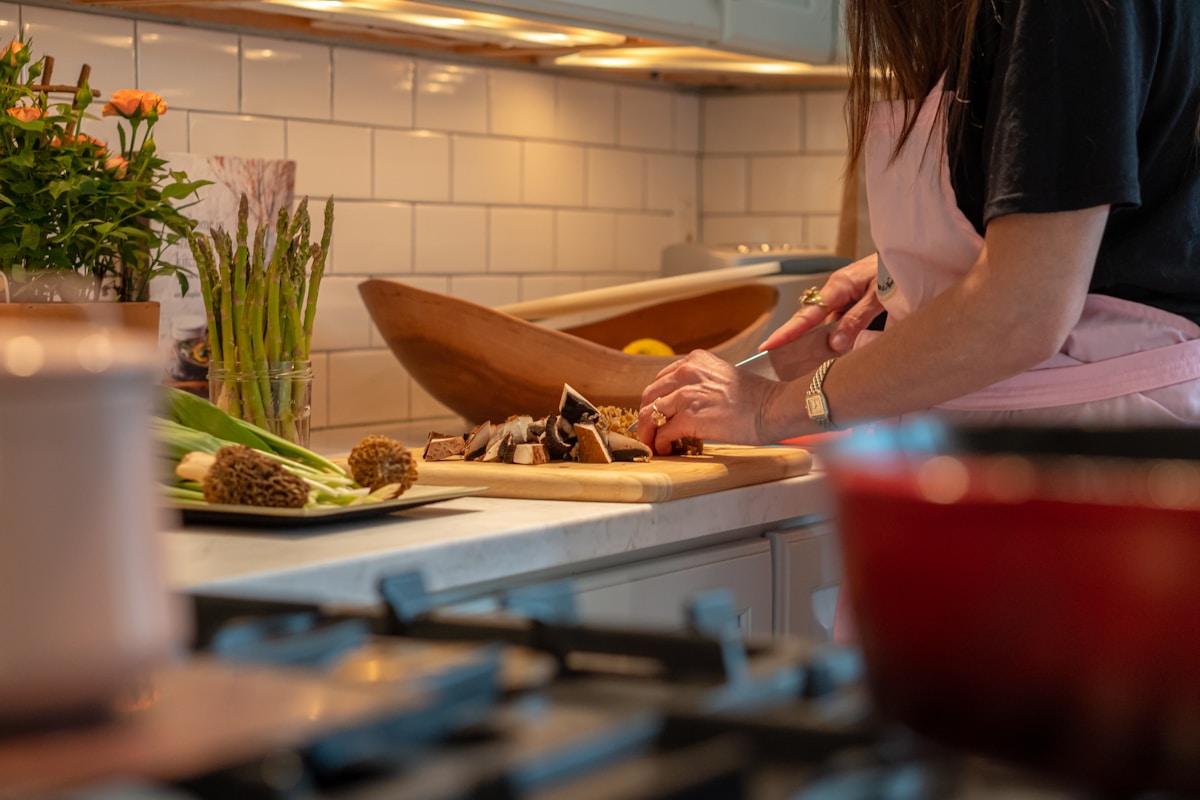
It’s five o’clock, that familiar golden hour of chaos. You’re trying to chop an onion for dinner, but there’s a small, very determined person wrapped around your leg, demanding to be picked up. You try the gentle hand-off to your partner, you try the mesmerizing cartoon on the tablet, you even try the forbidden pre-dinner snack. Nothing works. The onion sits half-chopped, and your dinner plans feel like they’re slipping away.
I see you. I’ve been there. Every parent has. In that moment, it’s so easy to see our little ones as adorable obstacles to getting a meal on the table. But what if we changed our perspective? What if that little person clinging to your leg wasn’t an obstacle, but your newest, most enthusiastic sous chef?
Inviting your toddler into the kitchen might sound like a recipe for disaster, and let’s be honest, it will be messier at first. (Yes, really!) But I promise you, the joy, the learning, and the memories you’ll create are worth every stray pinch of flour. The kitchen is where families grow together, and it starts with one simple invitation: “Do you want to help?”
The First Step Setting the Stage for Success
Before we can hand over a whisk, we need to bring our little ones up to our level—safely. A wobbly chair is a recipe for a tumble, and holding them on your hip while you try to work is a recipe for a strained back. The single best investment I ever made for my family kitchen was a learning tower.
Sometimes called a kitchen helper stool, this sturdy piece of furniture is a game-changer. It’s a safe, enclosed platform that allows your child to stand at counter height, right beside you. They can see everything you’re doing, their hands are free, and they are securely contained. We used a Little Partners Learning Tower for years, and it was worth its weight in gold. It creates a designated “helper spot” at the counter, which signals to your child that this is their special place to participate.
When your child feels included and can actually see the magic happening, their desire to cling and fuss often melts away, replaced by focused curiosity. They are no longer on the outside looking in; they are part of the action. This simple piece of equipment transforms the dynamic from you trying to cook around your child to cooking with your child.
The Official “Kitchen Helper” Job List
Okay, your toddler is safely at the counter. Now what? You can’t exactly hand them a chef’s knife. The key is to assign simple, one-step jobs that are genuinely helpful and perfectly suited for little hands. Think of these as official titles you can bestow upon your tiny assistant.
The Official Produce Washer: This is the perfect entry-level position. Set up a colander in the sink and give them a pile of potatoes, carrots, apples, or berries to rinse under a gentle stream of cool water. They can use a soft vegetable brush to scrub the potatoes. It involves water (a guaranteed toddler win), accomplishes a real task, and teaches them about cleaning our food before we eat it.
The Master Mixer & Stirrer: Toddlers love to stir. Give them a bowl with cold ingredients—like whisking eggs for scrambling, stirring yogurt and granola for a parfait, or mixing a simple vinaigrette (just oil, vinegar, and a pinch of salt in a bowl). Give them their own small bowl and a silicone spatula. They will stir with a level of concentration that is a true wonder to behold.
The Professional Pourer & Transferer: This builds incredible fine motor skills. Ask them to pour pre-measured dry ingredients, like a cup of flour or sugar, into the main mixing bowl. (My kitchen hack: have them do this over a large baking sheet to catch the inevitable spills!) Another great job is transferring. Ask them to move uncooked pasta from one bowl to another, or to scoop beans from a bag into a measuring cup. It feels like a game, but it’s teaching them control and measurement.
The Tearer & Masher: Little hands are surprisingly good at tearing! Give them lettuce for a salad or kale for making kale chips. It’s a satisfying sensory experience. Mashing is another favorite. A ripe banana for banana bread or a soft avocado for guacamole can easily be mashed with the back of a fork. It’s a wonderful way for them to contribute physically to the dish.
The Junior Scooper: When you’re making cookies, use a small cookie scoop and let them be in charge of scooping the dough onto the baking sheet. You might need to help guide their hands at first, but they will beam with pride when they see their perfectly round little dough balls lined up and ready for the oven.
Remember to start slow. Pick one job for one part of the meal. As they grow more confident, you can string together a few tasks. The goal isn’t efficiency; it’s engagement.
A Parent’s Guide to Embracing the Mess
Let’s address the elephant in the room: the mess. Flour will get on the floor. A little bit of egg might end up on the cabinet. Your child will probably be wearing some of the banana they were supposed to be mashing. It’s okay.
Repeat after me: The mess is part of the learning.
Thinking of it as “sensory play” instead of “a mess” can really help shift your mindset. Your child is learning what flour feels like, how sticky dough is, and what happens when you stir too fast. These are valuable lessons! To keep your sanity, here are a few practical tips:
- The Cooking Uniform: Put an oversized t-shirt or a dedicated apron on your child before you start. This signals it’s time to cook and protects their clothes.
- The Splash Zone Mat: Place a cheap, wipeable mat or an old towel on the floor beneath the learning tower. When you’re done, you can just shake it out or toss it in the wash.
- The Baking Sheet Workspace: As I mentioned before, this is my number one trick. A large, rimmed baking sheet gives your child a defined space to work in. Spills are contained, and cleanup is as simple as carrying the sheet to the sink.
Breathe. Remind yourself that a few extra minutes of cleanup is a small price to pay for the connection and confidence you are building in your child. (Your future self, who has a teenager that knows how to make their own lunch, will thank you.)
The Magic of “I Made It Myself!”
One of the most incredible, and often unexpected, benefits of cooking with your kids is how it transforms picky eaters. I have seen it happen time and time again. A child who would never touch a green bean will proudly eat one if they were the one who washed it and snapped the ends off.
There’s a powerful sense of ownership that comes from helping to create something. When your toddler helps tear the lettuce, whisk the dressing, and toss the salad, it’s no longer just a bowl of strange green stuff. It’s their salad. They have a connection to it. They feel a sense of pride and are far more likely to take that first curious bite.
Encourage them to taste as you go (when it’s safe, of course). Let them smell the spices, taste the sweet strawberries, and feel the bumpy skin of an orange. Involving all their senses makes food an adventure, not a battleground. This positive association with food, built in the warmth of the kitchen with you, will last a lifetime.
Our Favorite First Recipe Toddler’s Rainbow Fruit Salad
Ready to give it a try? This recipe is perfect because it requires no heat, minimal cutting, and lots of toddler-friendly tasks. It’s more of an assembly job, which builds confidence right away.
You will need:
- 1 cup of blueberries
- 1 cup of strawberries
- 1 ripe banana
- 1-2 clementines or a small orange
- A big bowl and a large spoon for stirring
- A colander
- A kid-safe knife (a nylon knife or even a butter knife works well for strawberries)
Here are the “Official Sous Chef” steps:
- Wash the Berries (The Official Produce Washer): Place the blueberries and strawberries in the colander and let your toddler hold it under the faucet. Show them how to gently shake the colander to rinse all the berries.
- Peel and Chunk the Banana (The Master Masher… or Breaker!): Peel the banana (you can start it for them) and let them break it into bite-sized chunks with their hands and drop them in the big bowl.
- Slice the Strawberries (The Cautious Cutter): For this step, you’ll be right there with them. After you’ve removed the green tops, let them use a kid-safe knife to slice the soft strawberries. Guide their hands and celebrate every successful slice.
- Peel the Clementines (The Super Squeezer): Show them how to peel the clementine. They can then separate the segments and add them to the bowl.
- Mix the Rainbow (The Master Mixer): Hand them the big spoon and let them gently stir all the colorful fruits together. Talk about the colors, smells, and textures.
That’s it! They’ve just made a beautiful, healthy dish. Serve it up for a snack and be sure to say, “Wow, you made this delicious salad for us!” The look of pride on their face will be the sweetest thing you’ll see all day.
Cooking with a toddler isn’t about saving time. In the beginning, it’s about investing time. You’re investing in their skills, in their confidence, and in your relationship. You’re turning a daily chore into a moment of joyful connection. So take a deep breath, embrace the mess, and invite your little one to the counter. The real magic of the kitchen isn’t just in the food we make, but in the memories we cook up together.



 Beatrice