


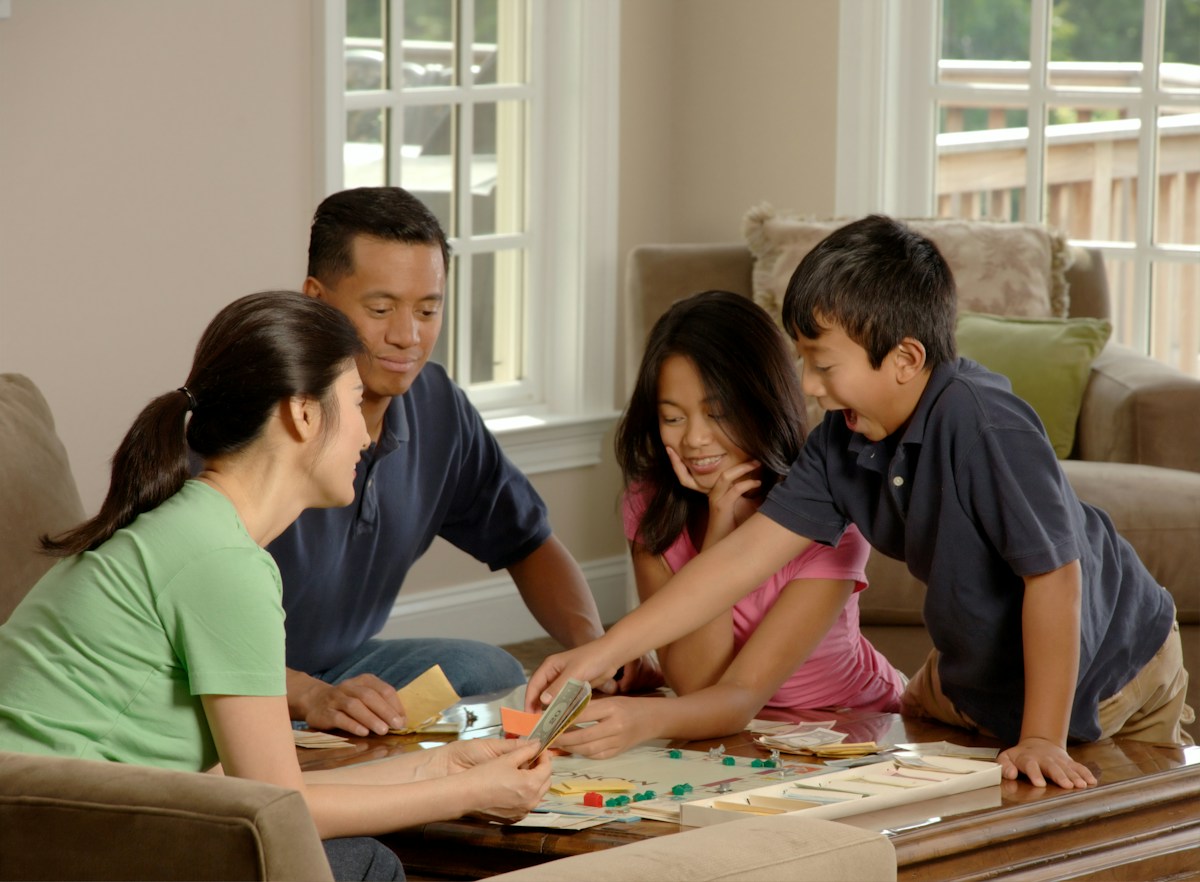
At the kitchen table, a simple card game can change the mood in seconds. One moment your child is laughing; the next, a lost round brings tears, yelling, or a chair pushed back from the table.
To help a child handle losing, move gradually from guaranteed wins to short, honest, low-pressure games. Prepare your child for the outcome, acknowledge the disappointment, model calming down, and praise recovery rather than treating winning as the goal. For children around ages 4–7, learning to lose is an emotional skill that develops with practice—not a test of character, confidence, or kindness.
The aim is not to make losing feel fun immediately. It is to help your child discover, one manageable experience at a time, that disappointment can be felt, handled, and followed by another activity or another try.
Key Takeaways
- Move gradually from guaranteed wins to fair, predictable games rather than changing the rules overnight.
- Start with cooperative activities, short rounds, and low-stakes competition when your child is rested and receptive.
- Acknowledge disappointment without promising a different result, and offer a simple calming choice.
- Praise taking turns, following rules, recovering, and trying again—not just winning.
- Pause play when it becomes unsafe or overwhelming, and seek professional guidance if distress is intense, persistent, worsening, or disruptive across settings.
Why Always Letting a Child Win Can Backfire
Letting a child win occasionally can make a family game playful and encouraging. However, if every game is secretly arranged so the child wins, real losses may feel especially confusing later. The child has had little chance to practice waiting, adapting, or recovering when the result does not match their hopes.
A sudden switch from guaranteed wins to intense competition can also feel like a trick. Your child may think, “The rules changed,” even if you believe you are simply beginning to play fairly. That sense of surprise can add to the disappointment.
This does not mean you have damaged your child’s confidence. Confidence can be built through warmth, attention, effort-based praise, and opportunities to learn. You can say, “I love playing with you whether you win or lose,” while still allowing an honest result.
Watch the level of challenge. A game may be too difficult for the moment if your child repeatedly cries, quits immediately, yells at other players, cannot rejoin after a break, or becomes upset before the game even starts. These signs do not mean your child is a “bad loser.” They suggest that the practice needs to be shorter, simpler, or better timed.
Start With Cooperative, Short, and Low-Stakes Games
Begin with activities in which everyone works toward a shared goal. Try completing a simple puzzle together, building a tower as a team, finding matching pairs cooperatively, or cleaning up game pieces before a timer ends. These activities let children practice turns, flexibility, and shared excitement without placing one child against another.
Next, introduce games with small and predictable outcomes. Good first steps might include:
- A matching game with only a few pairs
- A short race using toy cars or paper objects
- A simple board game with one or two rounds
- A family challenge to build the tallest block tower
- A tossing or target game where each player gets the same number of turns
- A familiar card game adapted to use fewer cards
Tell your child what kind of activity is coming. Say, “This is a teamwork game, so we all win or lose together,” or, “This is a practice race. One person may finish first, and then we will stop after one round.” Clear information makes the outcome less surprising.
Offer limited choices rather than asking an overwhelmed child to plan everything. Try, “Would you like the matching game or the short race?” You can also offer a choice about length: “One round or two?” Keep the promise. If you say one round, do not add extra rounds because the game is going well—or because you hope to create another chance to win.
Set up the kitchen table for calm play. Clear away hot drinks, sharp objects, and breakable items. Use a stable surface, supervise small pieces according to your child’s age and the materials, and avoid starting when your child is hungry, overtired, rushed, or already upset. A five-minute game at a comfortable time is often more useful than a longer game at the end of a difficult day.
Help a Child Handle Losing With Honest, Consistent Rules
Before play begins, explain the rules in a few simple sentences. Demonstrate a turn if needed, and check understanding with a gentle question such as, “What happens when the timer rings?” Avoid giving a long speech about sportsmanship just before the game; a clear expectation is easier for a young child to use.
Keep the rules the same for everyone. Do not secretly give extra turns, change the winning condition, or make an adult mistake disappear every time your child is behind. If the rules need adjusting because the game is too hard, pause between rounds and explain the change openly: “This version is not working well for us. Before we play again, let’s use fewer cards.”
Adults do not need to lose every time. You can sometimes offer a useful head start or choose a simpler version of the game, but the arrangement should be clear rather than deceptive. For example, say, “You can start with one extra block because we are practicing,” or, “Today we are playing cooperatively.” The goal is to make the challenge manageable, not to make winning feel guaranteed.
Explain that fair play includes different results. Try phrases such as:
- “Sometimes you win, sometimes I win, and sometimes we stop before there is a winner.”
- “That round went to me. We can feel disappointed and still be kind.”
- “The rule stays the same for everyone.”
- “You wanted to win. The result was different this time.”
- “We can talk about changing the rule before the next round, not while someone is taking a turn.”
Avoid teasing, gloating, dramatic celebrations, sibling comparisons, and labels such as “bad loser.” Even playful comments can feel sharp when a child is already disappointed. Celebrate your own result briefly, then return attention to the shared activity: “I got the last card. That was my turn. Would you like to help me put the pieces away?”
Name Feelings, Model Calming Down, and Try Again Later
When a child is upset about losing, start with connection rather than a lecture. You do not have to promise a win or say that losing is not a big deal. Acknowledge what happened accurately:
- “You really wanted that win, and losing feels hard.”
- “I can see tears. Your body needs a pause.”
- “You are angry that the race ended. I will stay close while you calm down.”
- “It is okay to feel disappointed. It is not okay to throw the pieces at someone.”
Then offer one or two calming choices. A drink of water, slow breaths, a cuddle if welcomed, stretching, or a few quiet minutes away from the table may help. Keep the choices simple: “Would you like to sit beside me or take a short walk to the doorway?” A child who is highly upset may not be ready to explain what happened or choose a complicated strategy.
Model the response you want to teach. If you lose, avoid pretending that the result does not matter. You might say, “I was hoping to win, so I feel disappointed. I am taking a breath. I can congratulate you, or I can put the game away and try another day.” This shows that graceful behavior does not require pretending to be delighted.
Do not demand an apology, handshake, smile, or “good game” while your child is overwhelmed. Those social responses can be practiced later, once the child is calm. Afterward, keep the review brief: “You were upset, took a break, and came back. Next time, what should we try first—water or breathing?”
If your child quits, do not chase them around insisting they finish. Set a calm boundary: “You may stop playing, but the pieces stay on the table.” If yelling continues, say, “The game is paused because people need to be safe and respectful. We can clean up together or try again another day.” This protects the other players without shaming the child.
Praise Effort, Flexibility, and Recovery
Specific praise helps your child notice the skills that matter beyond the final score. Look for small behaviors, including:
- Waiting for a turn
- Listening to the rules
- Accepting help
- Staying with a difficult round
- Using words instead of grabbing or shouting
- Taking a break safely
- Returning after disappointment
- Congratulating another player when ready
- Suggesting a fair solution
Instead of saying only, “You are such a good sport,” describe what you saw: “You were upset, put the cards down gently, and came back after your breath.” Or: “You did not win that race, but you waited while your sister finished and helped reset the game.”
Praise effort without implying that effort always produces a win. “You concentrated on matching the cards” is more useful than “You tried hard, so you should have won.” The first statement values the process; the second can make an unexpected loss feel unfair.
Balance competitive games with activities in which your child can create, cooperate, teach someone else, or practice a skill without ranking. A child might build a pretend restaurant, show a parent how to draw a character, make up a family story, or work with everyone to complete a puzzle. These experiences support confidence without making success depend on beating someone.
Increase the challenge slowly. If one short round ends with manageable disappointment, stop there while the experience is still contained. The next session might include two rounds or a slightly less familiar game. Repeatedly forcing a child through distress is not the same as teaching coping; a short, successful practice is often more productive.
When to Pause the Game and Seek Extra Help
Pause immediately if play becomes unsafe, cruel, destructive, or too distressing for anyone at the table. Remove game pieces if they are being thrown, move people apart if needed, and use a calm statement: “The game is over for now. We will try again when everyone is safe.” Do not use a game to deliberately provoke your child or prove that they can tolerate losing.
Many children become tearful, angry, or eager to quit sometimes. With support, they may calm down and return to play or move on to another activity. It is worth discussing your concerns with the child’s pediatrician or a qualified child-development or mental-health professional if reactions are unusually intense, persistent, worsening, unsafe, or disruptive across games and everyday situations.
Pay attention to the wider pattern. Extra guidance may be helpful if losing-related distress regularly prevents ordinary family activities, affects relationships, continues long after the game ends, or appears alongside major difficulties with transitions and other disappointments. You do not need to diagnose the cause. Share what you observe, when it happens, what helps, and how often it interferes.
While seeking advice, continue offering calm routines and low-pressure practice. Focus on safety and connection rather than making your child prove they can lose. The goal is steady growth in flexibility, emotional regulation, and respectful play.
FAQ
How do I help a child handle losing without hurting confidence?
Separate confidence from the result. Tell your child that family approval does not depend on winning, then praise specific behaviors such as taking turns, trying a strategy, accepting help, calming down, and returning after a break. Start with short, predictable games and increase difficulty gradually.
Should I let my child win sometimes when teaching sportsmanship?
You do not need to let your child win every time. Occasional wins can be part of enjoyable play, and adults can use a simpler version or a clear head start when practicing. Avoid secretly rigging results or creating an expectation that the child is guaranteed to win. Honest, manageable outcomes teach more than constant victories.
What should I do when my child cries, quits, or gets angry after losing?
Acknowledge the disappointment, set a safety boundary, and offer a brief pause. Say, “You wanted to win. It is okay to cry, but it is not okay to throw the pieces.” Once your child is calm, decide whether to finish cleaning up, switch to a cooperative activity, or try another day. Do not force an immediate apology or rematch.


