


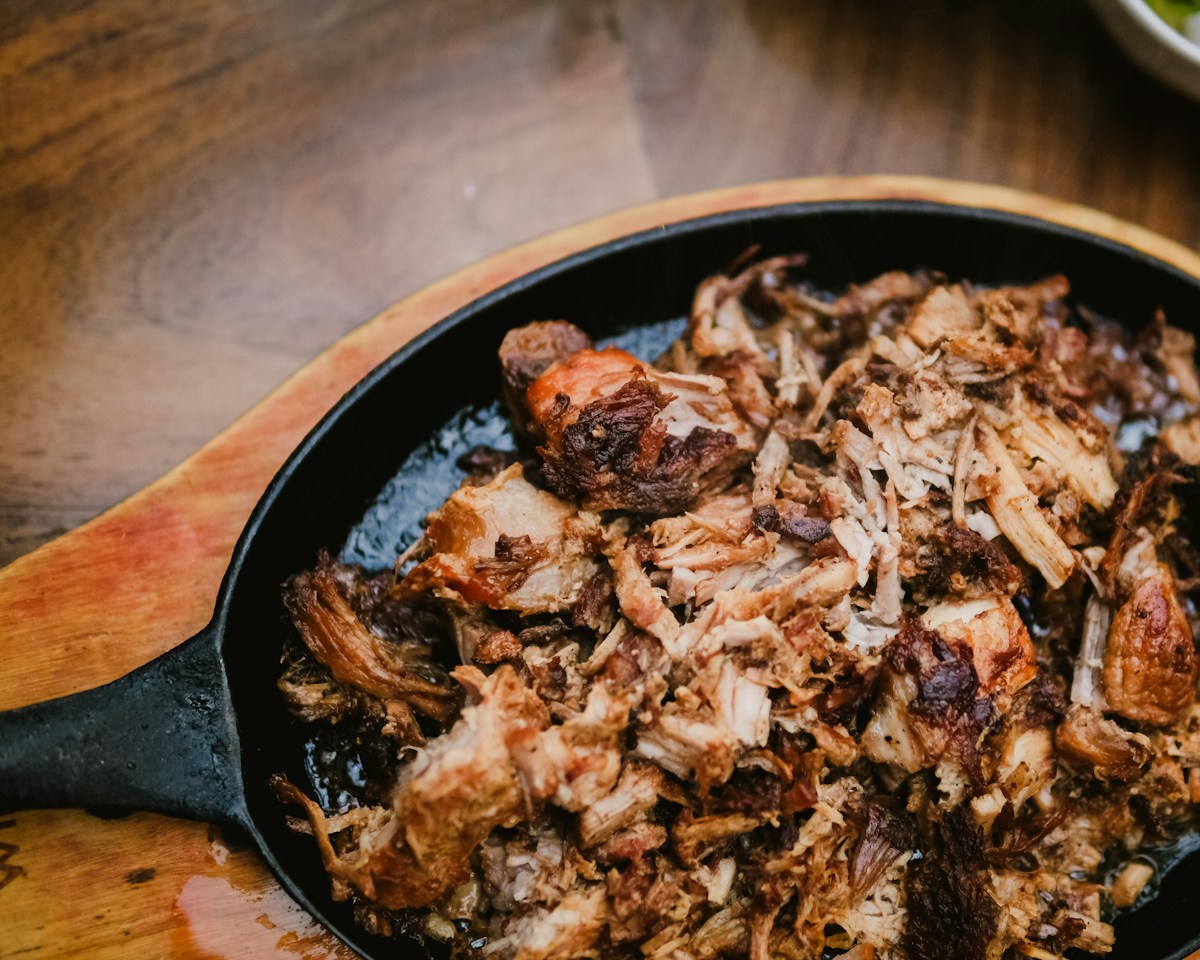
You bring home a large pork slab because the price is too good to pass up—then it sits in the refrigerator while you wonder whether it is a roast, pulled pork, or five pounds of kitchen homework.
The good news: pork shoulder is one of the most useful budget cuts you can buy. Long, gentle cooking makes it tender, and one roast can become sandwiches, tacos, rice bowls, soup, quesadillas, and breakfast hash instead of five pounds of the same dinner.
Key Takeaways
- Check the label and whether the roast is bone-in or boneless before choosing a cooking method.
- Pork shoulder is best for slow cooking, braising, roasting, or pressure cooking—not quick, high-heat meals.
- Cook it until it is safe and tender; shoulder meant for shredding needs more cooking than the minimum safe temperature alone.
- Keep strongly flavored sauces separate when possible so leftovers can become different meals.
- Refrigerate cooked pork promptly, freeze extra portions, and reheat leftovers to 165°F.
First, Identify Your Pork Shoulder Slab
Start with the package label. A pork shoulder slab may be called pork shoulder, Boston butt, pork butt, picnic shoulder, boneless shoulder roast, or bone-in shoulder roast. Despite its name, pork butt comes from the shoulder area, not the rear of the pig.
Before picking a recipe, check two things: whether there is a bone and how thick the meat is. A five-pound bone-in roast includes bone weight, while a five-pound boneless pork shoulder usually gives you more finished meat. Boneless roasts may also be flatter, rolled, or tied, which can affect cooking time.
Pork shoulder contains marbling and connective tissue from a hardworking part of the animal. That is why it becomes wonderfully tender with long, gentle cooking but can seem chewy when cooked quickly in a hot skillet. Given enough time, it can shred easily or slice into soft, tender pieces.
If a boneless slab is very wide or will not fit in your slow cooker or Dutch oven, cut it into two large pieces before cooking. Smaller pieces can cook more evenly and are easier to manage. Leave a bone-in roast whole unless you are comfortable cutting around the bone.
Trim only a very thick, firm layer of exterior fat if desired. Leave some fat behind for flavor and moisture. Kids can help mix dry seasonings or choose toppings, while adults handle raw pork, knives, and hot cookware.
Choose the Best Method for Your Time, Equipment, and Desired Texture
For most five pound pork shoulder recipes, the best method is the one that fits your schedule and equipment.
Choose a slow cooker pork shoulder when hands-off cooking matters most. Add the seasoned pork and the amount of liquid your recipe and appliance call for, then let it cook until fork-tender. This is a good choice for busy days, but shoulder still needs enough time to become truly soft.
Choose Dutch oven pork shoulder for a richer braise. Brown the pork in a little oil if you have time, then cover it with onion, garlic, broth, or another cooking liquid. Browning is optional, but it adds deeper flavor to the meat and pan juices.
Choose an oven roast for browned edges and sliceable pork. This method works especially well for garlicky herb pork. Keep the roast covered for most of the cooking time, then uncover near the end if you want more color on the outside.
Choose a pressure cooker when dinner needs to happen sooner. Pressure cooking can tenderize pork shoulder faster than the oven or slow cooker. Browning the meat first and reducing the cooking liquid afterward can improve flavor and texture. Always follow your appliance manual for minimum liquid and safe filling limits.
Cooking time depends on the roast’s shape, thickness, bone, appliance, and whether you want sliceable or shreddable meat. Start checking near the end of your recipe’s cooking window with a thermometer and a fork. For shredding, the fork should twist easily and the meat should pull apart with little resistance.
For whole cuts of pork, the minimum safe internal temperature is 145°F followed by a 3-minute rest. Pork shoulder for pulled pork is usually cooked longer because tenderness—not just temperature—is the goal.
5 Easy Five Pound Pork Shoulder Recipes and Flavor Routes
You do not need five separate roasts to enjoy different pork shoulder slab recipes. Choose one flavor route for the whole roast, or cook it with mild seasoning and flavor smaller portions later.
1. Barbecue-Style Pulled Pork
For sandwiches, baked potatoes, or casual family plates, rub the pork with 2 tablespoons brown sugar, 1 tablespoon paprika, 2 teaspoons salt, 1 teaspoon black pepper, 1 teaspoon garlic powder, and 1 teaspoon onion powder.
Cook in a slow cooker, Dutch oven, or covered oven dish with about 1 cup of broth, water, or apple juice. Shred when tender. For more flexible leftovers, mix barbecue sauce into only the portion you are serving that night.
Serve it first on buns with cabbage slaw and pickles, or pile it onto baked potatoes with cheese and barbecue sauce at the table.
2. Garlicky Herb Roast Pork
This is one of the easiest boneless pork shoulder ideas for a family that prefers savory, less-sweet flavors. Mix 1 tablespoon dried Italian herbs, 1 teaspoon garlic powder, 1 teaspoon salt, 1/2 teaspoon pepper, and 1 to 2 tablespoons oil. Add fresh garlic if you have it.
Roast or braise the pork with sliced onions and a little broth until tender. Slice thick pieces for dinner, then shred or chop the remaining meat for wraps and bowls.
Serve with roasted potatoes and green beans, or make pork-and-cheese sandwiches on toasted bread with mustard.
3. Taco and Burrito Filling
For taco night, season the pork with 1 tablespoon chili powder, 2 teaspoons cumin, 1 teaspoon garlic powder, 1 teaspoon onion powder, 1 teaspoon salt, and black pepper. Add a sliced onion, about 1 cup broth, and the juice of a lime or orange if available.
A Dutch oven, slow cooker, or pressure cooker all work well. Shred the cooked pork and stir in a few spoonfuls of cooking liquid to keep it moist.
Serve with tortillas, beans, rice, salsa, corn, shredded cabbage, cheese, and avocado if it fits the budget. The next day, turn it into burritos or crisp skillet tacos.
4. Simple Dutch Oven Pork Braise
For a cozy, low-fuss dinner, brown the pork if desired, then add one sliced onion, 3 to 4 garlic cloves, 2 cups broth, black pepper, and a pinch of dried thyme or oregano. Cover and cook gently until tender.
Save the cooking liquid. Skim excess fat if needed, then use the flavorful broth to cook rice, loosen mashed potatoes, or start a soup.
Serve the braised pork over rice with carrots or cabbage. Another easy meal is pork and beans in broth with warm tortillas.
5. Neutral Batch-Cooked Pork for Meal Prep
For the most variety, season the pork simply with salt, pepper, onion, garlic, and a bay leaf if you have one. Cook until tender, then divide the meat into plain portions before adding sauces.
This pork shoulder meal prep approach lets one portion become barbecue sandwiches, another become tacos, and another become soup. It also works well for picky eaters because sauces, cheese, and toppings can stay separate.
Serve the first meal with rice, beans, and vegetables, or set out toppings so everyone can build a bowl they enjoy.
Turn One Roast Into Several Family Meals
A five-pound roast will not produce the same amount of cooked meat every time. Bone weight, fat trimming, and moisture loss all affect the final yield, so plan meals around the cooked pork you have instead of expecting a fixed number of servings.
Before mixing in a strong sauce, divide the meat into meal-size portions. Reserve a few portions for meals in the next few days and freeze the rest for later.
Here is a simple leftover rotation:
- Make pulled-pork sandwiches with slaw, pickles, or sliced apples.
- Build taco rice bowls with pork, beans, corn, salsa, and cabbage.
- Make crisp quesadillas with shredded pork and cheese.
- Simmer pork with broth, frozen vegetables, beans, and rice or noodles for soup.
- Cook diced potatoes and peppers, add pork, and top with eggs for breakfast hash.
Stretch the meat with affordable sides such as rice, beans, tortillas, baked potatoes, cabbage, eggs, and frozen vegetables. These additions make smaller portions of pork feel like a complete meal.
Cook, Rest, Store, Freeze, and Reheat Pork Safely
Use a food thermometer, especially if you are new to cooking roasts. Whole pork cuts are safe at 145°F followed by a 3-minute rest, but continue cooking shoulder if it is still firm and will not shred. Pull-apart tenderness is a texture goal, not a separate food-safety rule.
Let the roast rest briefly before slicing or shredding so it is easier to handle. Resting time can vary by recipe and roast size; loosely cover the pork if you want to keep it warm.
Divide leftovers into smaller, shallow containers so they cool more quickly. Refrigerate cooked pork within 2 hours of cooking. If it has sat out longer than 2 hours, it is safer to discard it. Use refrigerated cooked pork within 3 to 4 days.
Freeze portions you will not use soon. Press extra air from freezer bags, label them with the meal and date, and freeze them flat for easier storage and thawing. For best quality, use frozen cooked pork within about 3 to 4 months.
Thaw frozen pork in the refrigerator, in cold water that is changed regularly, or in the microwave if you will reheat it right away. Do not thaw pork on the counter.
To reheat shredded pork without drying it out, add a splash of broth, cooking juices, water, or sauce. Cover it in a skillet, saucepan, oven dish, or microwave-safe dish and heat until steaming hot throughout. Reheated leftovers should reach 165°F.
A simple plan is to refrigerate two near-term meal portions and freeze the remaining pork in labeled packages. Having cooked pork ready makes future dinners much easier.
FAQs
Is a five-pound pork shoulder slab the same thing as pork butt?
Sometimes, but not always. Pork butt, Boston butt, picnic shoulder, and shoulder roast all come from the shoulder area, but they may have different shapes, bones, fat caps, and labels. Check the package and cook based on the cut you actually have.
Can I cook a five-pound boneless pork shoulder in a slow cooker without much liquid?
Pork shoulder releases juices as it cooks, but your slow cooker and recipe may require a minimum amount of liquid. Follow your appliance instructions, use the liquid called for in the recipe, and avoid opening the lid often because that slows cooking.
What are the best ways to use leftover pork shoulder besides sandwiches?
Try taco bowls, quesadillas, soup, breakfast hash, fried rice, baked potatoes, burritos, or pasta with a simple tomato sauce. Keeping part of the pork unsauced makes those meals easier to vary.


