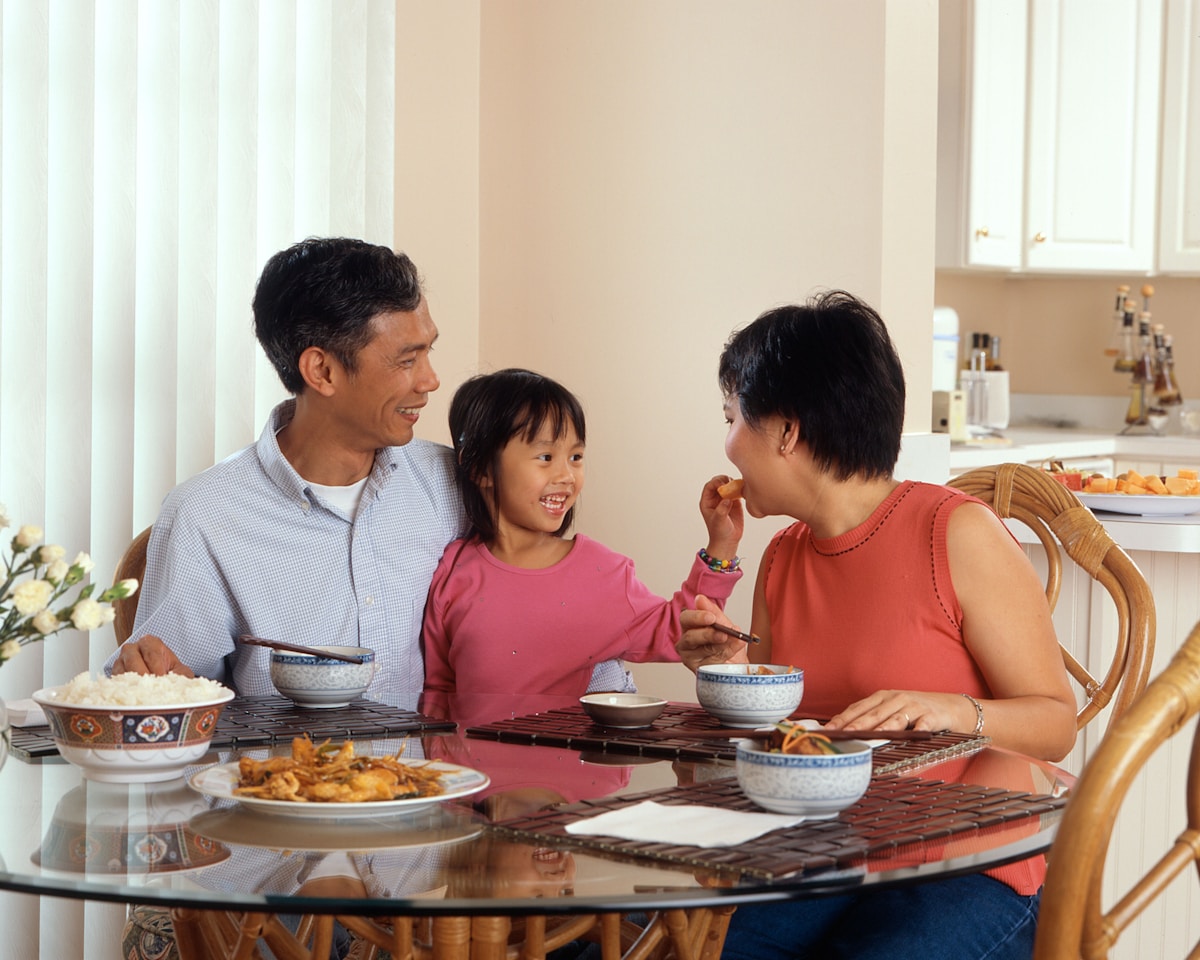
A child is ready for dinner at five, one parent is still driving home, and the other is finishing a work call. If that sounds familiar, family meals at different times do not have to mean cooking three separate dinners.
The simplest approach is to prepare one flexible meal in components, serve the child’s portion first, and finish the adults’ plates later. With a little planning, the same protein, starch, vegetable, sauce, and toppings can become a mild child plate, a packed meal, or a more generously seasoned adult dinner.
Key Takeaways
- Build one modular dinner from a protein or beans, a starch, a vegetable, a sauce, and optional toppings.
- Keep foods that lose texture quickly separate until serving, especially crisp toppings, dressed greens, and toasted items.
- Cool, store, hold, and reheat cooked food according to current food-safety guidance rather than relying on smell or appearance.
- Offer familiar components from the shared meal in age-appropriate textures instead of preparing a completely separate dinner.
1. Build a Modular Dinner Instead of Cooking Multiple Meals
A modular dinner has five useful parts:
- A protein or bean dish
- A starch, such as rice, pasta, potatoes, bread, or tortillas
- A vegetable
- A sauce or seasoning
- Optional toppings
You do not need every part at every meal. The framework simply helps you separate elements that can be served plainly from those best added at the end.
For example, cook chicken with mild seasoning, prepare rice, roast soft vegetables, and set out yogurt sauce, salsa, herbs, or grated cheese. A young child might receive rice, chicken, and a soft vegetable. Later, adults can add salsa, chili, lime, herbs, or more sauce without starting another dinner.
This works well when children eat before parents or family members arrive home at different times. Assemble one plate early, then keep the remaining components stored or held safely until the other diners are ready.
Think of the meal as one shared menu with different assembly times—not a child dinner and an adult dinner. A plain component should be part of the original plan rather than an emergency substitute made after a child rejects the finished dish.
Here are four easy formats for staggered family meals:
Tacos: Prepare tortillas, a mild bean or meat filling, cooked vegetables, and cheese. Offer a deconstructed plate to a child, then add salsa, pickled vegetables, hot sauce, or fresh herbs to adult tacos later.
Grain bowls: Cook a grain, protein, and vegetable separately. Keep the sauce and toppings apart so each person can choose a combination. A child might have plain rice, beans, and soft broccoli, while adults add dressing and crunchy toppings.
Pasta: Cook pasta and prepare sauce separately when practical. Serve a child pasta with a little sauce on the side, then add vegetables, beans, meat, herbs, or extra seasoning to adult portions.
Sheet-pan meals: Roast ingredients together when their cooking needs match, then portion them separately. This makes it easier to offer a plain potato, soft vegetable, or mild protein to a child while adults add sauce at the table.
2. Choose Foods That Stay Appealing at Different Mealtimes
Food safety and food quality are not the same thing. Food that has been handled and stored safely may still become softer, drier, wilted, or less crisp while it waits. Plan around both concerns.
Foods that often work well for make-ahead family dinners include soups, stews, casseroles, cooked grains, beans, roasted vegetables, and saucy proteins. Their moisture and structure can make them more forgiving during reheating, although the result depends on the recipe and storage method.
Foods that commonly lose texture include fried coatings, crisp tortillas, dressed greens, toasted bread, fresh-cut avocado, and crunchy toppings. Add these just before serving whenever possible.
Use a “base plus finishing touches” strategy:
- Prepare the filling, grain, pasta, or cooked vegetables ahead.
- Store components separately when doing so protects their texture.
- Reheat only the portion needed for the next diner.
- Add fresh herbs, grated cheese, dressing, avocado, toasted seeds, or crunchy vegetables at serving time.
For pasta, sauce can often be kept separate so the noodles do not absorb all the moisture while waiting. For grain bowls, keep dressing away from greens and crunchy toppings. For tacos, warm the filling when needed and add tortillas and toppings close to the meal.
A common mistake is keeping every part of dinner on the counter until the last person arrives. That can reduce quality and create food-safety concerns. Keep food stored or held according to current guidance, and assemble each plate as close to eating time as practical.
3. Use a Safe Cook, Cool, Store, and Reheat Workflow
A staggered family dinner needs a clear food-safety routine. Follow current guidance for cooling, refrigeration, hot-holding, reheating, leftover storage, and serving temperatures. Because the right process can vary by food and equipment, do not rely on invented time or temperature rules.
A practical workflow looks like this:
- Cook the components thoroughly. Follow the recipe and use a food thermometer when appropriate. Color, texture, and appearance alone are not reliable proof that food is safe.
- Portion food promptly. Smaller portions in suitable containers may cool differently from a large, deep container. Follow current guidance, particularly for dense foods such as soup, rice, beans, and casseroles.
- Refrigerate or hold food correctly. Do not leave cooked food sitting out simply because someone plans to eat later. Keeping food cold, keeping it hot, and leaving it at room temperature are different situations.
- Reheat the portion needed. Use a method that heats the food thoroughly, checking with a thermometer when appropriate and following guidance for that type of food.
- Serve and return leftovers to safe storage promptly. Reheating cannot make food safe after improper storage.
Use suitable storage containers when recommended by current food-safety guidance, and avoid packing a large quantity of hot food into a deep container if that slows safe cooling. Labeling containers with the food and preparation date can make the refrigerator easier to manage, but labels do not replace safe storage practices.
When food is waiting for an adult who will eat later, choose one deliberate plan: store it cold and reheat it later, or keep it hot using appropriate equipment and procedures. Do not use a switched-off oven, a warm countertop, or an unverified container as a substitute for safe temperature control.
4. Serve a Child Plate Without Making a Second Dinner
Start with one or two familiar components from the shared meal, then offer another component in a manageable form. This can reduce pressure while giving the child a chance to see and explore family foods. It does not guarantee that the child will eat a new ingredient.
Examples include:
- Plain grain, beans, and soft cooked vegetables from a grain bowl
- Pasta with sauce on the side, plus a small portion of the family protein
- A deconstructed taco plate with tortilla pieces, filling, cheese, and a suitable vegetable
- Soft potato, cooked vegetable, and mild chicken from a sheet-pan dinner
Serve portions and textures according to the child’s age, development, chewing ability, and individual needs. Check current pediatric or public-health guidance for preparing foods that may be choking hazards. Hard, round, sticky, tough, or unusually large pieces may need different preparation, cutting, cooking, or supervision depending on the child.
Avoid using broad age-based rules as a substitute for knowing the child’s developmental stage. If there are concerns about chewing, swallowing, allergies, feeding skills, or growth, ask a qualified health professional for individualized advice.
A helpful plate does not need to look like a miniature version of the adult plate. It can use the same ingredients in a simpler arrangement. The goal is to make one shared dinner adaptable—not to pressure a child to eat a strong sauce or to cook a completely separate meal.
5. Create a Staggered Family Dinner Schedule
A family dinner schedule can be simple and flexible. Here is an example for a child who eats early and adults who eat later:
Earlier in the day: Prepare the grain, protein or beans, and vegetables. Cool and refrigerate cooked components using current food-safety guidance. Keep sauces and crisp toppings separate.
Before the child’s meal: Reheat or assemble the child’s portion. Add age-appropriate textures and familiar components. Serve the meal in a calm place, even if the adults are not ready to eat.
During the work or activity transition: Keep remaining food refrigerated or safely hot-held according to current guidance. Do not leave dinner on the table simply because an adult is expected soon.
When adults eat: Reheat or assemble adult portions. Add sauce, herbs, salad dressing, avocado, toasted toppings, or other ingredients that are best fresh.
After dinner: Handle leftovers promptly according to current food-safety guidance. Store components so the next meal is easy to assemble, and discard food when guidance says it should no longer be kept.
Before cooking, ask four questions:
- Who will eat first, and who may arrive later?
- Which components hold or reheat well?
- Which ingredients must stay separate to protect texture?
- Will each portion be refrigerated, safely hot-held, or packed for later?
A thermos or insulated food container can be useful for a child’s later meal, but it is not a safety device by itself. Follow the manufacturer’s instructions, prepare and reheat the food according to current food-safety guidance, and use the container only for the purpose and conditions it is designed to handle. If it requires preheating, do that as directed. Never use it to rescue food that has been left at an unsafe temperature.
You can preserve a shared-meal feeling even when the clock does not cooperate. Use the same menu for everyone, save one conversation topic for dinner, let the early eater help choose toppings, or sit together briefly for part of the meal. One person may eat earlier, but the family can still share the planning, ingredients, rituals, and connection.
FAQ Family Meals at Different Times
How do you keep a family dinner from becoming multiple separate meals?
Plan one modular dinner and serve it in different combinations. Keep a familiar component available, but use ingredients from the shared meal rather than preparing an unrelated substitute. Sauces and toppings can be added later for adults.
What family meal components hold up best when children eat before adults?
Soups, stews, casseroles, beans, cooked grains, roasted vegetables, and saucy proteins are often practical choices for holding or reheating. Keep crisp toppings, dressed greens, fried coatings, toasted bread, and cut avocado separate until serving when possible.
Can you use a thermos or insulated container for a child’s later meal?
Yes, when the container is suitable for the food and used according to its instructions and current food-safety guidance. Reheat and pack food safely, follow any preheating directions, and remember that insulation does not make improperly stored food safe.
The best plan for family meals at different times is not a complicated timetable. It is a repeatable system: cook flexible components, protect their texture, store them safely, and assemble each plate when that person is ready. That gives children a familiar starting point, adults room to customize, and the whole family one menu to share.