I still remember the Great Egg Hunt Debacle of ‘08. My nephew, a sweet little two-year-old with chubby cheeks and a determined waddle, stood in the middle of the park lawn, empty basket in hand, watching a stampede of older kids clear the field like a candy-colored swarm of locusts. His little lip quivered, and my heart just about broke. The magic of the day evaporated in a puff of competitive chaos and toddler tears.
We’ve all been there, haven’t we? You spend hours in the kitchen preparing lovely treats, carefully stuffing dozens of plastic eggs, only to watch the whole event devolve into a frantic free-for-all. It can feel like the very opposite of the joyful family moment you envisioned. But over the years, I’ve learned that a successful egg hunt isn’t about luck; it’s about a good, old-fashioned kitchen-table plan. The secret isn’t just about hiding eggs; it’s about creating an experience where every child, from the wobbliest toddler to the savviest pre-teen, feels the pure joy of discovery.
The Golden Rule of the Hunt: Fair Play Starts with a Plan
The single most important thing you can do to ensure a happy hunt is to separate the hunters by age. It sounds so simple, but it makes all the difference. A ten-year-old on a sugar-fueled mission and a three-year-old who is still mesmerized by the color of the plastic egg are playing two completely different games. Forcing them onto the same field is a recipe for frustration.
Think of your backyard or park as a multi-zone arena of fun:
-
The Toddler Patch (Ages 1-3): This should be a smaller, clearly marked-off area. The goal here isn’t about the “hunt” so much as the “find.” For these little ones, the magic is in spotting a bright color in the grass and managing to pick it up with their tiny hands. Motor skills are still developing, so competition is not the point. We want discovery, not distress.
-
The Junior Explorer Zone (Ages 4-6): These kids are ready for a bit more of a challenge. They understand the concept of searching, but still benefit from a dedicated space so they aren’t overwhelmed by the bigger kids. Their eggs can be slightly more hidden, but still relatively easy to spot.
-
The Expert Hunter Field (Ages 7+): Now we can get tricky! This is where you can hide eggs behind bushes, inside a watering can, or tucked into the branches of a low tree. These older kids thrive on the challenge and the bragging rights that come with finding the best-hidden egg.
How do you mark these zones? Get creative! Use colorful party streamers tied between garden stakes, a line of pinwheels, or even a long garden hose laid out on the grass. The key is to make the boundaries visual and fun. And most importantly, communicate the plan to all the parents before the whistle blows. A quick, cheerful announcement like, “Okay everyone! Our littlest bunnies are in the daisy patch, and our super hunters have the whole back lawn!” sets the expectation for fairness from the start.
More Than Just Chocolate: Filling Your Eggs for Every Age
Now for my favorite part—the fillings! What goes inside the egg is just as important as where you hide it. A one-size-fits-all approach can lead to disappointment or, worse, a choking hazard for the little ones.
For the Toddler Patch (Safety First!):
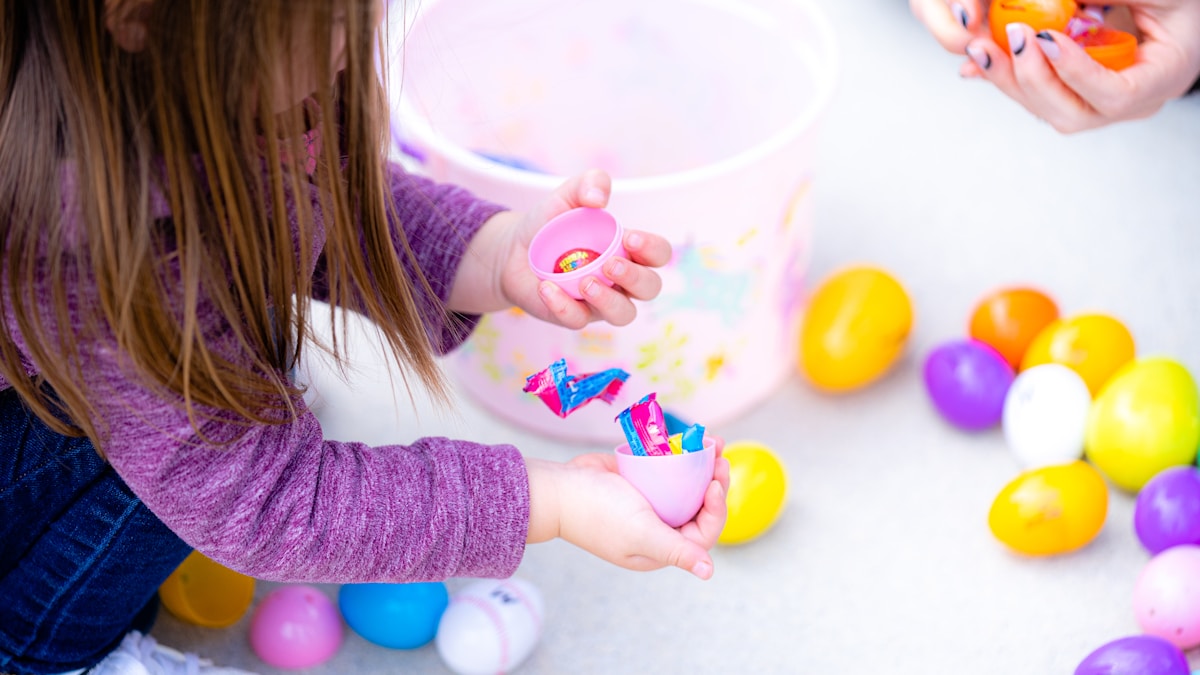
Think big, soft, and safe. Avoid hard candies, small toys, and anything that could be a choking risk.
- Puffs like Gerber Lil’ Crunchies or Happy Baby Organics Superfood Puffs.
- Small, soft fruit snacks. I love Annie’s Organic Bunny Fruit Snacks for the theme!
- Stickers! A sheet of colorful animal or character stickers can be rolled up to fit perfectly.
- Small, non-toxic finger puppets.
(Kitchen Hack: For this age group, use the largest jumbo-sized plastic eggs you can find. They are much easier for clumsy little hands to spot, grab, and even attempt to open.)
For the Junior Explorers (A Little More Variety):
This group can handle small, wrapped candies and tiny treasures.
- Classic foil-wrapped chocolate eggs (Cadbury Mini Eggs are a perennial favorite).
- Jelly beans or gummy snacks.
- Goldfish crackers or Teddy Grahams for a less sugary option.
- Temporary tattoos or bouncy balls.
For the Expert Hunters (Time for Fun Surprises):
Older kids love novelty. Mix in some non-candy items to make it exciting.
- Coins! A few quarters, dimes, and nickels make for a very exciting find.
- Slips of paper with handwritten jokes or riddles.
- A “Golden Ticket” egg that can be redeemed for a bigger prize, like a small Lego set, a new book, or the privilege of choosing the family movie that night.
Setting the Stage: Your Backyard Becomes the Magic Field
The art of hiding is all about tailoring the difficulty to the audience. In the Toddler Patch, “hiding” means placing eggs in plain sight. Seriously. Just plop them down right in the middle of the grass. Put one at the base of a very obvious tree. Rest another on top of a low garden wall. For a two-year-old, the victory is in the spotting and claiming.
For the older kids, think like a treasure master. Use the environment. Tuck an egg into the crook of a tree branch, balance one on a fence post, or hide one under a large leaf. The rule is: the older the kid, the more creative the hiding spot.
This is also where we need to have a gentle word about parental involvement. We all want to help our kids succeed, but the joy of an egg hunt comes from the child’s own discovery. I encourage setting up a “Parent Cheering Section” along the sidelines. Parents can point and shout encouragement (“I think I see a blue one over there!”) but should be asked to stay out of the hunting grounds. This prevents well-meaning adults from accidentally snatching eggs meant for other children and empowers each child to fill their own basket.
The Rules of Engagement: Ensuring Every Basket is Happy
To truly level the playing field and stamp out the competitive chaos, a few simple rules can work wonders.
First, implement an egg limit. Before the hunt begins, announce cheerfully, “Alright, hunters! Everyone gets to find 12 eggs today! Once your basket has 12, you can come to the finish line to show us your treasure!” This immediately shifts the goal from “get the most” to “find your share.” It encourages kids to slow down and savor the search, and it guarantees that even the slowest hunter will go home with a full basket.
Second, consider staggered starts. Let the Toddler Patch group begin their hunt a full five minutes before you release the older kids. This gives the little ones a calm, focused window of time to explore without being intimidated by the energy of the big kids. It’s their own special, private party.
Finally, set up a “Sharing and Trading Station.” This is a small table where, after the hunt, kids can trade candies they don’t like or share any extras they might have found beyond the limit. It’s a wonderful, low-pressure way to introduce the concepts of sharing and good sportsmanship.
Beyond the Hunt: Bringing the Fun Back to the Kitchen
The fun doesn’t have to end when the last egg is found! The grand finale should always lead back to the heart of the home: the kitchen. This is how you transform a 10-minute activity into a full day of family memories.
My absolute favorite post-hunt tradition is making Egg Hunt Bark. It’s incredibly simple and so much fun for the kids.
- Prep your station: Line a large baking sheet (a half-sheet pan works perfectly) with parchment paper.
- Melt the chocolate: In a microwave-safe bowl, melt about 12 ounces (around 340g) of good-quality chocolate chips or melting wafers. I like using Ghirardelli melting wafers as they set up beautifully. Microwave in 30-second intervals, stirring in between, until smooth. This usually takes about 90 seconds. Don’t let it get too hot—you’re aiming for around 115°F (46°C).
- Spread it out: Pour the melted chocolate onto the prepared baking sheet and use a spatula to spread it into a thin, even layer.
- The Fun Part! Now, let the kids unwrap their treasures and sprinkle them all over the melted chocolate. Crushed mini eggs, jelly beans, pretzels, leftover puffs—anything goes!
- Chill out: Place the baking sheet in the refrigerator for about 30-45 minutes, or until the chocolate is completely firm.
Once it’s set, you just break the bark into wonderfully random, delicious pieces. It’s a communal treat made from their own hard-won loot. Every bite is a reminder of their successful hunt.
At the end of the day, a little planning transforms a potentially stressful event into one of the year’s sweetest memories. It’s not about winning or losing; it’s about the gleam in a child’s eye when they spot that bright pink egg in the grass. It’s about the whole family coming together, first in the yard and then in the kitchen. Because the best treats, after all, are the moments we create together.



 Lucas
Lucas