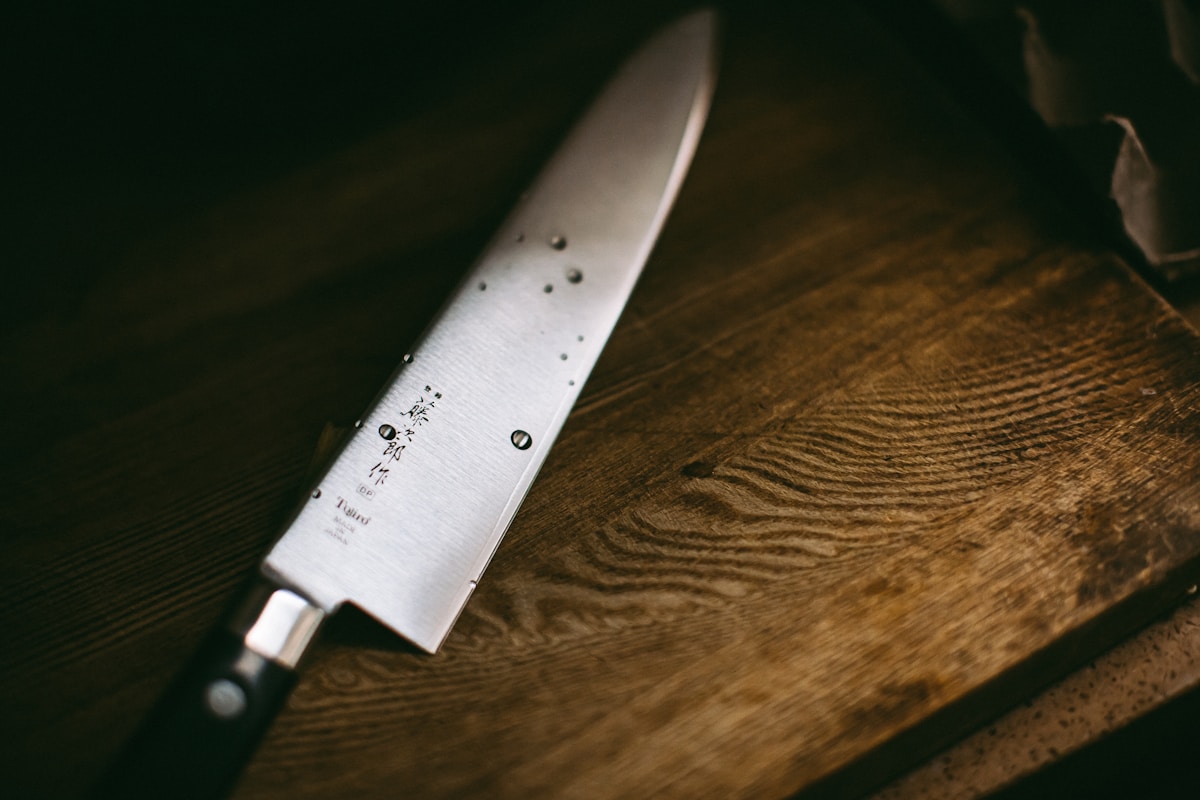
We’ve all been there. You’re in the middle of flipping pancakes on a Sunday morning, and a small, black flake of non-stick coating lands right in the batter. Or you’re trying to get a fine dice on an onion for your famous chili, but your cheap knife is mashing it into a tear-inducing pulp. It’s frustrating, and it makes cooking feel like a chore.
This is the moment many of us face the big question: do you run to the big-box store and buy another $25 replacement, or do you finally invest in something… better? The “buy once, cry once” philosophy isn’t just for power tools. In the kitchen, it’s a game-changer. The idea is simple: spend more upfront on a high-quality tool that will last for decades, rather than repeatedly buying and replacing cheap versions that fail you. But is it really worth it? As the gear reviewer here at kitchen-fun.com, I’ve tested hundreds of products, from bargain-bin finds to artisanal heirlooms. Let’s break down where your money makes a real difference.
The Anatomy of ‘Cheap’ vs ‘Quality’ What Are You Paying For?
When you see a $150 chef’s knife next to a $20 one, it’s easy to wonder what could possibly justify that price gap. It’s not just about a fancy brand name; it’s about material science, craftsmanship, and thoughtful design.
Materials: This is the biggest factor. A cheap knife often uses low-grade stainless steel that is stamped out of a large sheet, like a cookie cutter. It’s soft, won’t hold an edge for long, and feels flimsy. A quality knife, on the other hand, is often forged from a single piece of high-carbon steel. This metal is harder, allowing it to be sharpened to a razor-fine edge and, more importantly, hold that edge through weeks of use.
The same goes for cookware. Your average $25 non-stick skillet is made from a thin sheet of aluminum. It heats up quickly, but it also heats unevenly, creating hot spots that scorch your food. It’s also prone to warping under high heat. A high-end stainless steel pan, like an All-Clad, features a “clad” construction—a core of aluminum or copper for excellent heat conduction, sandwiched between layers of durable, non-reactive stainless steel. This construction provides the best of both worlds: even heating and incredible durability.
Construction & Design: Quality tools are built to last. Look at the handle of a good knife—you’ll often see a “full tang,” where the steel from the blade runs all the way to the end of the handle. This provides strength and balance. A cheap knife’s blade might only be glued a few inches into a plastic handle, creating a weak point that can (and does) break.
In cookware, it’s about sturdy rivets holding handles in place, not flimsy screws that loosen over time. For appliances like a stand mixer, it’s the difference between plastic gears that strip under pressure and an all-metal gearbox that can handle the stiffest bread dough without a problem. It’s all about creating a tool that feels like an extension of your hand, not something you have to fight with.
The Big Three Where Your Money Matters Most
You don’t need to replace your entire kitchen arsenal overnight. If you’re going to invest, start with the workhorses—the tools you reach for almost every time you cook. I call these “The Big Three.”
1. The Chef’s Knife This is your single most important tool. A good knife makes prep work faster, safer, and more enjoyable.
- The Budget Option: A typical department store knife ($15-$30). It feels light, the steel is soft, and it comes out of the package decently sharp. After a week of dicing onions and chopping carrots, it’s already starting to drag. You can’t slice a tomato without crushing it. (A tragedy for any sandwich lover.) You have to sharpen it constantly, and eventually, the soft steel just won’t hold an edge anymore.
- The Investment Piece: A Wüsthof Classic 8-Inch Chef’s Knife or a Global G-2 8-Inch. (Price range: $120-$180). From the moment you pick it up, you feel the difference. The weight is balanced perfectly in your hand. The forged high-carbon steel blade is incredibly sharp and stays that way for months with proper care (just a few passes on a honing steel before each use). It glides through produce. Dicing an onion becomes a quick, precise task, not a messy struggle. With minimal care, this knife will last your entire life.
Real-World Test: Take a ripe heirloom tomato. With the cheap knife, you have to saw back and forth, and you end up with a squashed slice and juice all over your cutting board. With the Wüsthof, a single, gentle downward push yields a perfect, clean slice with the skin intact. That’s the difference.
2. The Skillet Your go-to pan needs to handle everything from delicate eggs to a ripping-hot steak sear.
- The Budget Option: A thin, non-stick aluminum skillet ($20-$40). It works okay for a few months. But you can’t use high heat or it will get damaged. You can’t use metal utensils, or the coating will scratch. After a year, that “non-stick” surface is flaking into your food, and the bottom has warped into a dome, causing oil to pool around the edges.
- The Investment Piece: A Lodge 12-Inch Cast Iron Skillet (around $30-50, an incredible value) or an All-Clad D3 12-Inch Stainless Steel Fry Pan (around $130-$170). These are tanks. Cast iron provides unmatched heat retention, giving you that deep, gorgeous crust on a steak or burger. Stainless steel offers precise control and the ability to build a beautiful “fond” (the browned bits on the bottom of the pan) for making pan sauces. Both can go from the stovetop directly into a 500°F (260°C) oven and will literally last for generations.
Real-World Test: Let’s sear a steak. Heat the Lodge cast iron over high heat for 5-7 minutes until it’s lightly smoking. Add a tablespoon of neutral oil. Place a thick-cut, pat-dried ribeye in the pan. The hiss is deafening and immediate. After 3 minutes, you’ll have a dark, even, crunchy crust that is impossible to achieve in a cheap non-stick pan that would buckle and scorch under that kind of heat.
The Workhorse Appliance The Stand Mixer Debate
For bakers, a stand mixer is non-negotiable. This is where the difference between cheap and quality becomes a matter of pure physics and power.
- The Budget Option: A generic brand mixer with a plastic body and a 300-watt motor ($50-$150). It’s fine for whipping cream or making a simple cake batter. But the second you try to make a batch of bagel dough or a rustic sourdough, the motor strains, the mixer head bogs down, and the whole machine might start walking across your counter. The plastic gears inside are a ticking time bomb.
- The Investment Piece: A KitchenAid Artisan Series 5-Quart Stand Mixer (around $450). This is the industry standard for a reason. With its all-metal construction and a powerful, direct-drive motor, it doesn’t flinch. The planetary mixing action ensures every bit of flour is incorporated from the bottom of the bowl. It can knead a stiff dough for 10-15 minutes without breaking a sweat. Plus, the power hub allows you to add attachments for everything from grinding meat to making pasta. It’s not just a mixer; it’s a kitchen platform.
Real-World Test: Try a simple sourdough recipe requiring a 10-minute knead. In the budget mixer, you’ll hear the motor pitch change and whine as the gluten develops and the dough stiffens. You might even smell a faint electrical odor. (That’s not a good sign.) With the KitchenAid, you set the timer, turn it to speed 2, and walk away. The low, steady hum is the sound of a machine doing exactly what it was designed to do, effortlessly.
Kitchen Hack When ‘Good Enough’ is Actually Great
Now, I’m not saying you need to take out a second mortgage to equip your kitchen. The “value over vanity” philosophy means being smart. You invest in the tools where performance and durability are critical. For many others, cheap is perfectly fine.
Here’s where you can save your money:
- Silicone Spatulas & Turners: A $5 silicone spatula works just as well as a $25 one. They’re consumable items.
- Mixing Bowls: A simple set of stainless steel nesting bowls is lightweight, durable, and costs very little. No need for fancy ceramic or glass unless you love the look.
- Vegetable Peelers: The simple, Y-shaped Kuhn Rikon peeler costs about $5 and is beloved by professional chefs everywhere. It’s sharper and more effective than many peelers that cost five times as much.
- Basic Whisks & Measuring Cups: As long as they’re sturdy and the measurements are accurate, the budget versions are all you need.
The Real Hack: The best way to make your investment pay off is to take care of your tools. My number one tip is for your knife: Get a honing steel and learn how to use it. A quick 10-second hone before each use doesn’t sharpen the knife, it realigns the microscopic edge, keeping it sharp for much longer between professional sharpenings. For cast iron, learn the simple process of seasoning. It takes five minutes after each use and builds a natural, non-stick surface that gets better with age.
The Final Verdict Calculating the True Cost of Your Kitchen
Let’s do some simple math. You buy a $25 non-stick pan and it lasts, being generous, two years before the coating is shot. Over a decade, you’ve spent $125 on five pans that you’ve thrown in the trash.
Alternatively, you buy one $40 Lodge cast iron skillet. You take care of it. In ten years, it’s performing better than the day you bought it. In twenty years, your kids might be fighting over who gets to inherit it. You’ve saved $85 and created zero waste.
The same logic applies to your knife. One $150 Wüsthof will outlast a lifetime of replacing $20 knives. A KitchenAid mixer will still be kneading dough long after three cheaper mixers have had their plastic gears turned to dust.
The “buy once, cry once” approach isn’t about being a snob or having the most expensive gear. It’s about recognizing that cooking is a physical act. The tools you use directly impact the process and the result. Investing in a few core, high-quality pieces saves you money, reduces waste, and, most importantly, removes frustration from the kitchen. It makes cooking the joyful, creative act it’s meant to be. And that’s a return on investment you can taste.