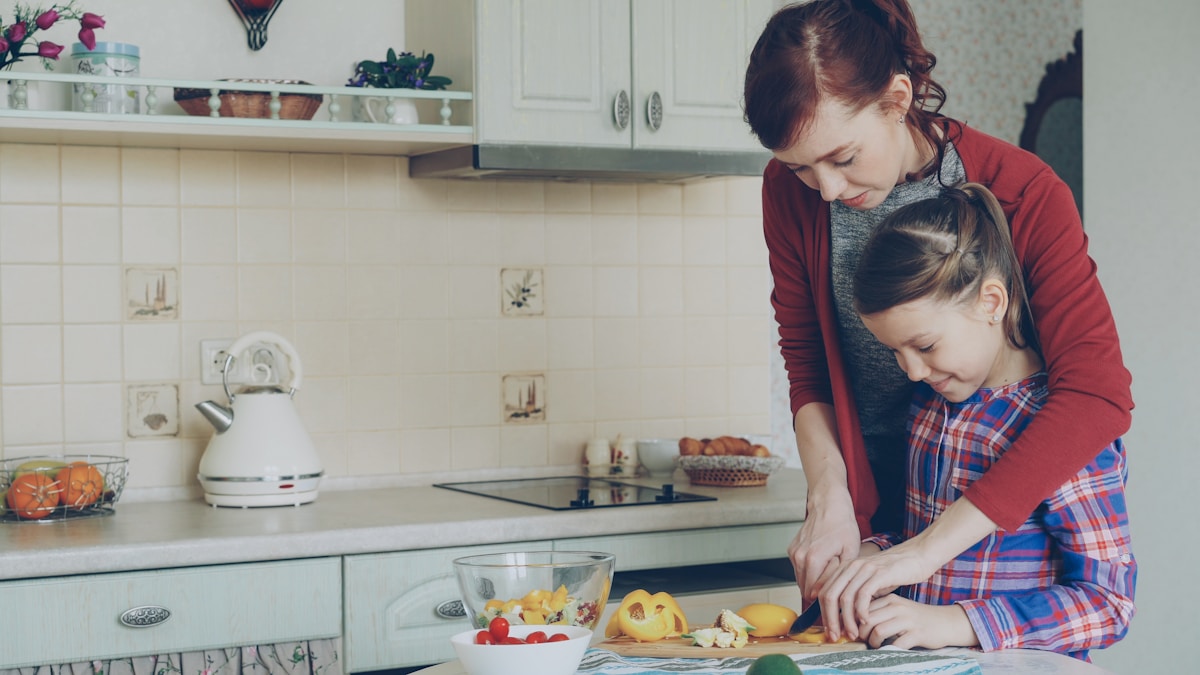
The pasta water is nearly boiling, someone wants a snack, and your preschooler suddenly wants to help with dinner. On a busy night, it can feel easier to say, “Not now.”
But preschooler kitchen tasks do not have to mean handing over the meal or creating a separate cooking project. One small, useful job for five focused minutes can help your child feel included while dinner keeps moving.
Key Takeaways
- Give your preschooler one short, specific job instead of expecting them to help with the entire meal.
- Choose cool, simple tasks such as rinsing produce, tearing greens, sprinkling toppings, or setting the table.
- Set up the task before inviting your child over, with a clear finish line and a small portion of ingredients.
- Keep adults in charge of heat, sharp tools, appliances, raw ingredients, heavy dishes, and cooking timing.
- Expect some mess and a short attention span; five helpful minutes is a success.
Start With One Small, Useful Job
Cooking with preschoolers works best when the task is ready before your child arrives at the counter. Pick one job that matches their coordination, mood, and interest that day, then explain exactly what to do and when it is finished.
A preschooler may happily tear lettuce for two minutes and then decide they are done. That is normal. The goal is not to keep them engaged through every stage of dinner; it is to give them a real way to contribute.
Try this quick setup:
- Wash hands together before handling food.
- Use a stable, appropriately sized step stool only with close adult supervision.
- Clear a small work area and put away unrelated tools.
- Set out only the ingredients and tools needed for one task.
- Give a concrete finish line, such as, “Put cheese on these four tortillas,” or “Tear enough lettuce to fill this bowl.”
- Keep the adult responsible for heat, sharp tools, appliances, raw ingredients, and the overall dinner timing.
A tray or rimmed baking sheet can make a useful child work station. It creates a visible boundary, catches dropped toppings, and can be moved out of the way when you need counter space.
Easy Preschooler Kitchen Tasks Before Cooking Begins
Some of the best easy kitchen jobs for kids happen before cooking starts. The kitchen is usually calmer then, without steam, hot pans, and last-minute steps competing for attention.
Wash and sort sturdy produce. With an adult nearby, a preschooler can help rinse sturdy fruits and vegetables in a colander or bowl. Potatoes, bell peppers, cucumbers, apples, and snap peas are practical options.
After rinsing, ask your child to sort ingredients by color, size, or purpose. On taco night, they might rinse peppers while you prepare the filling. For a sheet-pan dinner, they can place potatoes in one bowl and broccoli in another before you handle cutting and cooking.
Keep the portion small. Give your child two peppers and a cucumber rather than a full grocery bag. A manageable amount helps prevent the task from turning into a wet, slippery production.
Tear soft ingredients. Tearing is one of the most useful 3 year old cooking activities because it fits ordinary meals. Your child can tear lettuce or spinach for salad, soft herbs for a garnish, tortillas for a layered casserole, or soft bread for a side dish.
Demonstrate once: pinch, pull, drop. For a family salad, say, “Fill this bowl halfway with torn lettuce.” The pieces do not need to be even to be useful.
Carry lightweight dinner items. Preschoolers often enjoy carrying things from the counter to the table. Ask them to move napkins, plastic bowls, lightweight produce, sealed spice containers, or a small bowl of shredded cheese.
Skip glass, large bottles, heavy cookware, and anything hot. If an item would be a problem when dropped, choose something lighter and less breakable.
Unpack groceries with a purpose. Grocery unpacking can become one of those repeatable family dinner helper jobs that makes children feel capable. Your child can place produce in a bowl, hand you shelf-stable items one at a time, or sort ingredients into “use tonight” and “save for later.”
Before spaghetti night, for example, they might put the pasta box, sauce jar, and napkins into a dinner basket. You can handle heavy, breakable, refrigerated, or difficult-to-open items.
Make a two-choice dinner decision. Preschoolers do not need control over the whole menu to feel involved. Offer two options you are already comfortable serving: broccoli or peas, rice or pasta, cucumber slices or carrot sticks, cheese or avocado for tacos.
Two choices are easier than an open-ended question. “Should we have peas or broccoli with dinner?” gives your child a real decision without slowing down the meal plan.
Helpful Jobs During Dinner Prep and Assembly
The most practical preschooler kitchen tasks during active prep are usually cool, low-risk assembly jobs. These work well after an adult has chopped, cooked, measured, or opened the ingredients.
Pour pre-measured ingredients. Put a small amount of an ingredient into a cup or bowl, then let your child pour it into a larger cool bowl. They can add shredded cheese to a casserole before it goes into the oven, prepared vegetables to a salad bowl, or sauce to a mixing bowl while you hold it steady.
Small portions are easier to manage than full packages. Instead of handing over a large bag of cheese, offer a handful in a small bowl. If it spills, the mess stays small and the job still feels successful.
Pouring close to a stove or over a hot pan requires an adult directly beside the child. When possible, move the task to a cool counter and handle the hot step yourself.
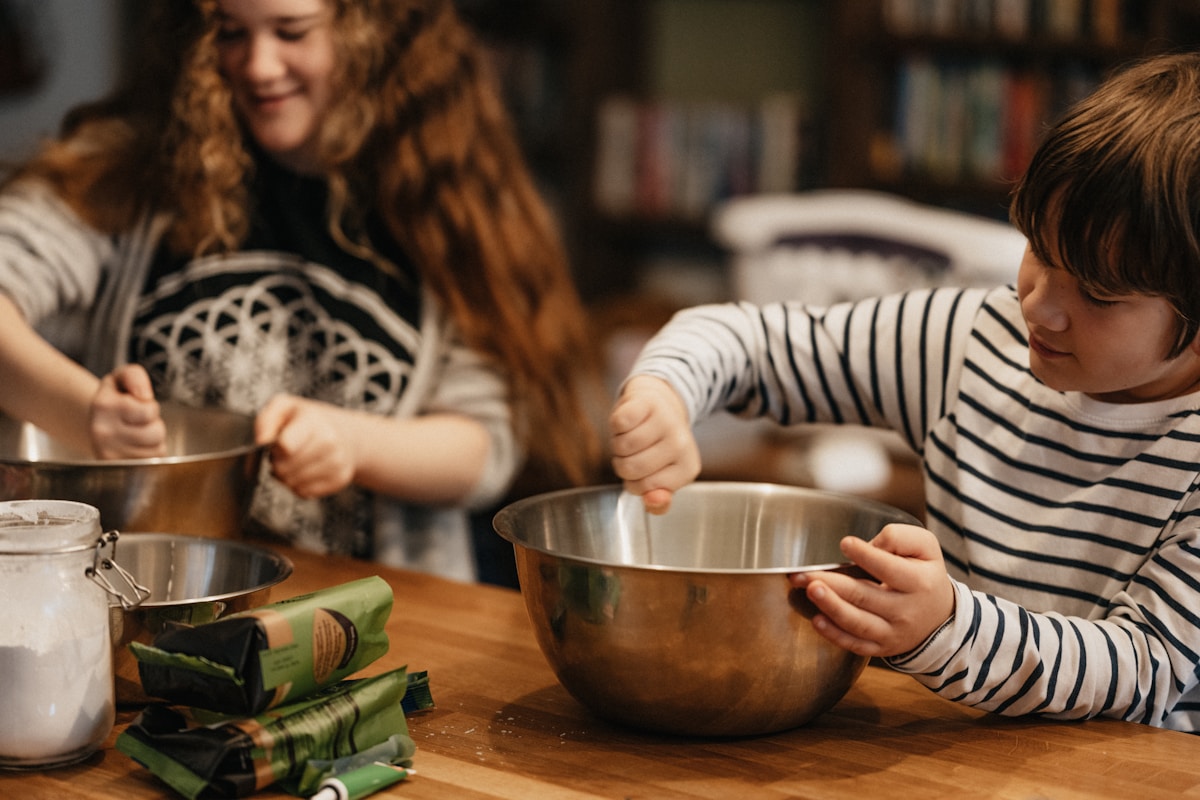
Stir cool ingredients. Stirring is satisfying for young children, but it works best with a stable bowl and cool ingredients. A preschooler can mix salad, yogurt dip, cold pasta salad, pancake batter, or mashed potatoes that have cooled enough for the task.
Use a sturdy spoon and a wide bowl with room below the rim. A damp cloth under the bowl can reduce sliding. Give a simple direction such as, “Stir ten times,” rather than expecting perfect mixing.
Sprinkle and top. Toppings make excellent kids meal prep tasks because there is an obvious beginning and end. Your child can sprinkle shredded cheese, breadcrumbs, herbs prepared by you, or a seasoning portion you have measured.
Try topping flatbreads, adding cheese to tacos, placing cucumber slices on sandwiches, or sprinkling herbs over a serving bowl. For pizza-style flatbreads, give your child one flatbread or one section instead of the entire batch.
Build simple foods. Assembly helps children see a direct result from their work. Preschoolers can layer tortillas for quesadillas before an adult cooks them, build sandwiches, add ready-to-use ingredients to a salad, or arrange vegetables on a serving platter.
Tacos are especially flexible. The adult cooks the filling and prepares ingredients that need cutting. The child can add cheese, beans, lettuce, or other ready-to-use toppings to bowls or onto their own taco.
Set the table. Setting the table is one of the most dependable family dinner helper jobs. Ask your child to place napkins, placemats, unbreakable cups, and utensils where they belong.
Make the direction concrete: “Put one napkin at each chair,” or “Give everyone one fork.” If matching is fun for your child, leave one finished place setting as a model.
Some jobs can be done with you within arm’s reach, such as placing toppings on a tray at the counter. Others need you directly beside your child, including pouring something likely to spill or working near the cooking area. The difference is not whether your child is capable; it is whether the task and space can stay safely controlled.
Dinner Tasks That Need Direct Adult Supervision—or an Adult Only
Including your child does not mean making them responsible for every dinner step. A clear handoff is often the safest and easiest routine: your child works on a cool component while you manage the cooking.
Adult-only tasks include using the stove, oven, microwave, air fryer, blender, food processor, mixer, sharp knives, graters, hot pans, hot oil, and boiling water. Draining pasta, lifting heavy dishes, and moving cookware should also remain adult jobs.
Tasks needing direct adult supervision include working near heat, opening cans or packages, using any cutting tool, and handling raw eggs, meat, poultry, or seafood. Take extra care with unwashed produce and foods that are small, round, hard, sticky, or otherwise difficult to chew.
Keep your child close enough that you can guide their hands or move the task away quickly if needed. Follow manufacturer instructions for any appliance, stool, or child kitchen tool. A tool marketed for children is not a substitute for active adult supervision.
A safe food prep for preschoolers routine might look like this: your child tears lettuce and adds cheese to a bowl; you cook the meat, handle raw ingredients, and manage the hot pan; then your child puts napkins on the table. Everyone participates, while the adult remains in charge of safety-sensitive steps.
Make Cooking With Preschoolers Work on a Busy Night
The goal is not a perfectly calm, fully collaborative dinner. The goal is a small moment of connection that fits real life.
Plan for a five-minute helper window. Invite your child in after you have gathered ingredients and before the busiest cooking stage begins. When the job ends, have them wash hands and transition to setting the table, coloring nearby, looking at a book, or another supervised activity while dinner finishes.
Reduce mess before it happens. Put a small portion of the ingredient in a bowl instead of offering the entire package. Use a tray, keep a damp cloth nearby, and give your child an empty bowl for scraps.
Use precise directions. “Put three cucumber slices on each plate” is clearer than “Help with the salad.” “Carry these four napkins to the table” is easier than “Set up dinner.” Specific instructions also show your child when the task is complete.
Accept imperfect results when safety is not affected. A sandwich may have too much cheese on one side, or a salad may be stirred more than necessary. Those small imperfections are part of learning.
Repeat the same jobs often. A child who regularly tears lettuce on taco night or places napkins at dinner begins to recognize the routine. Familiar jobs are usually easier than introducing a new activity every evening.
End with one small cleanup task. Your preschooler might throw away a napkin, carry an unbreakable cup to the sink, put a spoon in a designated dish tub, or wipe a low surface with adult guidance. Kitchen helping includes tidying as well as preparing food.
FAQ: Preschooler Kitchen Tasks for Dinner
What can a 3-year-old help make for dinner?
A 3-year-old may be ready for simple, supervised jobs such as rinsing sturdy produce, tearing greens, stirring cool ingredients, sprinkling toppings, building a sandwich or taco, and putting napkins on the table. Choose one small job rather than expecting them to help through every stage of dinner.
Can preschoolers use knives when cooking?
Sharp knives require close adult control, and preschoolers should not use them independently. If you choose to introduce any cutting tool, stay directly beside your child, consider their individual readiness, and follow the manufacturer’s instructions. Many useful dinner tasks do not require cutting at all.
How do I cook with a preschooler without making dinner take twice as long?
Prepare one short task in advance, give a clear finish line, and aim for about five minutes of helping. Let your child add cheese to four tortillas, for example, then move on to napkins or another supervised activity while you complete the meal. Small, repeatable jobs make cooking with preschoolers feel cooperative instead of overwhelming.