We all talk about the big “firsts” in our children’s lives, don’t we? The first wobbly bike ride without training wheels, the first time they catch a ball, the day they finally drive the car out of the driveway alone. These are huge, wonderful milestones. But I’m here to tell you that some of the most powerful, lasting memories—what some people are calling ‘core memories’—aren’t made on a baseball field or a bicycle path. They’re made in the warm, wonderful, and sometimes messy heart of the home: the kitchen.
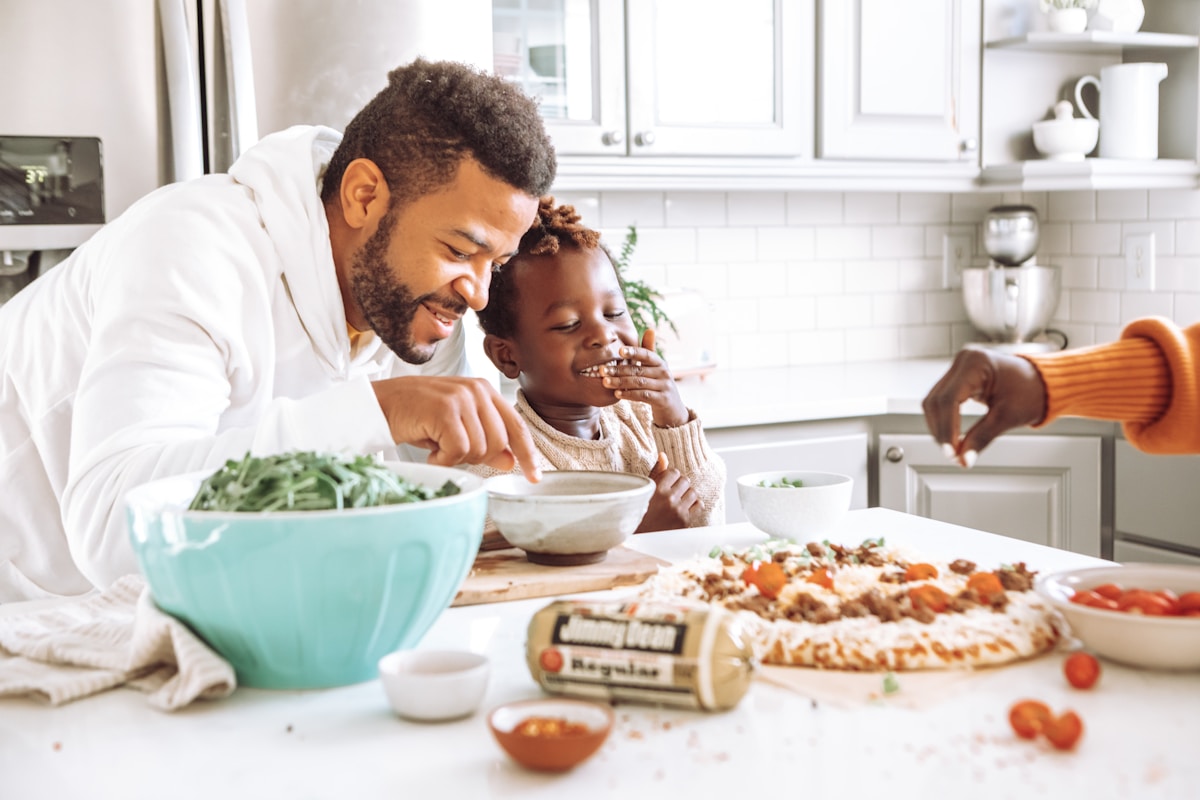
More and more, I hear from dads who are looking for exactly this kind of connection. They want to do more than just watch a movie together; they want to build something, to teach a real skill, to create a ritual that belongs just to them. And the kitchen is the perfect place to do it. It’s a world of science, art, and pure magic, all waiting to be explored one simple skill at a time. The goal isn’t to raise the next celebrity chef (though you never know!), it’s to raise a confident, capable child who knows the deep satisfaction of making something with their own two hands.
Why the Kitchen is the New Workshop
For generations, the garage or the workshop was often seen as the place where dads passed down skills. Fixing a leaky faucet, changing the oil, building a birdhouse—these were the hands-on lessons. Today, that same spirit of mentorship is finding a vibrant new home right next to the stove. And it makes perfect sense! Cooking is one of the most fundamental life skills we can offer our children.
When you teach a child to cook, you’re not just showing them how to follow a recipe. You’re teaching them patience, how to follow directions, and the importance of cleaning up after themselves. You’re giving them a crash course in basic math with measuring cups and a science lesson in what happens when heat meets butter and sugar. (Spoiler alert: delicious things happen.)
Most importantly, you’re creating a space for conversation. While you’re peeling carrots or waiting for water to boil, the day’s stories come tumbling out. It’s a low-pressure environment where you’re working side-by-side toward a common, yummy goal. You’re building a team. The spills and the slightly burnt cookies aren’t failures; they’re the funny stories you’ll tell for years to come.
The First Rung on the Ladder: Ages 3-5
For the littlest chefs, the kitchen is a giant sensory playground. At this age, it’s all about exploration, not precision. Your job is to provide safe, fun tasks that let them feel like a genuine helper. Put a sturdy stool by the counter, roll up their sleeves, and let the fun begin.
Key Skill 1: The Mighty Egg Crack
This is a huge one. For a little kid, successfully cracking an egg is like climbing Mount Everest. It feels like a superpower. Forget tapping it on the edge of a bowl, which often pushes tiny shell fragments into the egg. Here’s my never-fail method:
- Give them a separate small bowl to crack the egg into. This is your “oops” bowl, just in case.
- Teach them to tap the egg firmly but gently on a flat, hard surface, like the countertop. This creates a single, clean fracture line.
- Show them how to place their two thumbs on either side of the crack and gently pull it apart. The egg will plop right out.
Will bits of shell get in? Sometimes! Just stay calm and fish them out with a larger piece of the eggshell—the shell acts like a magnet. Your calm reaction teaches them that mistakes are no big deal.
Key Skill 2: World-Class Stirring and Mashing
This is where their little muscles get a workout. Give them a bowl with a non-slip bottom (a damp dish towel placed underneath works wonders) and a whisk or a wooden spoon. They can help stir pancake batter, whisk eggs for scrambling, or mix together a simple vinaigrette. The task is satisfyingly physical. Mashing is another winner. A ripe banana for banana bread or a soft, cooked sweet potato can easily be mashed with a simple fork or a potato masher, giving them a real sense of accomplishment.
Key Skill 3: The Official Produce Washer
This is a genuinely helpful job that toddlers can own. Set them up safely at the sink and let them scrub potatoes with a vegetable brush or rinse berries in a colander. They love playing in the water, and you get clean produce. It’s a win-win!
Building Confidence: Ages 6-9
As their fine motor skills develop, kids in this age range are ready for more responsibility. They can begin to use simple tools and understand basic cooking concepts, always with close supervision, of course.
Key Skill 1: Mastering the Vegetable Peeler
Handing your child a sharp object for the first time feels like a big step, because it is! But with the right tool and technique, it’s a safe and empowering one. I highly recommend a Y-peeler; the design is often more stable and easier for small hands to control. Start with something simple like a carrot or a potato.
- The Golden Rule: Always, always peel away from your body and your fingers. Demonstrate this motion clearly several times. Hold the vegetable firmly at the top, and peel downwards onto a cutting board. It may feel slow and clumsy for them at first, but praise their focus and safe technique above all else.
Key Skill 2: Measuring Like a Scientist
Baking is the perfect arena for teaching precise measurement. Explain the difference between liquid and dry measuring cups. Show them the proper way to measure flour: spoon it into the measuring cup until it’s overflowing, then use the flat back of a butter knife to level it off perfectly. This one tip will instantly improve their (and your) baking! It’s a fun, tangible way to introduce concepts like fractions and precision.
Key Skill 3: The Perfect Scrambled Eggs
This is often the first full dish a child learns to make from start to finish, and it can become “their thing.” A dad on a forum I follow mentioned that making scrambled eggs with his daughter is now their special weekend ritual, a bond built over a warm pan.
Here’s a simple recipe for one:
- Crack 2 large eggs into a bowl.
- Add 2 tablespoons of milk or cream, a pinch of salt, and a dash of pepper.
- Whisk it all together until it’s a uniform, pale yellow.
- Heat a small non-stick skillet over low—and I mean low—heat. Add a pat of butter.
- Pour in the eggs and let them cook slowly, stirring gently and constantly with a silicone spatula. The low heat is key to creamy, soft eggs, not dry, rubbery ones. It takes about 3-4 minutes. This teaches them the invaluable lesson of heat management.
The Junior Sous Chef: Ages 10-13
Now we’re really cooking! Kids in the pre-teen years can handle more complex tasks and start to follow recipes with more independence. This is where they can take the lead on making a simple family meal, boosting their confidence to new heights.
Key Skill 1: The Ultimate Grilled Cheese
This is a culinary rite of passage. But there’s a difference between a basic grilled cheese and a great one. Teach them the secrets!
- The Heat: Use medium-low heat, around 275-300°F (135-150°C). If the heat is too high, the bread will burn before the cheese has a chance to get gloriously melty.
- The Fat: Here’s the hack: spread softened butter or mayonnaise directly on the outside of the bread slices, from crust to crust. This guarantees an evenly golden, crispy exterior.
- The Cheese: Use a good melting cheese like mild cheddar, American, or Provolone. Encourage them to try combinations! A slice of cheddar and a slice of provolone is a game-changer.
Key Skill 2: Safe Stovetop Cooking
Beyond grilled cheese, this is a great age to teach them how to make a pot of pasta or heat up a can of soup. The most important lesson is safety. Teach them to always turn pot handles inward, away from the edge of the stove, to avoid accidental spills. When draining pasta, you should handle the heavy pot of boiling water, but they can be in charge of setting the timer, testing the pasta for doneness, and scooping the sauce.
Key Skill 3: Following a Recipe from Start to Finish
Choose a simple, rewarding recipe like classic chocolate chip cookies. A recipe like the one on the back of the Nestlé Toll House chocolate chip bag is practically foolproof. Let them take the lead. Have them read each step, gather the ingredients (a concept chefs call mise en place), and perform each action. Your role is to be the guide, ready to answer questions or help with the heavy mixer, but let them be the chef.
The Secret Ingredient is Ritual
Teaching individual skills is fantastic, but the real magic happens when you turn it into a tradition. This is how you create those core memories that last a lifetime. It doesn’t have to be complicated. Consistency is more important than complexity.
Maybe you establish ‘Pancake Saturday,’ where your son is the official batter-stirrer and berry-placer. Or ‘Taco Tuesday,’ where your daughter is the master guacamole-masher and cheese-grater. Giving them an official title and a consistent role fosters a powerful sense of pride and ownership. It’s their job. It’s their night.
These rituals become anchors in the busy sea of family life. They are the moments your kids will look back on twenty years from now and say, “Remember how Dad and I always made pancakes on Saturdays?” That, right there, is the good stuff.
So, Dad, get in the kitchen. Embrace the flour on the floor and the eggshells on the counter. Celebrate the lopsided cookies and the slightly-too-salty soup. Because you’re not just making dinner. You’re making memories. And those are the most nourishing things of all. The mess will wash away, but the feeling of creating something together will stick around forever.