You know that moment when you pull a pan of brownies out of the oven and the surface is a matte, dusty mess instead of a glossy, crackled crust? It is frustrating, especially when you see a Reddit user proudly showing off a brownie with a glasslike top that shatters when you bite into it. That crackly top is the holy grail for many home bakers. It signals a crust that is crisp and slightly chewy, contrasting with a fudgy, almost molten interior. The good news is that achieving it is not luck. It is a straightforward combination of ingredients, technique, and oven heat. Let us break down exactly how to get that crackly top every time.
The Science Behind the Crackle
The crackly top forms because of a thin layer of meringue that sets on the surface before the interior fully cooks. When you beat eggs and granulated sugar together, you incorporate air and dissolve the sugar, creating a foamy mixture. This foam rises to the top of the batter during baking. As the brownies heat up, the sugar in that foam caramelizes and the proteins in the egg whites coagulate, forming a thin, brittle crust. At the same time, the center of the brownie remains underdone and moist because the batter is dense with fat and chocolate. The contrast between the set crust and the soft interior creates the cracks. King Arthur Baking explains that a higher ratio of sugar to flour is critical for this effect. Sugar not only sweetens but also raises the temperature at which the batter sets, allowing the top to harden before the middle is done. Bon Appétit\u2019s recipe analysis confirms that beating the eggs and sugar until thick and pale (the "ribbon stage") is non-negotiable. The air you incorporate acts as insulation, helping the top brown faster.
Ingredients: Choose Wisely
For a reliable crackly top, start with the right ingredients. Granulated white sugar is essential. Brown sugar contains molasses, which attracts moisture and can make the top sticky rather than crisp. You want a high sugar-to-flour ratio \u2014 roughly 1.5 times as much sugar as flour by weight. For example, if you use 1 cup (120g) of all-purpose flour, use about 1.5 cups (300g) of sugar. King Arthur Flour recommends their unbleached all-purpose flour for consistent results, but any brand works.
Eggs are next. Use large eggs at room temperature. Cold eggs are harder to beat to full volume. The original Reddit poster used butter, melted chocolate, and cocoa powder \u2014 a combination that delivers both flavor and structure. I recommend using a mix: 4 ounces (113g) of semisweet or bittersweet chocolate (like Ghirardelli or Guittard) and 3/4 cup (65g) of Dutch-process cocoa powder. Dutch-process cocoa has a darker color and richer flavor, which also gives the crust a deeper mahogany tone. Regular natural cocoa works too, but the crust may be lighter. Butter adds richness; use unsalted butter, 1 cup (226g) melted and slightly cooled.
Technique: The Beating Is Everything
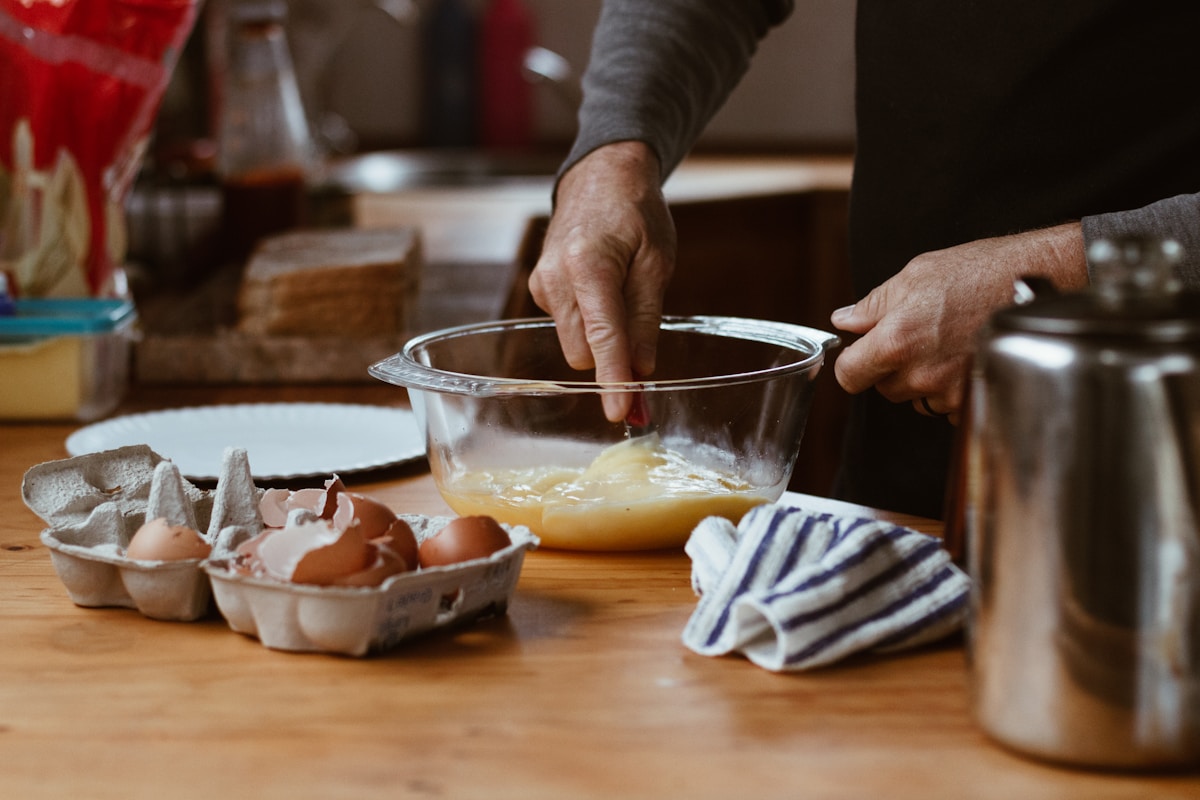
This is where most homemade brownies fall short. You need to beat the eggs and sugar long enough. In a stand mixer fitted with the whisk attachment (KitchenAid is ideal), beat 4 large eggs and 2 cups (400g) granulated sugar on medium-high speed for 5 to 7 minutes. The mixture should turn pale yellow, thick, and fall in a ribbon when you lift the whisk. If you are using a hand mixer, go for 8 to 10 minutes. This step cannot be rushed. Underbeaten eggs will not create enough foam, and the crust will not set properly.
Once the egg-sugar mixture is ready, gently fold in the melted butter and chocolate (cooled so it does not cook the eggs). Then sift together 1 cup (120g) all-purpose flour, 3/4 cup (65g) Dutch-process cocoa, and 1/2 teaspoon salt. Fold the dry ingredients into the wet mixture in two additions. Do not overmix. Overworking develops gluten, which makes brownies cakey rather than fudgy and can prevent a crackly top. You want a thick, glossy batter that still has some air bubbles.
Baking for the Perfect Crust
Preheat your oven to 350\u00b0F (175\u00b0C). Line an 8x8-inch metal pan with parchment paper, leaving overhang for easy removal. Metal pans conduct heat better than glass or ceramic, helping the top set faster. If you only have a glass pan, lower the temperature to 325\u00b0F (163\u00b0C) and increase baking time by 5 minutes. Pour the batter into the pan and spread evenly. Bake for exactly 20 minutes at 350\u00b0F, then start checking. The top should look shiny, cracked, and slightly puffed. Insert a toothpick into the center; it should come out with a few moist crumbs attached, not wet batter. If the toothpick is clean, you have overbaked. Total time is typically 22-25 minutes. Every oven is different, so use an oven thermometer (I recommend the ThermoPro) to verify the temperature.
After baking, let the brownies cool completely in the pan on a wire rack. The crust continues to firm up as it cools. Do not cut them while warm, or the crackly top will shatter into a mess. Patience is rewarded.
Troubleshooting Common Failures
My brownies have no crackle. This is almost always due to underbeaten eggs or too much flour. Make sure you beat the eggs and sugar until thick and pale. Also check your sugar ratio: if you use less than 1.5 cups sugar per cup of flour, the crust may not set. Finally, your oven might be too cool \u2014 invest in an oven thermometer.
The top is crackly but the brownies are dry. You overbaked them. Brownies continue to cook from residual heat after removal. Pull them out when the toothpick has a few moist crumbs. Next time, reduce baking time by 2 minutes.
The crust is too thin or brittle. This happens when the batter has too much air or the sugar level is extremely high. Stick to the ratio above. Also, do not overbeat once flour is added; that knocks out air. (Your future self will thank you for measuring carefully.)
The top is matte and dull. Lack of sugar in the top layer, or the eggs weren’t beaten enough to create a foam that rises. Also, using natural cocoa instead of Dutch-process can produce a grayer crust. Dutch-process is worth seeking out for visual appeal alone.
A Reliable Recipe to Try
Here is a go-to formula adapted from both King Arthur and Bon App\u00e9tit\u2019s principles. It yields a glorious crackled top and fudgy center.
- 1 cup (226g) unsalted butter
- 4 ounces (113g) bittersweet chocolate, chopped (like Ghirardelli 60% cacao)
- 2 cups (400g) granulated sugar
- 4 large eggs, room temperature
- 1 teaspoon vanilla extract
- 1 cup (120g) all-purpose flour (King Arthur Flour works beautifully)
- 3/4 cup (65g) Dutch-process cocoa powder (try Cacao Barry or Droste)
- 1/2 teaspoon salt
Melt butter and chocolate together, then cool. Beat eggs and sugar with an electric mixer on high until thick and pale (5-7 minutes). Beat in vanilla. Fold in chocolate mixture. Sift flour, cocoa, and salt; fold in just until combined. Bake in a parchment-lined 8x8-inch metal pan at 350\u00b0F for 22-25 minutes. Cool completely. The top will be crackled, shiny, and shatter when you slice. (Trust me on this one.) Enjoy the moment of pride when you share a photo online.
Final Thoughts
Getting a crackly top on homemade brownies is not a mystery. It comes down to a high-sugar batter, thoroughly beaten eggs, a hot oven, and the right pan. Once you understand the chemistry, you can tweak the recipe to your preferences \u2014 add a bit more chocolate, swap in some brown sugar for a chewier crumb (but expect a less pronounced crackle), or fold in nuts. The crackly top is a sign that you have mastered the balance between foam and structure. Now go bake a batch and watch that glossy crust form. It is a small kitchen victory that never gets old.