


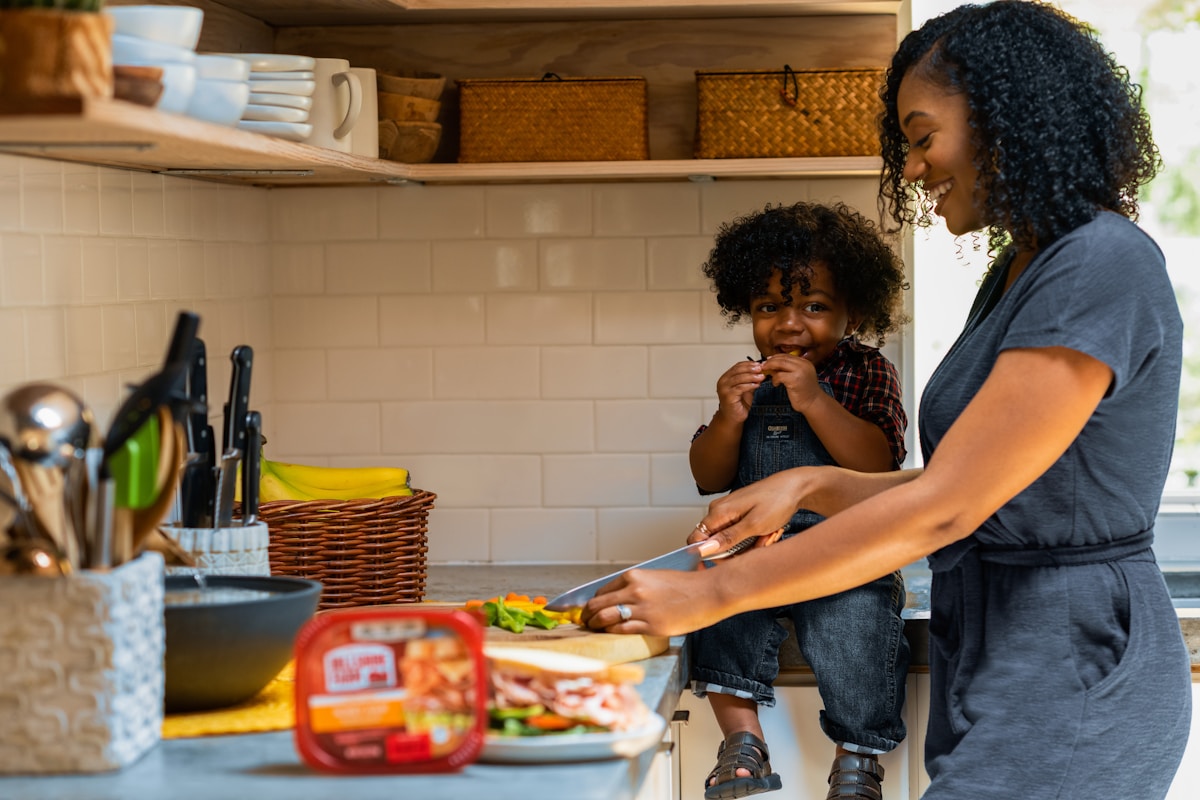
It is late afternoon, someone is tugging at your leg, and the moment you reach for the cutting board, your toddler suddenly needs to be held. Dinner still needs to happen, but independent play is not happening tonight.
You can cook with a clingy toddler without expecting them to entertain themselves through an entire meal-prep session. The goal is more realistic: offer connection, keep them safely nearby, finish one short task at a time, and choose dinners that can handle interruptions.
Key Takeaways
- Aim for short cooking bursts, not a long stretch of independent play.
- Spend a few focused minutes connecting before you begin dinner.
- Set up a supervised activity or helper job outside the active cooking area.
- Choose simple meals and shortcuts that can pause when your toddler needs you.
- Use a backup dinner without guilt when the original plan is no longer working.
Start With a Connection-First Plan, Not a Perfect Independence Goal
Toddlers often need extra closeness at the end of the day. They may be hungry, tired, overstimulated, or simply ready for your attention after a busy day. Their protest when you begin cooking does not mean you have failed at routines or independent play.
Instead of aiming for 30 uninterrupted minutes in the kitchen, aim for one useful step. Wash vegetables, start pasta, or put beans and cheese on a tortilla. Then pause, reconnect, and decide on the next smallest step.
A workable rhythm can look like this:
- Spend five minutes connecting.
- Set up a nearby activity or helper job.
- Complete one kitchen task that takes a few minutes.
- Check in with your toddler.
- Repeat only while it is helping.
This may be less efficient than cooking alone, but it is often more realistic than trying to finish an ambitious recipe while a distressed toddler is asking to be close.
If your child stays near you and is reasonably settled, that is a win. If dinner becomes eggs and toast instead of the meal you planned, that counts too.
Use a Five-Minute Connection Ritual Before You Cook
Before starting dinner, give your toddler a brief, predictable moment of full attention. Sit together, cuddle, read one short book, sing a familiar song, or talk about what you are making.
You might say, “First we will have five minutes together. Then I will start dinner, and you can stay close to me.” A simple routine is easier to repeat when everyone is tired.
A small, familiar snack may also help take the edge off dinner-hour hunger. Fruit, crackers, yogurt, or toast can be enough to make waiting nearby feel more manageable for some children.
Make promises you can keep. Rather than saying, “I’ll be done in a minute,” name one visible task:
- “I am going to rinse these tomatoes, then I will come see your picture.”
- “I will put the rice on, then we can have a big hug.”
- “First you put napkins on the table, then I will check your job.”
When possible, return after the task you named. It will not make every dinner calm, but it gives your toddler a clear pattern: you leave briefly, then come back.
On especially difficult days, let the connection ritual guide the dinner choice. If your toddler is already very upset, switch to a faster meal rather than pushing through a longer recipe.
Create a Safe Nearby Helper Station
A helper station gives your toddler a place to belong while you cook. Set it up close enough for conversation and quick check-ins, but outside the active area around the stove, oven, sharp tools, hot cookware, heavy items, and working appliances.
The best location depends on your kitchen and your child. Choose a stable spot where you can supervise without stepping around them while carrying hot food or using a knife.
A small table or a clear floor space can work for non-food activities. Keep choices limited so setup and cleanup do not become another task. Try one or two options at a time:
- Crayons and a few sheets of paper
- Reusable stickers or a simple activity book
- A chunky puzzle
- A favorite toy reserved for dinner prep
- Matching spoons or measuring cups from a child-safe collection
- A small snack and cup at a stable table
You can also connect the station to dinner. Your toddler might handle sturdy produce in a bowl while you work nearby or sort two kinds of utensils. For any food activity, stay close, keep the task contained, and consider your child’s individual abilities.
A helper station is not a substitute for active supervision. Toddlers can change direction quickly and reach for unexpected things. If your child heads toward an unsafe area, pause the active task first. Move them to a safer place, offer one simple choice, and restart with the smallest possible cooking step.
The station does not need to last 20 minutes. Four peaceful minutes may be enough to assemble quesadillas or prepare a tray for the oven.
Give Toddlers Simple Kitchen Jobs That Keep Them Close
When you cook with a clingy toddler, inclusion may work better than distraction. A small job lets them stay near you while giving their hands a purpose. Choose tasks that avoid heat, sharp tools, raw meat, hot liquids, heavy cookware, and appliances, and supervise throughout.
These safe kitchen activities for toddlers may suit a closely supervised setup:
- Washing sturdy fruits or vegetables in a bowl beside you
- Handing over a requested utensil from a low, child-safe drawer
- Matching measuring cups or sorting spoons by size
- Tearing washed lettuce or soft herbs into a bowl
- Stirring a cold mixture in a stable bowl with you nearby
- Tipping premeasured dry ingredients into a larger bowl
- Putting napkins on the table
- Carrying lightweight, nonbreakable items to the table
Give one instruction at a time. “Put these three napkins on the table” is much clearer than “Can you help set up dinner?” Keep the job short enough that your toddler can finish before frustration builds.
Simple boundaries help, too. Try calm, repeatable language: “You can help with this bowl. The stove is grown-up work.” Or, “You may stir the cold ingredients with me. This pan is hot, so it stays with me.”
Do not turn the job into a test. If your child scatters spoons, pours too quickly, or loses interest, calmly take over. The purpose is connection and a few usable minutes, not perfect kitchen skills.
Some toddlers would rather sit beside you than participate. That is fine. They can watch, chat about what you are doing, or hold a favorite toy while you complete the next step.
Make Dinner in Stages With Low-Attention Meals and Shortcuts
The best quick dinners with toddlers are forgiving. They do not require constant stirring, precise timing, or a sink full of prep bowls before anyone can eat.
Start with the task that gives you the most flexibility. Wash produce, open canned ingredients, gather everything for the meal, or assemble a tray before beginning the part that needs close attention. If your toddler needs you, you can pause without losing all your progress.
A simple staged workflow might look like this:
- Connect for five minutes and offer a small snack if needed.
- Set up a nearby helper activity.
- Gather ingredients for one easy meal.
- Complete one active step, such as assembling a tray or starting a pot.
- Check in with your toddler.
- Finish the next step with a new job, snack, or activity nearby.
- Serve first and leave nonessential cleanup for later.
Shortcut ingredients are tools for high-need evenings. Keep family-friendly options on hand, such as prewashed produce, frozen vegetables, canned beans, rotisserie chicken, jarred sauce, shredded cheese, tortillas, eggs, and leftover grains. Follow package directions and your usual food-safety practices when preparing, serving, and storing food.
Here are practical toddler meal prep ideas that work in short windows:
Bean-and-cheese quesadillas: Fill tortillas with beans and cheese, fold, and cook while staying close by. Add fruit, avocado, or vegetables your family already enjoys.
Pasta with simple sauce: Cook pasta, warm a familiar sauce, and add frozen vegetables or leftover cooked protein if available. Keep the rest of the meal simple.
Eggs, toast, and fruit: This is a fast dinner for evenings when everyone is low on patience. Serve the components separately if that makes the meal easier.
Snack-plate dinner: Arrange familiar foods such as cheese, crackers, fruit, vegetables, hummus, beans, or leftover cooked foods. It may not look like a traditional dinner, but it can be exactly what a hard night needs.
Leftover grain bowl: Start with leftover rice, pasta, or another grain. Add beans, vegetables, cheese, sauce, or familiar toppings instead of starting a full recipe.
Save optional tasks for later. You do not need to wash every pan while dinner cooks, chop an extra garnish, or restore the kitchen before sitting down. Feeding everyone is enough.
Keep a Backup Plan for High-Need Evenings
Some evenings will not support the plan you made earlier in the day. Your toddler may be exhausted, unwell, unusually upset, or unable to settle anywhere except close to you. That is the moment for a backup plan, not more effort.
Keep a short list on the fridge or in your phone so you do not need to make decisions while stressed. The best backup dinners use familiar ingredients and require very little active cooking.
Your list might include:
- Eggs and toast with fruit
- Quesadillas with beans or cheese
- Pasta with jarred sauce
- Soup with bread and simple sides
- A snack plate made from familiar staples
- Leftovers served as separate components
You can also serve dinner in stages. Put fruit, bread, or another ready item on the table while you finish the main part. Eating earlier or later may work on some days, but it does not need to become a rigid rule.
When your toddler protests, keep your response warm and brief. Long explanations can be hard for a tired child to take in. Try:
- “You want me close. I hear you. I am making our food.”
- “You can sit here with me or help with this bowl.”
- “You do not want to play alone. I will stay nearby while I do this step.”
- “I am finishing this one thing, then I will come check on you.”
If the protest keeps growing, simplify again. Stop the recipe, step away from anything requiring immediate attention when appropriate, and choose the easiest safe next step. A calm parent and a basic dinner matter more than completing the original plan.
FAQs
How can I cook with a clingy toddler who cries whenever I start dinner?
Begin with a brief connection ritual, then name one small cooking step you will complete. Keep your toddler nearby with a supervised helper job, snack, or simple activity. If the crying escalates, switch to a faster meal rather than expecting a long stretch of independent play.
What are safe kitchen activities for toddlers while an adult cooks?
Closely supervised options may include matching utensils, putting napkins on the table, washing sturdy produce in a bowl, tearing washed greens, or stirring a cold mixture. Keep children away from heat, sharp tools, raw meat, hot liquids, heavy cookware, and active appliances.
What quick dinners work best when my toddler needs constant attention?
Choose meals with few steps and flexible timing, such as quesadillas, pasta with simple sauce, eggs and toast, snack plates, soup and bread, or leftover grain bowls. Shortcut ingredients and a willingness to leave cleanup for later make these meals even more workable.


