You spot a cast iron cauldron on a shelf and picture chili bubbling away, a big stew at the table, or a memorable outdoor meal. Then comes the practical question: where will it live, and will you use it more than a few times a year?
The short answer is yes: a cast iron cauldron can be useful for everyday cooking if you regularly make large one-pot meals and can comfortably manage its size and weight. Its best jobs are soups, stews, beans, braises, chili, and shared meals. For smaller households, quick weeknight cooking, or limited storage, a conventional Dutch oven or lighter stockpot is often the more practical choice.
Key Takeaways
- A cast iron cauldron is most useful for frequent large-batch soups, stews, beans, braises, and table-serving meals.
- Its deep, rounded shape can be great for volume and stirring, but may offer less browning space than a wide Dutch oven.
- Check the pot’s empty weight, base stability, handles, lid, storage dimensions, and approved heat sources before buying.
- Choose a Dutch oven for compact everyday versatility or a lighter stockpot when easy lifting matters most.
The short answer when a cast iron cauldron earns its space
A cast iron cauldron earns its place when it solves a recurring cooking problem. If you make a large pot of soup every weekend, cook beans for meal prep, host family dinners, or enjoy serving a centerpiece dish directly from the pot, its depth and capacity can be genuinely useful.
It is less convincing for someone who mostly cooks for one or two people. A heavy, oversized pot takes longer to wash, needs a sturdy storage spot, and can be awkward to move once filled. Decorative appeal is a bonus, not a reason to buy one.
The most practical cast iron cauldron uses include:
- Large soups, stews, chili, and bean dishes
- Braises that begin with browning and finish covered
- Big batches of curry, ragù, gumbo-style dishes, or pulled meat
- Party food served directly from the vessel
- Outdoor cooking only when the exact model is approved for that heat source
The main tradeoff is handling. Heavy cast iron cookware may feel manageable when empty, but a pot full of stew or stock is a very different object. Think about lifting, pouring, washing, and storing it—not just cooking in it.
A cauldron is not automatically more versatile than a Dutch oven. It is a specialized shape that can excel at large, communal meals, while a standard Dutch oven often fits daily cooking more easily.
What makes a cast iron cauldron different from other cast iron pots
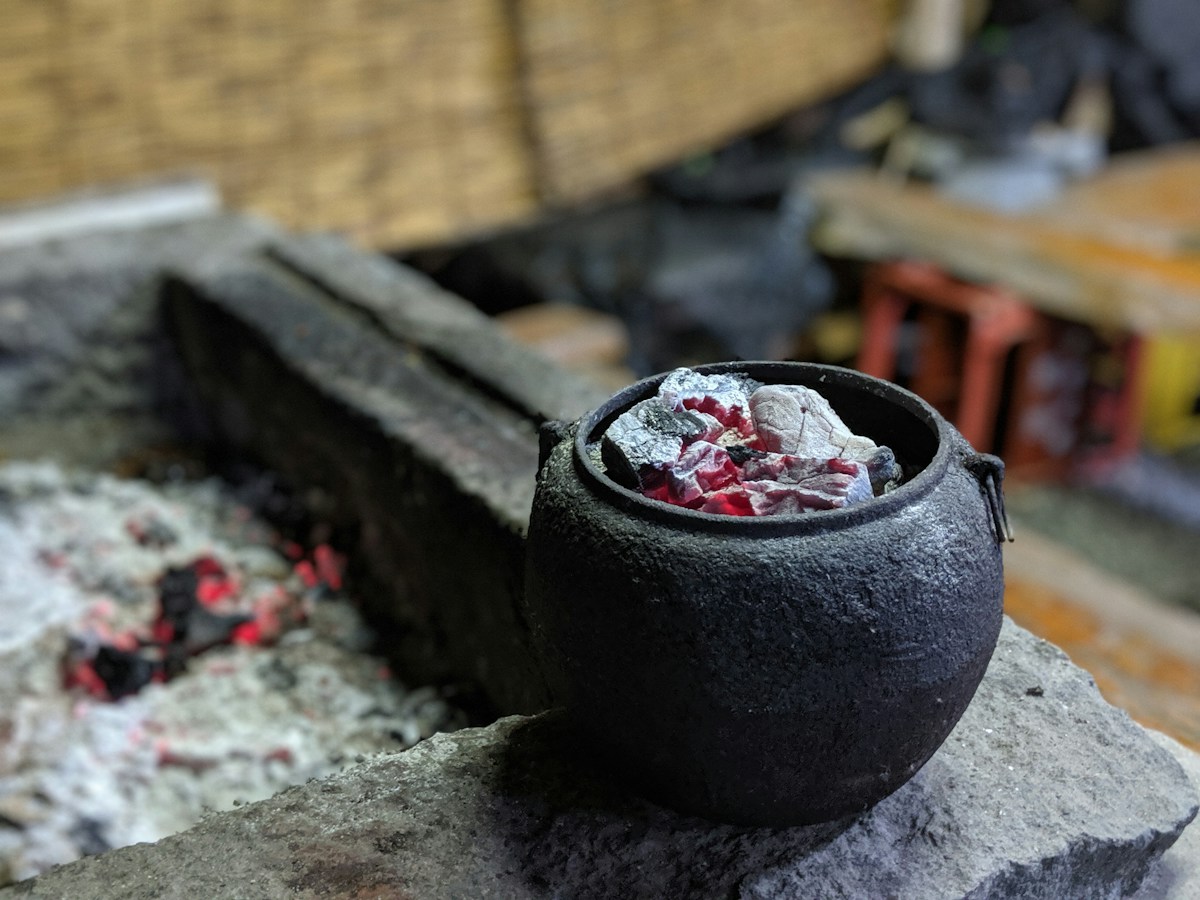
A cast iron cauldron is usually a deep, rounded or belly-shaped pot with side handles, a lid, and a more dramatic profile than a standard Dutch oven. Some have a broad, stable flat base for stovetop use. Others have curved sides, feet, bail handles, or designs intended primarily for outdoor cooking.
That variation matters. The word “cauldron” tells you less than the actual dimensions, base shape, lid, handles, and finish.
A deep cooking chamber can be helpful for soups and stews because it leaves room to stir without splashing over the sides. It can also make a large batch feel less crowded. On the other hand, a narrower opening may provide less accessible browning area than a wide Dutch oven.
The rounded shape can affect storage, too. A pot with a wide belly may need more shelf depth than its listed base diameter suggests. Measure the widest point, not only the bottom.
There are two main finish choices:
Bare cast iron has an exposed iron cooking surface. It generally needs seasoning and prompt drying according to the maker’s directions. It may suit cooks who are comfortable with routine maintenance and prefer traditional cast iron pot cooking.
An enameled cast iron cauldron has a glass-like enamel coating over the iron. The cooking surface does not need seasoning, which can simplify everyday cleanup and dishes with acidic ingredients, such as tomato-based soups. Enamel still needs thoughtful handling: avoid hard knocks, use the utensils and cleaners the manufacturer allows, and inspect the surface if you notice chips or cracks.
Do not assume every lidded cast iron pot performs the same way. A lid that fits securely, handles that leave room for oven mitts, and a base that sits flat on your cooktop matter more in daily use than whether the pot is called a cauldron.
Best cast iron cauldron uses in an everyday kitchen
The best cast iron cauldron uses involve food that can stay in one vessel from start to finish. Large, saucy dishes are the clearest match.
Soups, stews, chili, and beans are strong candidates. A deep pot gives you room to sauté aromatics, add liquid, and simmer without reaching for a second vessel. If you routinely cook enough for dinner plus leftovers, the extra capacity can be useful rather than wasteful.
Choose the size carefully. A giant pot is not automatically better. A pot that holds more food than you can safely lift is not convenient. Buy for your normal batch size, not the once-a-year holiday crowd.
Braises are another good fit. You can brown meat in the pot, add vegetables and liquid, cover it, and continue at a low stovetop setting or in the oven if the manufacturer approves both uses. The key question is surface area: if you usually brown several pieces of meat at once, compare the cauldron’s interior base width with a Dutch oven’s wider, flatter cooking floor.
Large shared meals suit the presentation side of a cauldron. Chili, stew, spiced rice dishes, beans, or a large pot of potatoes can go from kitchen to table in the same vessel. Place it on a sturdy trivet or heat-safe surface first, and make sure the table can tolerate both the heat and the weight.
Frying is a more limited use. A deep vessel may help contain splatter compared with a shallow pan, but frying with hot oil requires a stable setup and careful handling. Use the pot for this purpose only if its design, cooktop stability, and manufacturer guidance support it. Never select a heavy pot for frying if you would need to carry it while full of hot oil.
Outdoor cooking can be appealing, especially with a cauldron-style pot. This is strictly model-specific. Check the manufacturer’s instructions before using a pot on a grill, over live fire, or with another outdoor setup. Enamel, handles, lid knobs, and base construction may limit where a particular pot can be used.
Less ideal jobs include boiling a small amount of pasta, heating a quick can of soup, cooking delicate fish, or making a small sauce. For these tasks, the cauldron’s weight and bulk usually work against you.
Cauldron vs Dutch oven which is more practical?
The cauldron vs Dutch oven decision comes down to how often you cook big portions and how much you value easy everyday handling.
| Factor | Cast iron cauldron | Conventional Dutch oven |
|---|---|---|
| Capacity and shape | Often deeper or more rounded, with a large-batch profile | Commonly more compact, with a flatter bottom and straighter sides |
| Burner stability | Depends heavily on base diameter and whether the pot sits flat | Often easier to position securely on a kitchen cooktop |
| Browning | Can work well, but a narrower base may limit batch browning | Often easier for browning because of wider usable floor space |
| Stirring and serving | Well suited to deep soups and table serving | Well suited to soups, braises, casseroles, and routine stirring |
| Moving when full | Can be awkward because of size, rounded shape, and weight | Still heavy, but often easier to grip and maneuver |
| Storage | May need deeper shelves and a low storage position | Usually easier to fit in standard cookware storage |
For soup and stew, either pot can work well if the capacity fits your household. A cauldron may be the better choice when you repeatedly cook bigger batches and want a striking serving vessel. A Dutch oven is usually the stronger all-purpose option for a household that cooks smaller portions more often.
For braising, compare usable bottom area. If you need to brown several chicken thighs or chunks of meat without crowding, a wide Dutch oven may be more efficient. If you make deep, saucy braises for a crowd, the cauldron’s volume may be more valuable.
A lighter stockpot is the better purchase when your priority is capacity with easier lifting. It will not provide the same heavy construction or convenient one-pot browning potential as cast iron, but it is easier to carry to the sink, drain, and store. That matters for pasta water, corn on the cob, broth, and other large boiled foods.
Daily-use realities weight cleaning storage and safe handling
Before buying, check the listed empty weight. Then imagine the pot filled with stew, stock, beans, or water. The loaded weight can become substantial, especially in larger sizes.
Use two hands and dry oven mitts when moving hot cookware. If a full pot feels difficult to control, do not try to carry it across the kitchen alone. It is better to ladle food out where it sits or ask for help than to wrestle a hot, heavy vessel.
Clear the route from stove to table before lifting. Move utensils, loose towels, and other clutter out of the way. Set the pot on a sturdy trivet, heat-safe pad, or another surface that can tolerate both heat and weight.
Storage deserves the same attention. Measure shelf height, shelf depth, and clearance for the lid. A low cabinet or sturdy low shelf is usually safer than a high cupboard, where lifting a heavy pot down can be awkward.
For bare cast iron cauldron care, follow the maker’s instructions for washing, drying, seasoning, and rust prevention. Do not leave a damp bare cast iron pot sitting after washing. Prompt drying and routine maintenance help protect the cooking surface.
For an enameled cast iron cauldron, use the manufacturer’s advice on utensils, cleaning products, temperature changes, and dishwasher use. Do not assume every enameled pot is dishwasher-safe or suitable for every cooking temperature. If enamel chips, cracks, or shows unusual damage, consult the maker’s care guidance before continued use.
Compatibility is never universal. Confirm the exact model’s guidance for gas, electric, induction, ovens, grills, outdoor heat, and cleaning. Check the lid knob’s temperature limit as well, since it may differ from the pot body’s limit.
Questions to ask before buying a cast iron cauldron
Run through this list before committing shelf space and money:
- What are the empty weight, usable capacity, base diameter, and full height with the lid?
- Does the pot sit flat and stable on my cooktop?
- Is it approved for my burner type and intended oven temperature range?
- If I want outdoor cooking, does the manufacturer specifically approve that setup?
- Are the handles easy to grip with oven mitts?
- Is the lid easy to remove safely when steam is escaping?
- Can I comfortably lift it when it is full of my usual meal?
- Do I have a low, sturdy storage location with enough shelf depth?
- Will I truly make large soups, braises, beans, or shared meals often?
- Would bare cast iron or enamel better suit my cleaning and maintenance routine?
If you answer yes to most of these questions, a cauldron may earn its place. If you hesitate over weight, burner stability, or storage, a Dutch oven in a practical size is likely the better everyday choice.
FAQ Are cast iron cauldrons good for soup and stew?
Yes, they can be a strong choice for large batches of soup and stew because their depth and capacity provide room for ingredients and stirring. The important limitation is handling: choose a size you can safely move, wash, and store. For a small household, a medium Dutch oven may be more useful than an oversized cauldron.
FAQ What is the difference between a cauldron and a Dutch oven?
A cauldron often has a deeper, rounder, more distinctive shape, while a Dutch oven commonly has a compact flat base and a more conventional kitchen-pot profile. In practice, compare the actual base width, capacity, handles, lid, and weight. Exact designs vary by manufacturer.
FAQ Can an enameled cast iron cauldron go on every stove and in the oven?
Not necessarily. Compatibility depends on the individual pot, its base, its lid knob, and the manufacturer’s instructions. Check the product guidance for approved cooktops, oven temperatures, outdoor use, cleaning methods, and restrictions before buying or cooking.