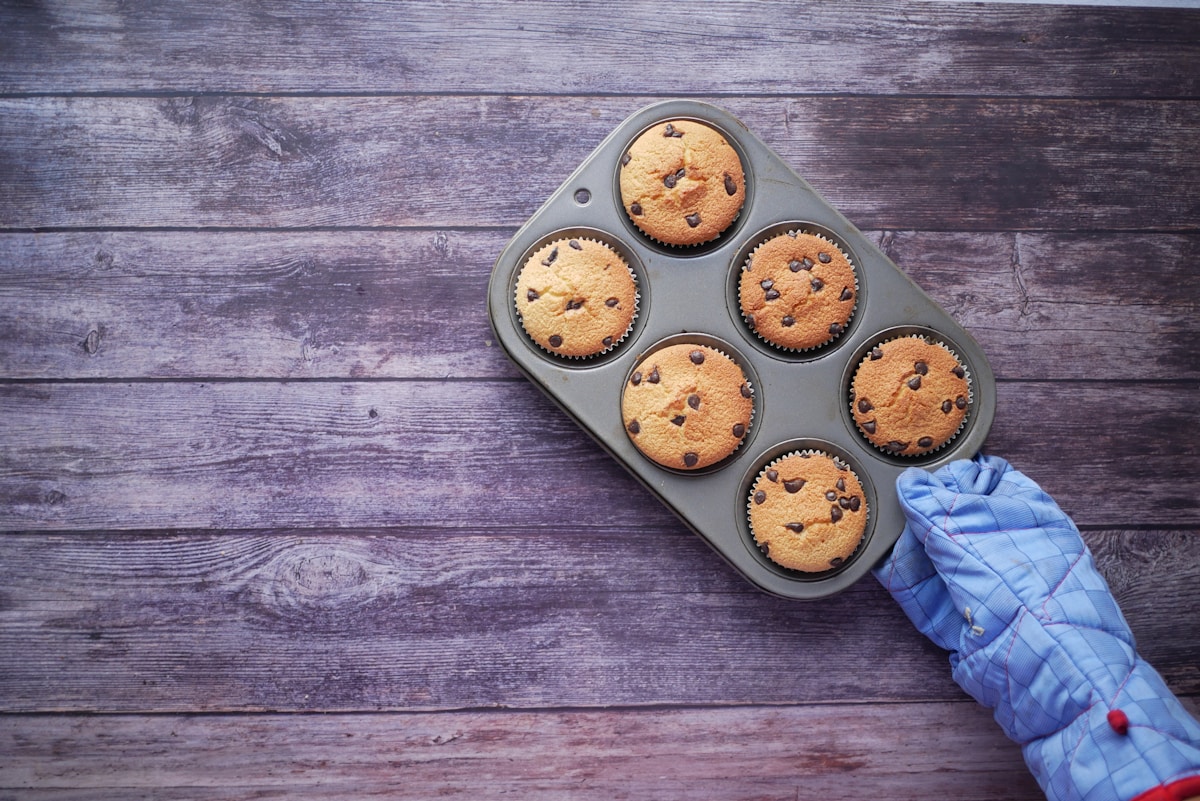
It’s a moment of pure baking dread. You’ve carefully measured, mixed, and monitored. The timer buzzes. You invert the pan, holding your breath, and then you see it: a deep crack running across your beautiful cake layer. Or maybe the layers are domed, refusing to stack flat, creating a wobbly, leaning tower of sponge.
Your first instinct might be frustration, a feeling that hours of work have been wasted. But I’m here to tell you that this is not a failure. This is the moment a baker is truly made. It’s where we move beyond simply following a recipe and start understanding the physics and chemistry of our craft. Almost any cake catastrophe can be rescued, and often, the ‘fixed’ version is more stable and delicious than the original plan.
Think of yourself not just as a baker, but as a structural engineer working with the most delicious building materials imaginable. Let’s get to work.
A Baker’s Triage: Diagnosing the Damage
Before we can fix the problem, we must understand its cause. Rushing into a solution without a proper diagnosis is like frosting a cake that’s still hot—a guaranteed mess. Let’s look at the common culprits.
The Problem: Cracked or Broken Layers
- The Cause: This usually happens for two reasons. First, the cake was too hot when you tried to remove it from the pan, causing its delicate structure to tear. Second, a drastic temperature change caused it to cool too quickly, leading to shrinkage and stress fractures. The outside cools and contracts faster than the still-warm, expanded interior, and something has to give.
- The Immediate Fix: Let it cool completely. Don’t touch it. A warm, broken cake layer is fragile. A cool one is much more stable.
The Problem: Domed or Sunken Tops
- The Cause: A domed top is a classic sign your oven was too hot. The edges of the cake baked and set too quickly, forcing the still-liquid batter in the center to rise up and over, like a little volcano. A sunken middle often points to underbaking, an oven door opened too early, or sometimes an issue with leavening agent ratios.
- The Immediate Fix: For a dome, the solution is simple: amputation. We’ll slice it off. For a sunken cake, the fix is more about creative camouflage with frosting or fruit.
The Problem: The Leaning Tower of Cake
- The Cause: This is a simple physics problem. You’re stacking unstable, uneven surfaces. Without perfectly level layers, gravity will always win.
- The Immediate Fix: Disassemble immediately if you can. We need to create flat, stable foundations before we can build upwards.
Structural Engineering with Buttercream and Dowels
This is where we rebuild. Our primary tools are a serrated knife, an offset spatula, and the magical culinary glue we call buttercream. The single most important technique in your cake-saving arsenal is the crumb coat.
A crumb coat is a thin, sacrificial layer of frosting that traps all the loose crumbs and seals the surface of your cake. It is the primer coat before the real paint job. Chilling this layer creates a firm, smooth, and stable canvas for your final, beautiful coat of frosting.
How to Apply a Perfect Crumb Coat:
- Level Your Layers: Place a cooled cake layer on your turntable or serving plate. Using a long, serrated bread knife, hold it parallel to the counter and carefully slice off any dome. Your goal is a perfectly flat surface. (Kitchen Hack: Save these scraps! They make a fantastic base for trifles or cake pops.)
- Apply the ‘Glue’: Place a small dollop of buttercream onto the cake plate before setting down your first layer. This anchors the entire structure.
- Fill and Stack: Place your first leveled layer down. Add your filling, then top with the next leveled layer. Repeat until all layers are stacked.
- The Coating: Using an offset spatula, apply a very thin layer of buttercream over the entire cake—top and sides. Don’t worry about crumbs getting into the frosting; that’s the whole point! Scrape off any excess. You should be able to see the cake through the frosting.
- The Critical Chill: Place the entire cake in the refrigerator for at least 30 minutes, or in the freezer for 15 minutes. You want the buttercream to be firm to the touch. This process solidifies the fats in the butter, creating a rigid shell that locks everything in place. That broken piece you were worried about? It’s now fused to the whole.
For cakes taller than three layers or those that are particularly heavy, you need internal support. Cake dowels (simple wooden skewers or purpose-made plastic rods work) act as columns, transferring the weight of the upper layers directly to the cake board, bypassing the delicate cake layers below. Simply press a dowel into the center of the lower tier, mark where it meets the top of the cake, remove it, and cut several other dowels to that exact length. Insert them in a circle a few inches in from the edge to create a stable platform for the next tier.
The Art of Improvisation: When Ingredients Run Low
Sometimes the problem isn’t structural; it’s logistical. You’re halfway through mixing your chocolate cake when you realize you’re out of cocoa powder. Don’t panic; think chemistry.
Let’s use that exact scenario. You can substitute unsweetened baking chocolate for cocoa powder, but it’s not a 1:1 swap. Here’s why: cocoa powder is essentially pure cocoa solids with most of the fat (cocoa butter) removed. Baking chocolate contains both cocoa solids and cocoa butter.
The Scientific Substitution:
- The Ratio: For every 3 tablespoons (about 18g) of natural unsweetened cocoa powder, you can use 1 ounce (28g) of unsweetened baking chocolate.
- The Adjustment: Because you’re adding fat back into the recipe via the cocoa butter in the chocolate, you must reduce another fat in the recipe. Decrease the butter or oil by 1 tablespoon for every 1 ounce of chocolate you add.
Simply melt the chocolate carefully (I prefer a double boiler or very short bursts in the microwave) and add it to the wet ingredients where you would normally add the oil or melted butter. The result will be a richer, fudgier cake due to the extra cocoa butter.
Case Study: Taming a Temperamental Oreo Buttercream
Scratch-made buttercreams with additions can be tricky. An Oreo buttercream, for instance, seems simple but often becomes stiff, gritty, and difficult to spread. Let’s break down the science.
Oreo cookie wafers are incredibly dry. When you mix the crumbs into your buttercream, they act like tiny sponges, immediately beginning to absorb moisture from the butter and milk/cream. This absorption process is what makes the frosting stiffen up over time. Furthermore, if the crumbs are too large, the texture will be gritty.
My Method for a Flawless Oreo Buttercream:
- Pulverize the Cookies: Don’t just crush them in a bag. Use a food processor or a powerful blender (like a Vitamix) to turn the entire cookie, filling and all, into a fine, flour-like powder. This maximizes flavor and eliminates grittiness.
- Make Your Base: Prepare your favorite American or Swiss Meringue Buttercream. Ensure it’s perfectly smooth and at room temperature (around 70°F / 21°C) before proceeding.
- Incorporate at the End: Add your Oreo powder to the finished buttercream and mix on low speed only until it’s just combined. Over-mixing can cause the frosting to break or become even stiffer as the crumbs continue to hydrate.
- Troubleshooting: If it becomes too stiff to spread, don’t just keep whipping. Add heavy cream or whole milk, one teaspoon at a time, until it reaches the perfect consistency. If it looks curdled or broken, it’s likely a temperature issue. If it’s too cold, let it sit at room temp for 20 minutes and re-whip. If it seems greasy and soupy, it’s too warm; chill it for 15 minutes before whipping again.
Embracing these recovery missions is the fastest way to become a more intuitive and confident baker. The cakes you see on social media are often the result of multiple attempts and clever fixes hidden beneath a perfect layer of frosting. Your ‘flawed’ cake, held together with a well-executed crumb coat and a bit of ingenuity, isn’t a failure. It’s a testament to your skill, a story of recovery, and I promise, it will be every bit as delicious.


 Beatrice