


I get it. You’ve got a booming cottage food business, maybe for cupcakes or sourdough, and your standard 30-inch oven just can’t keep up. You’re juggling half-sheet pans, timing batches perfectly, and the dream of a massive, high-capacity oven starts to feel less like a luxury and more like a necessity.
Then you see it online: a used commercial convection oven for a fraction of the price of a high-end residential model. It promises space for eight sheet pans at once. Eight! The temptation is real. It feels like the perfect shortcut to scaling your production.
Let me be direct, as someone who has tested more ovens than I can count: Stop. Do not do it. Installing a commercial oven in a typical residential kitchen is one of the most dangerous and financially irresponsible decisions a home baker can make. Let’s break down exactly why this tempting ‘hack’ can turn into a complete nightmare.
The Hard Truth About Heat and Fire Risk
Residential ovens, from a basic GE to a fancy Wolf range, are engineering marvels of insulation. They are designed for “zero-clearance” installation, meaning they can be installed directly touching your wooden cabinets and drywall. All the intense heat, often reaching 500°F (260°C), is designed to stay inside the oven box.
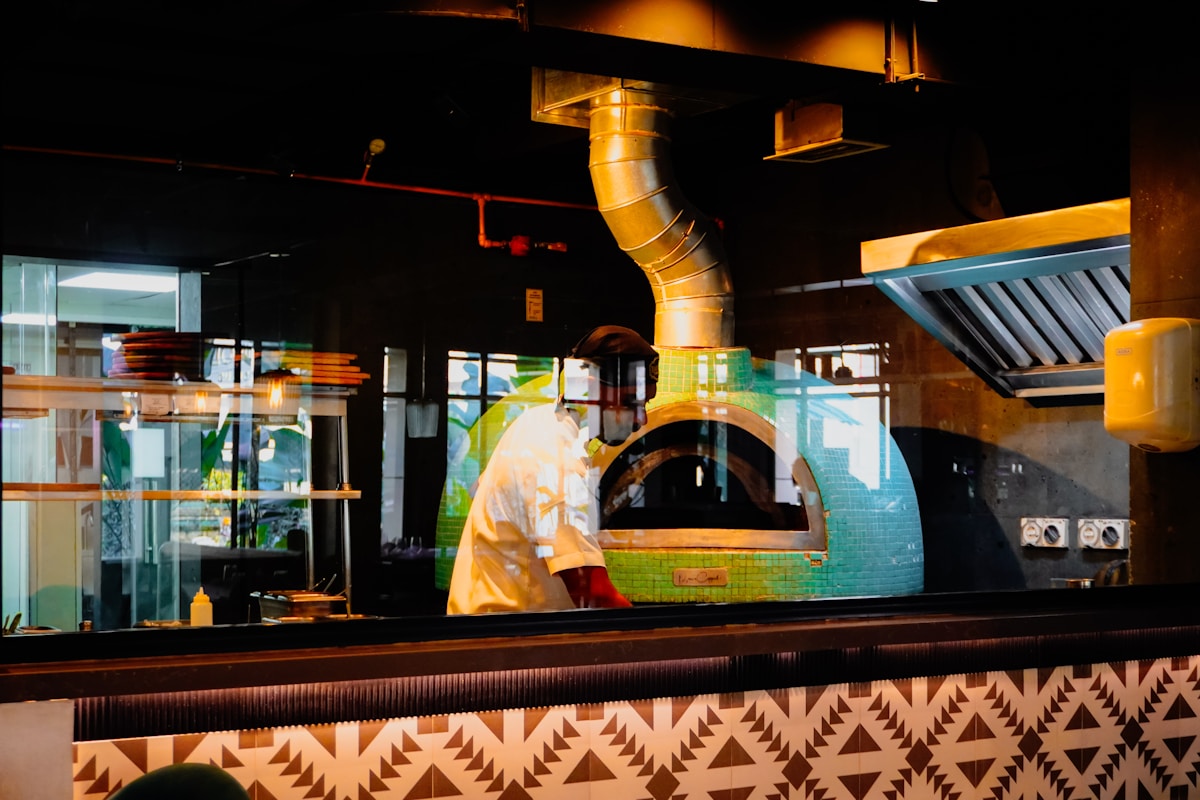
Commercial ovens are the complete opposite. They are built for wide-open commercial kitchens with stainless steel surfaces, concrete floors, and tons of ventilation. They have minimal insulation because, in that environment, it’s not a priority. They are designed to vent heat into the surrounding air.
Place one in your kitchen, nestled between your laminate countertops and oak cabinets, and you have a recipe for disaster. The ambient heat radiating from the oven’s exterior can, and will:
- Melt countertops: Laminate and solid-surface counters can warp, blister, and melt.
- Scorch and ignite cabinets: Over time, the constant high heat will dry out the wood of adjacent cabinets, lowering its ignition point until one day it can catch fire.
- Damage flooring: The heat radiating from the bottom can ruin vinyl, linoleum, or even wood flooring.
The National Fire Protection Association (NFPA) has extensive codes for a reason. A commercial oven in a residential setting is a fire hazard, plain and simple. (Yes, it’s really that serious.)
The Hidden Costs They Don’t Tell You About
Even if you ignore the fire risk, the logistical hurdles are massive and expensive. A commercial oven isn’t a plug-and-play appliance.
- Specialized Utilities: Many commercial gas ovens require a higher-pressure gas line than your home is equipped with, necessitating a costly visit from the gas company and a plumber. Electric models often require 3-phase power, something virtually no home is wired for. An electrician would have to run entirely new, expensive service to your house.
- Commercial Ventilation: You can’t just put a commercial oven under your standard microwave range hood. It requires a Type 1 or Type 2 commercial hood with a powerful exhaust fan, often mounted on the roof. This is a multi-thousand-dollar installation project that involves cutting through your walls and ceiling.
- Structural Reinforcement: A typical home oven weighs 150-200 pounds. A small commercial convection oven can easily weigh 500-800 pounds. Your kitchen floor joists were likely not designed to support that kind of concentrated weight. You might need to reinforce the floor from the basement or crawlspace just to prevent your new oven from crashing through it.
The Ultimate Deal-Breaker Insurance Voids
This is the point that ends the conversation. Let’s say you do it all. You install the oven, and nothing immediately catches fire. Then, an unrelated kitchen fire starts—a grease fire on the stovetop, for instance. The insurance adjuster arrives, sees a non-certified, commercial appliance installed in your home, and immediately denies your entire claim.
By installing equipment not rated for residential use, you void your homeowner’s insurance policy. You are taking on 100% of the financial liability for any fire, damage, or injury that occurs on your property. It’s a risk no baker, no matter how ambitious, should ever take.
Smart Alternatives for the Serious Home Baker
So, what’s the solution? How do you increase your baking capacity without turning your kitchen into a deathtrap? You invest in the right tool for the job. Here are your best options, all of which are designed and certified for home use.
-
The Pro-Style Residential Range: These are the best of both worlds. Brands like Thor Kitchen, BlueStar, and Wolf make 36-inch or even 48-inch ranges with massive ovens (up to 6.0 cu. ft. or more) that can fit a full-size commercial sheet pan. They have powerful convection systems and high BTU burners, but with all the required insulation and safety certifications for your home. Price Range: $3,000 - $15,000.
-
The Double Wall Oven: For pure baking capacity, nothing beats a double wall oven. This is my top recommendation for most home bakers looking to scale up. You get two full-size ovens, allowing you to bake cookies in one at 350°F (177°C) and proof bread in the other at 100°F (38°C). The workflow flexibility is unmatched. Look at models from reliable brands like KitchenAid, Bosch, and GE Profile. Price Range: $2,500 - $6,000.
-
A Powerful Second Oven (Countertop): Don’t underestimate a high-quality countertop oven. The Breville Smart Oven Air Fryer Pro is a workhorse that can fit a quarter-sheet pan and handle delicate baking with its precise temperature control. While it’s not a replacement for a full oven, using it as a dedicated second oven for smaller batches or side dishes can free up your main oven and dramatically improve your workflow. (Your future self will thank you.)
Lucas’s Final Take
The dream of a commercial-scale home bakery is a good one, but cutting corners on safety is a guaranteed path to failure. The allure of a cheap commercial oven is a mirage that hides enormous fire risks, staggering hidden costs, and the certainty of voiding your insurance.
Invest your hard-earned money wisely in an appliance that is actually built for your space. A great double wall oven or a pro-style range will give you the capacity and performance you crave without risking everything you’ve worked to build. Cook smart, and stay safe.


