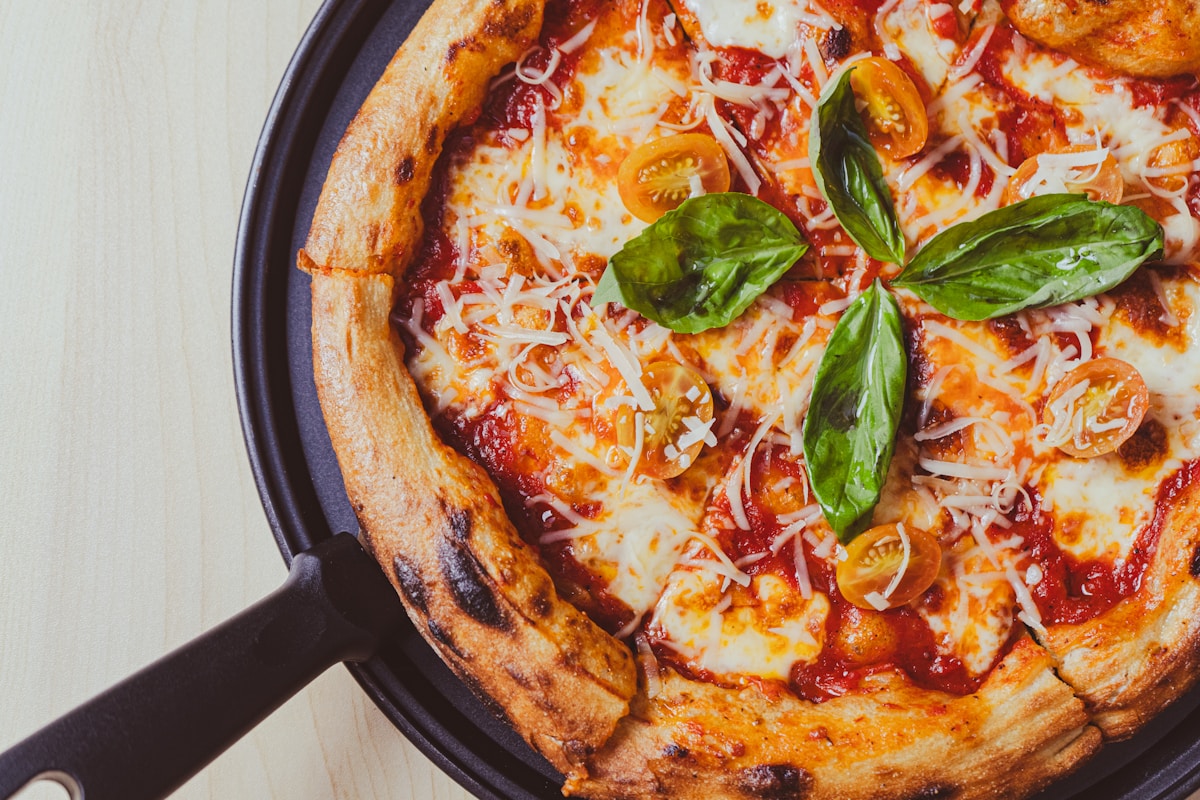
You pull a pizza from the oven, excited for a crispy, golden crust. Instead, the center is soggy and the bottom pale. The problem often isn’t your dough or toppings — it’s the pan you baked it on.
The best pizza pan for home baking depends on the crust style you want and your budget. For most home cooks, a perforated pan or a nonstick carbon steel pan delivers the best balance of crispness and ease. But pizza stones, steels, and cast iron each have their place. This guide compares the most popular options so you can choose the best pizza pan for home baking without guesswork.
Key Takeaways
- For crispy crust, choose a perforated pan or nonstick carbon steel for a reliable start; upgrade to a baking steel for authentic Neapolitan results.
- Aluminum pans are budget-friendly but can warp above 450°F; cast iron delivers excellent heat retention for deep-dish or thin crust.
- Preheat your pan for at least 30 minutes at 500–550°F on the lowest rack to maximize bottom heat.
- Most nonstick coatings are safe up to 500°F; check manufacturer specs and avoid thermal shock with stones.
Why Your Pizza Pan Choice Directly Affects Crust Quality
Home ovens max out around 500–550°F, far below the 800°F of a brick pizza oven. That lower temperature makes it harder to get a crisp, brown bottom. The pan you use must compensate by transferring heat efficiently.
Heat conduction and retention determine how quickly the dough cooks on the bottom. A pan that heats slowly or unevenly produces a pale or soggy crust. The right material can make the difference between a mediocre pizza and one that rivals your local pizzeria.
Pizza Pan Types: Aluminum, Steel, Cast Iron, Perforated, Stone, and Steel Plate
Aluminum pans Aluminum is lightweight and heats up quickly. It’s also the most affordable option — many basic round pans cost under $15. However, thin aluminum can warp under high heat, especially above 450°F. Warping creates uneven surfaces that lead to hot spots. Nordic Ware makes natural aluminum pans that are rust-resistant and warp-resistant, but they still lack the thermal mass of heavier materials. Best for occasional bakers on a tight budget who don’t mind a softer crust.
Carbon steel pans Carbon steel pans, like the GoodCook AirPerfect or King Arthur pizza pan, combine strength with good heat conductivity. They often come with a nonstick coating. These pans heat evenly and can handle high temperatures without warping. The King Arthur pan uses a steel-aluminum composite for durability and even baking. Carbon steel is heavier than aluminum but manageable. Many home cooks find these pans easy to clean and reliable. They are a strong candidate for the best pizza pan for home baking under $30.
Cast iron skillets A cast iron skillet is not a dedicated pizza pan, but it excels at pizza. Its thick walls and base retain heat superbly, producing an intensely crispy bottom in thin-crust pizzas. Cast iron also works well for deep-dish or Detroit-style pizza, where the pan is oiled and the dough fills the corners. The downside is weight — cast iron is heavy and unwieldy for launching and retrieving pizza. It also requires seasoning to maintain its nonstick surface. If you already own a 10- or 12-inch skillet, try it before buying a separate pan. Many pizza enthusiasts swear by cast iron for its crust results.
Perforated pans Perforated pans have small holes that allow hot air to reach the underside of the dough. This direct contact dries the bottom and promotes a crunchy crust. Perforated pans are especially good for thin-crust and Neapolitan-style pizzas. They are lightweight and typically made of aluminum or steel with a nonstick coating. Cleaning is straightforward because food doesn’t stick much. However, the holes can let cheese or sauce drip if you load the pizza too heavily. A quality perforated pan is often recommended as the best pizza pan for home baking for beginners who want a reliably crisp base.
Pizza stones Pizza stones mimic the porous floor of a brick oven. They absorb moisture from the dough and radiate steady heat. A good stone needs at least 30–45 minutes of preheating at maximum oven temperature. Once hot, it delivers a well-browned crust with some chewiness. Stones are fragile — dropping them or placing a cold dough ball on a hot stone can cause cracking. Some bakers find stones frustrating because the pizza can stick if not enough cornmeal is used. Cleaning a stone is tricky: never use soap; simply scrape residue and burn off stains.
Pizza steels Pizza steels are thick plates of steel (typically 1/4 to 3/8 inch) that store and transfer heat far more efficiently than stone. They can reach temperatures high enough to blister the crust in under 10 minutes of preheating after a initial 45-minute warm-up. Steels are nearly indestructible, but they are very heavy (often 15–20 pounds). They cost $60–$100 or more. For devoted pizza makers who want the closest thing to a commercial oven, a baking steel is the ultimate upgrade. It’s the best pizza pan for home baking for enthusiasts who prioritize crust quality over cost and weight.
How to Choose Based on Your Skill Level and Budget
Beginners If you’re new to homemade pizza, a round perforated pan or a nonstick carbon steel pan under $30 is your best bet. These pans are forgiving: you can shape the dough directly on them, no peel needed. They clean easily and produce a consistently crisp bottom. Look for brands like Nordic Ware aluminum perforated pan or GoodCook AirPerfect nonstick pan. Both are widely available and affordable.
Intermediate Once you’re comfortable with dough handling, try a cast iron skillet or a pizza stone. Cast iron gives excellent heat retention for a thicker crust or pan pizza. A pizza stone adds a satisfying chewiness to the crust. Both require preheating and a bit of technique — using a peel, dusting with cornmeal, and managing the launch. The learning curve is small, and the results improve noticeably.
Enthusiasts If you make pizza weekly and crave a blistered, Neapolitan-style crust, invest in a baking steel. It sits on the oven rack, preheats fully, and transfers intense heat to the dough bottom. The steel can also double as a griddle for flatbreads or steaks. Expect to pay $60–$100. Some bakers combine a steel with a stone for top heat, but a well-preheated steel alone can deliver outstanding results.
Budget options under $30
- Nordic Ware Natural Aluminum Round Pizza Pan (14 inch) – about $15
- GoodCook AirPerfect Nonstick Carbon Steel Pizza Pan – about $20
- USA Pan Nonstick Pizza Pan – about $25
- Farberware Nonstick Perforated Pizza Pan – about $18
These are all credible choices that won’t break the bank.
Pro Tips for Preheating, Positioning, and Preventing Sticking
Preheat correctly For stones and steels, place them on a middle or lower rack before turning on the oven. Allow at least 30 minutes of preheat at 500–550°F. For perforated or aluminum pans, preheating isn’t critical, but placing a cold pan in a hot oven can cause warping in thin models. A short 10-minute preheat helps even heat distribution.
Position in the oven The lower the rack, the more bottom heat your pizza gets. For maximum crispness, place the pan or stone on the lowest rack. If you’re using a steel, position it about 6 inches from the top heating element to brown the cheese too.
Prevent sticking Dust the pan generously with cornmeal, semolina, or flour before placing the dough. For nonstick pans, avoid cooking spray or oil — they can leave a gummy residue. Cast iron needs a thin layer of oil, preheated to create a nonstick surface. For stone or steel, a dusting of semolina works best; the coarse grains act as tiny ball bearings and prevent adhesion.
Avoid thermal shock Never place a cold or room-temperature pizza stone directly onto a preheated rack. Let the stone heat up gradually inside the oven. Similarly, don’t transfer a frozen pizza straight onto a hot stone — let it thaw first.
Cleaning properly
- Nonstick pans: Hand wash with mild soap and a soft sponge; avoid abrasive scrubbers.
- Steel pans: Scrape residue, wash with soap and water, dry immediately, and apply a thin coat of oil to prevent rust.
- Cast iron: Scrape off food, rinse with water (no soap if possible), dry thoroughly on the stove, and re-season if needed.
- Pizza stone: Never use soap. Scrape off burnt bits with a bench scraper, then wipe with a damp cloth. High-heat burns off stains.
Frequently Asked Questions
Can I use a pizza stone in a home oven? Yes. Place the stone on the lowest rack before preheating. Allow at least 30 minutes at 500°F. Use cornmeal or semolina to prevent sticking. Avoid placing cold dough directly on a hot stone to prevent cracking.
Is nonstick coating safe at high heat? Most modern nonstick coatings are safe up to 500°F. Always check the manufacturer’s maximum temperature rating. Avoid heating a nonstick pan empty above that limit. Brands like King Arthur (Americoat) and GoodCook use coatings designed for high-heat baking.
How do I clean a pizza steel? Scrape off any stuck residue with a metal spatula. Wash with mild soap and warm water. Dry immediately with a towel. Apply a very thin layer of vegetable oil to prevent rust. Never soak a steel.
What is the best pizza pan for home baking for beginners? A round perforated pan or a nonstick carbon steel pan under $30 is ideal. The perforations help produce a crisp base, and the nonstick coating makes cleanup easy. Look for a 14-inch size to fit most oven racks.
Can I use a pizza stone for other foods? Yes. Pizza stones work well for bread, baguettes, cookies, and even roasting vegetables. They provide steady, even heat. Just be aware that strong odors can transfer to the stone over time.
Is a pizza steel better than a pizza stone? For blistering, crunchy crust, a steel is superior because it conducts heat faster and retains more energy. Stones do well for a chewy, airy crust. Steels are heavier and more expensive. Your choice depends on your preferred crust texture and budget.