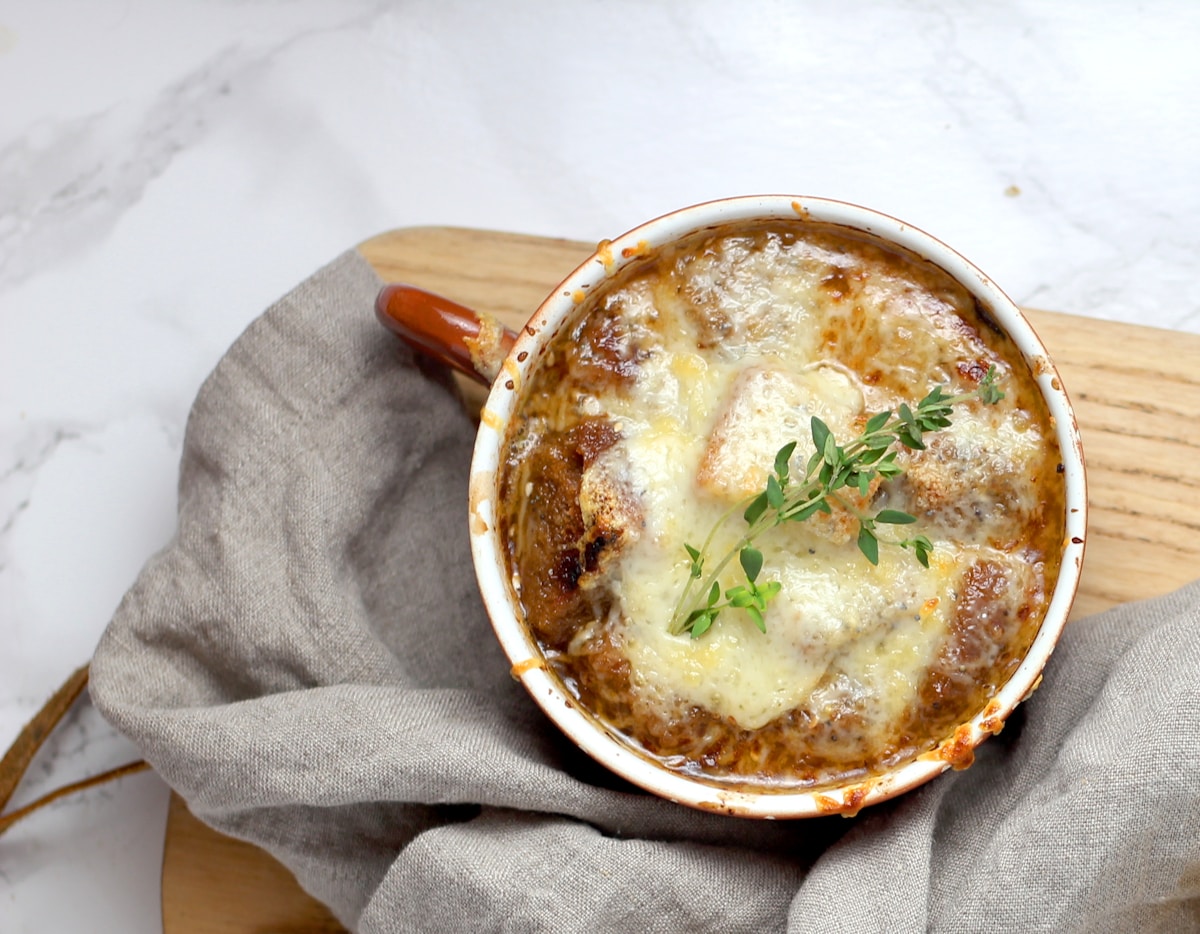
Close your eyes and imagine it: a rustic crock, steaming with a broth so dark and savory it warms you from the inside out. You dip your spoon through a molten cap of bubbly, golden Gruyère cheese, breaking through a toasted crouton soaked in that magnificent soup. And then you get it—the impossibly sweet, jammy treasure of perfectly caramelized onions. This is French Onion Soup, a dish that feels like a hug in a bowl.
For many of us, that experience stays in restaurants. Why? Because the heart and soul of this classic soup—the onions—traditionally requires an almost meditative level of patience. We’re talking up to an hour of standing, stirring, and coaxing sliced onions to transform from sharp and pungent to profoundly sweet and mahogany-brown. On a busy weeknight, that can feel like an eternity.
But what if I told you there was a little bit of kitchen science that could get you 90% of the way there in a fraction of the time? It sounds like magic, but it’s a simple trick that hinges on one humble pantry staple. Let’s explore the secret to unlocking weeknight French Onion Soup.
The Soul of the Soup: The Art of Slow Caramelization
Before we dive into the shortcut, we must pay respect to the original method. Traditional French onion soup is a testament to the power of transformation. It takes a simple, inexpensive ingredient—the onion—and through the slow application of heat, turns it into something luxurious.
This magical change is all thanks to the Maillard reaction, a complex chemical dance between amino acids and reducing sugars. When you cook onions low and slow in a heavy-bottomed pot (like a classic Le Creuset or Lodge Dutch oven) with a knob of butter, you’re not just browning them; you’re systematically breaking down their complex carbohydrates into simpler sugars. This is what creates that signature sweetness and hundreds of new aromatic compounds that give the soup its incredible depth.
This process is a ritual. It can’t be rushed. You need to keep the heat low enough to prevent burning while allowing the onions to soften, release their moisture, and slowly, surely, turn that beautiful amber, then copper, then deep brown. It’s a labor of love, and the flavor it produces is unparalleled. But love doesn’t always have an hour to spare.
The Kitchen Hack: Unlocking Flavor with a Pinch of Science
Here’s the game-changer: baking soda.
Yes, the same stuff that makes your cookies rise can dramatically accelerate the onion caramelization process. Adding just a tiny amount of baking soda (sodium bicarbonate) to your onions changes everything. Why? Baking soda is alkaline. By raising the pH of the onions, it significantly speeds up the Maillard reaction. The cell walls of the onions also break down much faster, releasing their sugars and moisture more readily.
Instead of an hour of gentle stirring, you can achieve a deep, rich color and flavor in as little as 15 to 20 minutes. (Yes, really!)
The Golden Rule: A little goes a very long way. The key is moderation. For a large batch of soup using about 4-5 large yellow onions, you only need about ¼ teaspoon of baking soda. If you add too much, the onions can become overly soft and mushy, and you might detect a slight chemical aftertaste. Used correctly, however, it’s completely undetectable and the results are stunning.
How to Make Fast French Onion Soup
Ready to put this theory into practice? Here’s a streamlined guide to making a magnificent French onion soup on a timeline that actually works for a real life.
You’ll Need:
- 4-5 large yellow or sweet onions, thinly sliced
- 3 tablespoons unsalted butter
- ¼ teaspoon baking soda
- 1 teaspoon sugar (optional, but helps kickstart browning)
- 2 cloves garlic, minced
- ½ cup dry white wine or dry sherry (optional, for deglazing)
- 8 cups of high-quality beef broth
- A few sprigs of fresh thyme and 1 bay leaf
- Salt and freshly ground black pepper
- Thick slices of baguette or crusty bread, toasted
- 2 cups grated Gruyère cheese (or a mix of Gruyère and Swiss)
The Method:
- Melt and Sauté: In a large Dutch oven or heavy-bottomed pot over medium heat, melt the butter. Add your mountain of sliced onions and a pinch of salt. Cook, stirring occasionally, for about 5-7 minutes until they begin to soften.
- Add the Magic: Sprinkle the ¼ teaspoon of baking soda and the optional sugar over the onions. Stir it in well. Now, the transformation begins. (Don’t walk away now!)
- Watch and Stir: The onions will almost immediately start to release more liquid and begin to change color. Keep stirring frequently as they move from pale yellow to tan to a deep, rich brown. This should take about 10-15 more minutes. Be amazed.
- Build the Broth: Once the onions are deeply caramelized, stir in the minced garlic and cook for one minute until fragrant. If using, pour in the wine to deglaze the pot, scraping up any browned bits from the bottom. Let it cook down for a minute.
- Simmer and Season: Pour in the beef broth, add the thyme sprigs and bay leaf, and bring to a simmer. Reduce the heat to low, cover partially, and let it simmer for at least 30 minutes for the flavors to meld. Season to taste with salt and pepper.
- The Cheesy Finale: Ladle the soup into oven-safe bowls. Top each with one or two slices of toasted bread and be very generous with the grated Gruyère. Place the bowls on a baking sheet and broil on high for 2-4 minutes, or until the cheese is melted, bubbly, and beautifully browned. Watch it carefully to prevent burning! Serve immediately and accept your applause.
Is It Cheating or Just Smart Cooking?
Some culinary purists might argue that using a shortcut like baking soda detracts from the tradition of the dish. I see it differently. Food traditions are living things; they evolve with our lives and our understanding of science. The traditional, hour-long method is a beautiful, mindful process for a slow Sunday afternoon.
This scientific shortcut, however, is a tool. It’s a key that unlocks a classic, comforting dish for a busy Tuesday night. It makes an otherwise intimidating recipe accessible and achievable. If a pinch of baking soda means you and your family can enjoy a bowl of homemade, soul-soothing French onion soup without the massive time commitment, I don’t call that cheating. I call that kitchen magic.


 Lucas
Lucas
